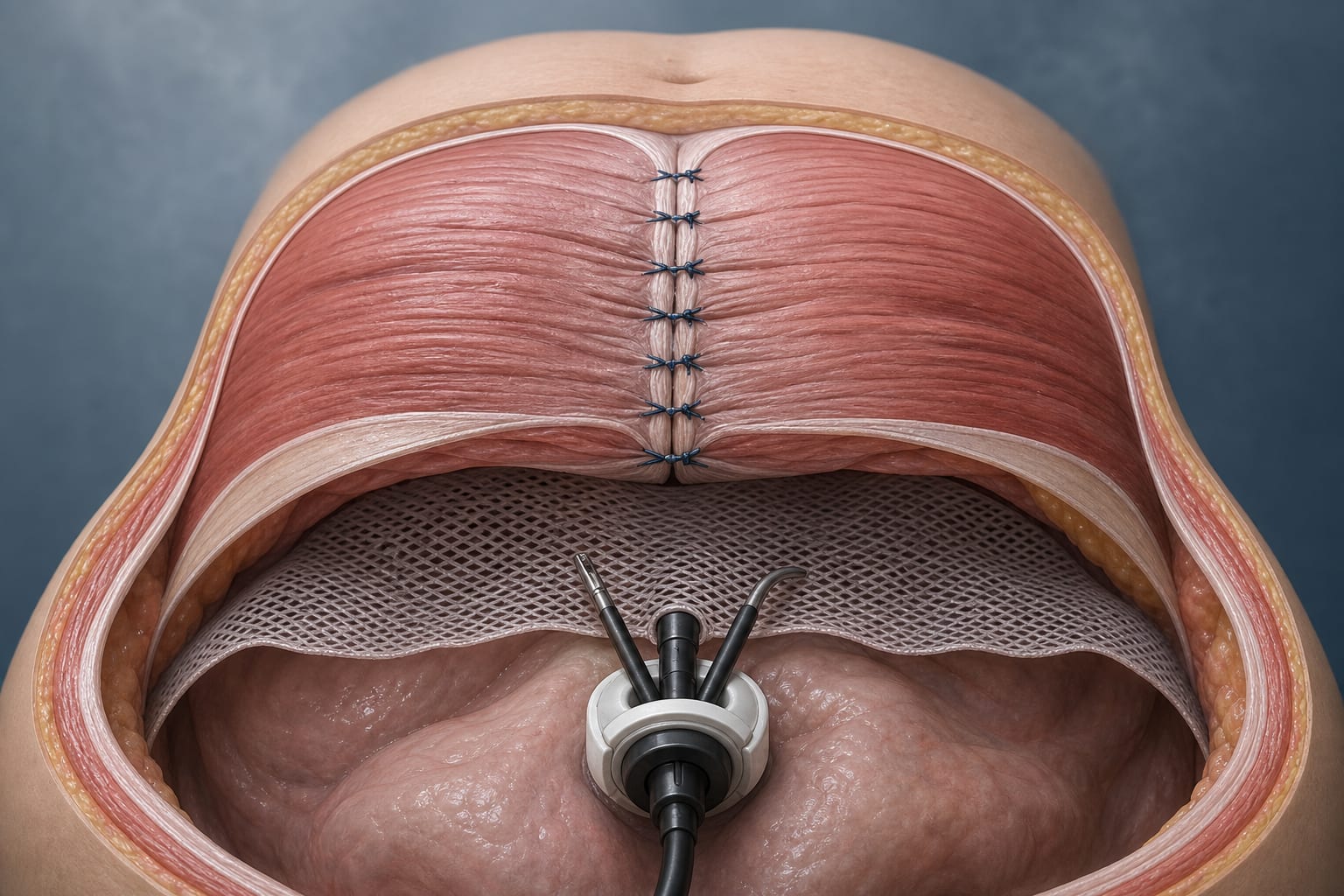
To describe a novel symmetrical anterior–posterior partial fundoplication technique aimed at improving surgical outcomes for GERD patients, specifically focusing on safety and effectiveness.
Approach:
Key Findings:
The technique aims to create a reproducible antireflux barrier while minimizing postoperative dysphagia.
The study included patients who underwent primary elective procedures, excluding redo or non-elective cases.
Outcomes assessed included safety (intraoperative complications, ICU admissions) and effectiveness (hiatal hernia recurrence, patient-reported outcomes).
Interpretation:
The authors believe that adherence to the described principles can improve surgical outcomes and reduce complications associated with fundoplication.
Limitations:
The study is retrospective and observational, which may introduce bias and limit the generalizability of the findings.
Exclusion of certain patient populations may limit generalizability.
Conclusion:
The symmetrical anterior–posterior partial fundoplication technique may enhance surgical outcomes for GERD patients.