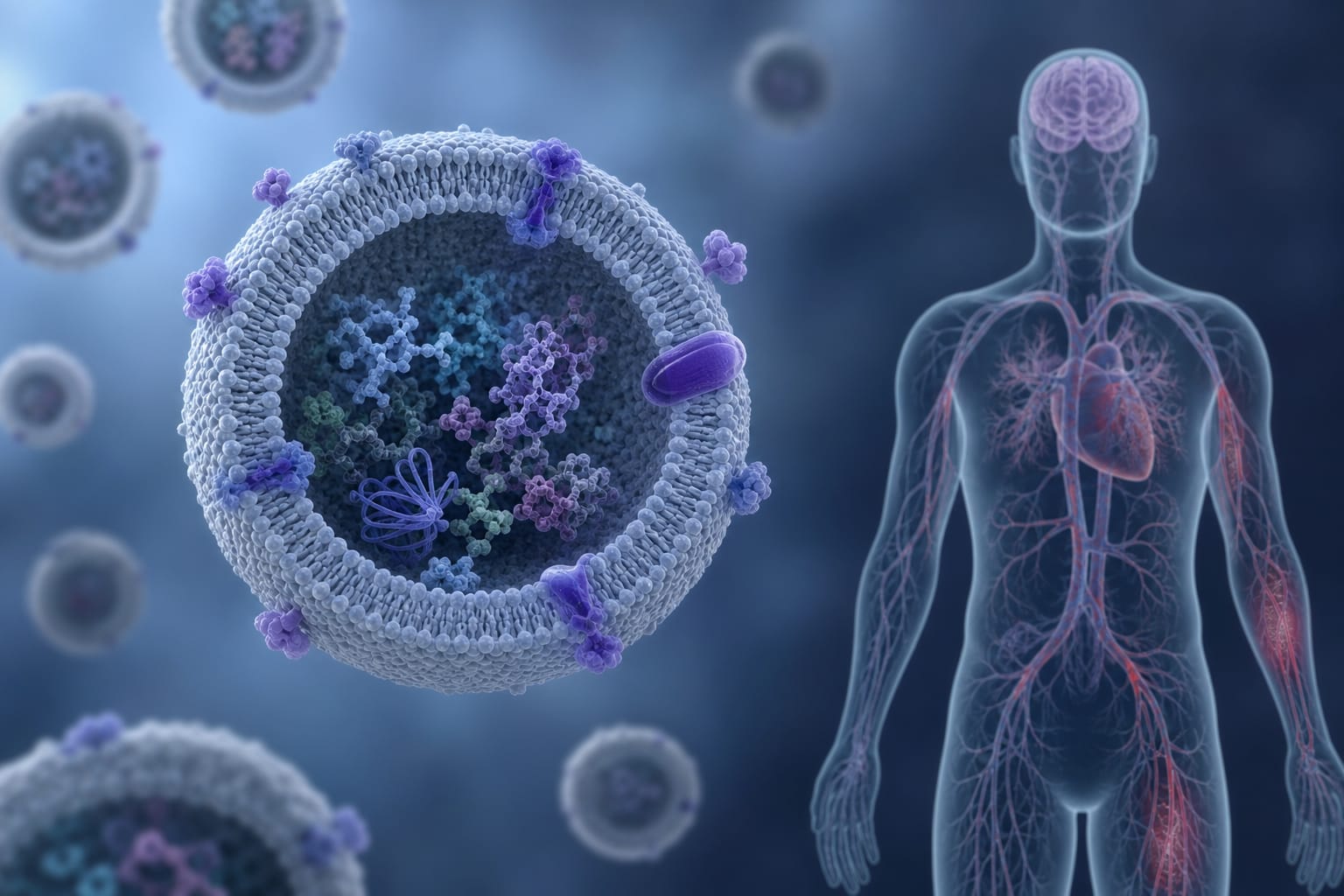
To investigate the protein cargo of plasma-derived small extracellular vesicles (SEVs) from PASC-positive and PASC-negative individuals to identify EV-linked biomarkers of Long-COVID.
Approach:
Sample Collection: SEVs were isolated from EDTA plasma of PASC-positive (n=20) and PASC-negative (n=11) individuals using size-exclusion chromatography, a method that allows for the separation of vesicles based on size.
Proteomic Profiling: SEV protein cargo was profiled across more than 5400 proteins using the Olink Explore HT platform, which enables high-throughput analysis of protein expression.
Key Findings:
269 significantly dysregulated proteins identified in PASC-positive patients, including 84 upregulated and 21 downregulated.
Dysregulated proteins were enriched in pathways related to coagulation, inflammation, apoptosis, fibrosis, extracellular matrix remodeling, mitochondrial dynamics, and immune activation.
Persistent increases in FN1, HCF-H, HGF, and IL-17RA were observed in PASC-positive SEVs.
Interpretation:
Proteomic alterations in SEVs from PASC patients highlight inflammatory, thrombotic, and neurobiological dysregulation, suggesting the potential of SEVs as biomarkers and mechanistic drivers of long COVID.
Limitations:
The study involved a relatively small sample size.
The cross-sectional design limits causal inferences.
Conclusion:
Proteomic analysis of SEVs provides insights into the biological underpinnings of Long-COVID.