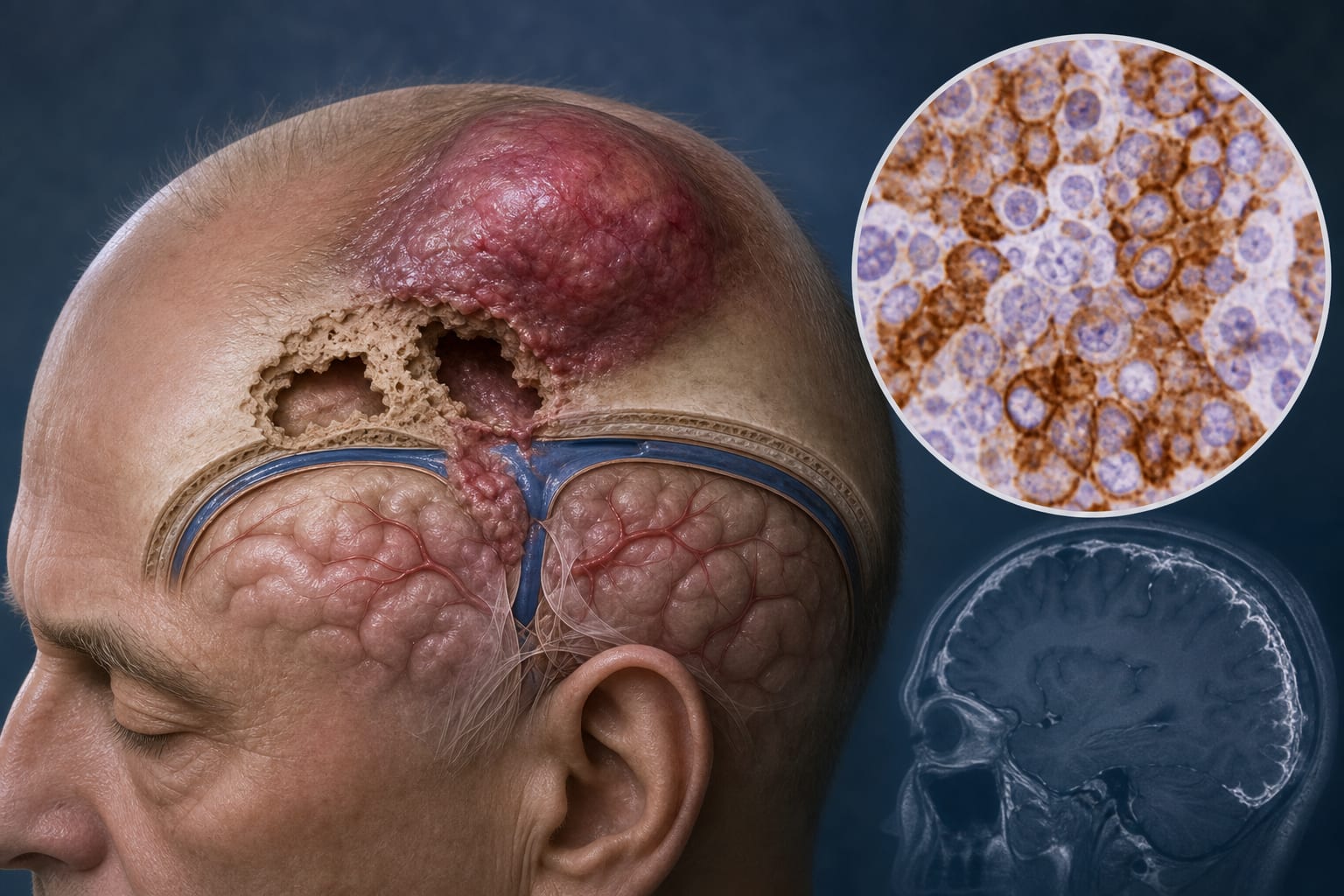
To present the first case of sustained tumor reduction in a sporadic CNS hemangioblastoma treated with belzutifan, highlighting its potential efficacy in tumors lacking identifiable VHL alterations.
Key Findings:
Belzutifan shows promising efficacy in VHL-associated hemangioblastomas with objective response rates between 44% and 76%.
The case presented indicates potential HIF-2α pathway dependence in sporadic hemangioblastomas, despite the absence of detectable VHL genetic alterations.
Surgical gross total resection remains the primary treatment for cranial hemangioblastomas, with belzutifan emerging as a viable systemic therapy, particularly for patients with limited surgical options.
Interpretation:
The findings suggest that belzutifan may be effective in treating sporadic hemangioblastomas, indicating a broader applicability of HIF-2α inhibition beyond VHL-associated tumors, and highlighting the need for further research.
Limitations:
The case study is singular and does not provide extensive data on the efficacy of belzutifan in a larger cohort of sporadic hemangioblastoma patients, which may limit generalizability.
Further research is needed to confirm the findings and explore the mechanisms of action in tumors without VHL alterations, as well as to address potential biases in this case study.
Conclusion:
Belzutifan may represent a new therapeutic option for sporadic hemangioblastomas, warranting further investigation into its role in tumor management and the need for larger studies to validate these findings.
by Rebekka E. Hooks, Niket Yadav, Mark Willy L. Mondia, Georgios Mantziaris, Alaa Saleh, Anna Vi Jones, Matthew McCord, Melike Mut, Ashok R. Asthagiri, Benjamin W. Purow