Editorial: Psychosocial factors, mental comorbidities and related biomarkers interacting with the onset and course of somatic diseases - Summary - MDSpire
Conexiant’s news site is now MDSpire News. Learn more
Advertisement
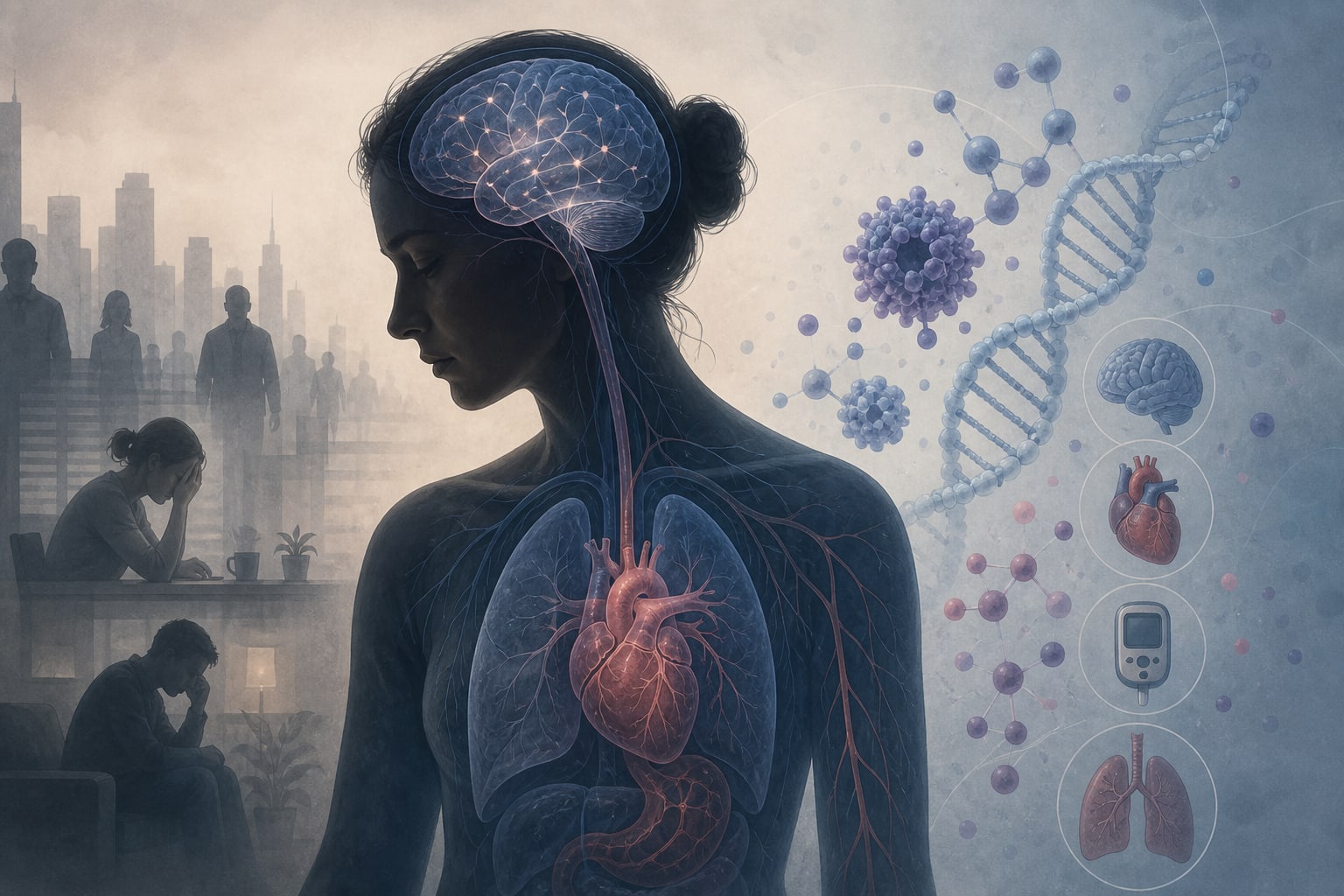
Editorial: The Interplay of Psychosocial Elements, Mental Health Comorbidities, and Associated Biomarkers in the Development and Progression of Physical Illnesses
To examine the influence of psychosocial and mental health factors, along with biomarkers, on the development and progression of somatic diseases.
Approach:
Bidirectional mind–body interactions: Discusses the increasing prevalence of chronic somatic diseases and mental disorders, emphasizing the need for integrated approaches to address both psychological and somatic dimensions.
Lifestyle behavior and disease coping: Highlights studies that explore the impact of psychological factors and lifestyle behaviors on clinical outcomes, such as erectile dysfunction and chronic diarrhea.
Causal perspective on the psycho-somatic interaction: Presents findings from a Mendelian randomization analysis linking major depression to increased sepsis risk, suggesting a causal relationship.
Psychological resources and well-being: Examines the role of resilience and social support in managing chronic illnesses and their association with psychological well-being.
Health services and consultation-liaison psychiatry: Addresses the challenges posed by the COVID-19 pandemic on mental health and somatic disease management.
Key Findings:
Mental disorders represent 14.6% of worldwide years lived with disability according to the Global Burden of Disease Study 2019.
Comorbid mental disorders complicate help-seeking and worsen outcomes in somatic diseases.
Psychological support can enhance emotional expression and sexual health in patients with chronic conditions.
Alcohol consumption is linked to higher rates of depression and gastrointestinal symptoms.
Major depression is associated with increased sepsis risk, indicating a need for clinical awareness.
Interpretation:
The editorial discusses the interplay between psychosocial factors, mental health comorbidities, and physical illnesses.
Limitations:
The referenced studies may have limitations in generalizability due to specific populations or methodologies.
There may be potential biases in self-reported data regarding lifestyle behaviors and mental health.
Conclusion:
Addressing both psychosocial and somatic factors is essential for improving outcomes in patients with chronic diseases.