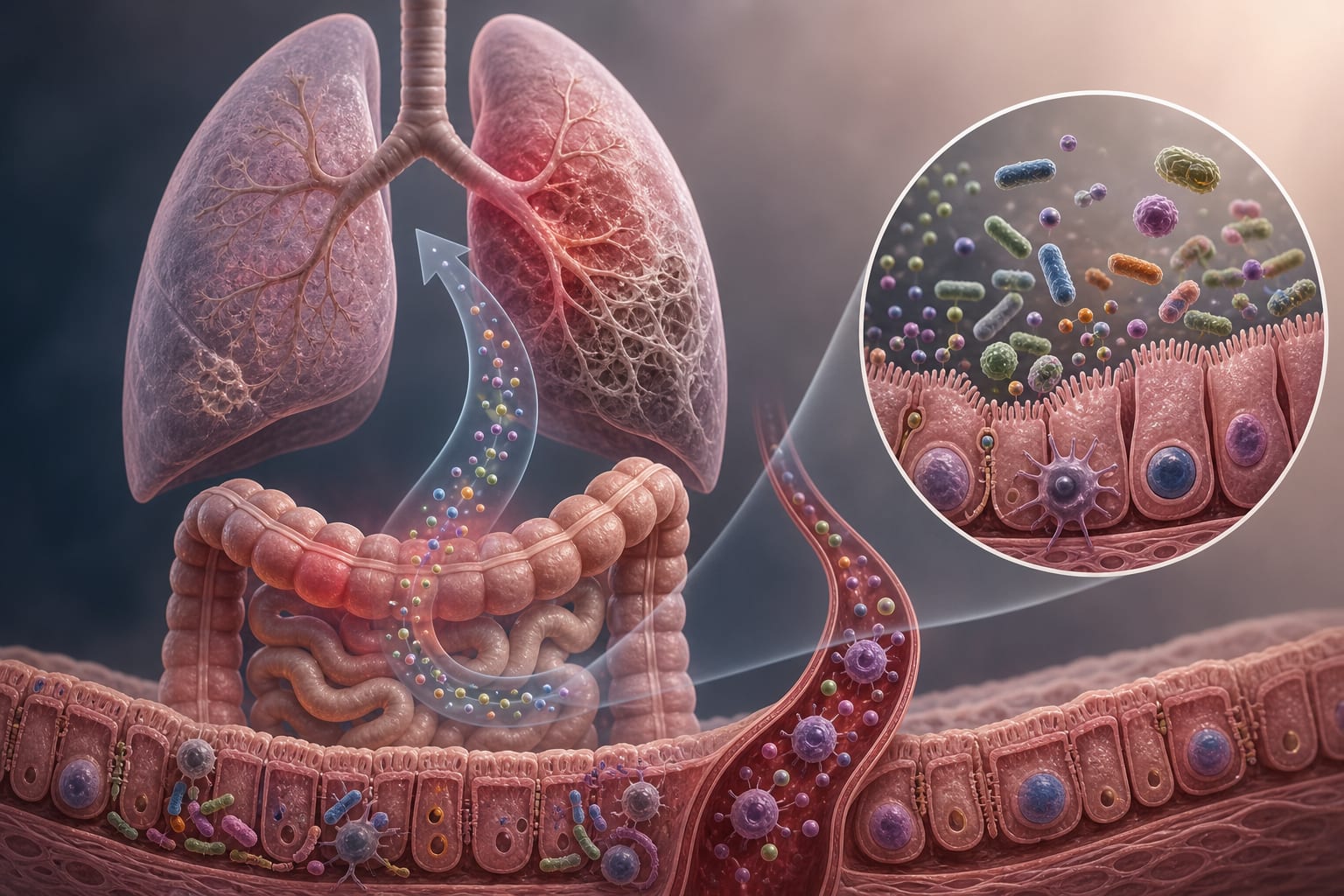
To explore the gut–lung microbiota axis in radiation-induced lung injury (RILI) and its implications for treatment strategies.
Approach:
Review of Evidence: Synthesized evidence from preclinical models, clinical cohorts (N = 52–89), and randomized controlled trials (RCTs) regarding the gut–lung microbiota axis in RILI.
Key Findings:
Radiotherapy induces gut dysbiosis, barrier breakdown, and metabolite changes, promoting inflammation and fibrosis via pathways such as TLR4/NF-κB and TGF-β/Smad.
Lower gut microbiota stability is associated with an increased risk of grade ≥2 radiation pneumonitis (RP) in non-small cell lung cancer cohorts.
Higher baseline Faecalibacterium abundance may confer protection against RP.
Mechanisms involve lipopolysaccharide translocation, IL-25/S1P-driven ILC2 migration, and Treg/Th17 imbalance.
Artificial intelligence models predict RP with 75% accuracy.
Preliminary pilot studies suggest potential interventions, including gut microbiota monitoring and SCFA supplementation.
Interpretation:
Causality between gut microbiota changes and RILI remains unproven due to confounding factors such as antibiotic use, as noted in the source.
Limitations:
Inter-species microbial variations hinder translation of findings.
Lung microbiota shifts are still an emerging area of study.
Current evidence is largely associative and requires further validation through large-scale RCTs.
Conclusion:
Future trials should account for confounding factors and explore the integration of immunotherapy and proton therapy to clarify gut–lung interactions.
Dana-Farber Cancer Institute's Dr. Jennifer Ligibel shared updated results from the BWEL study showing a weight loss intervention led to significantly better physical function, global physical and mental health, and symptom in patients with early breast cancer.