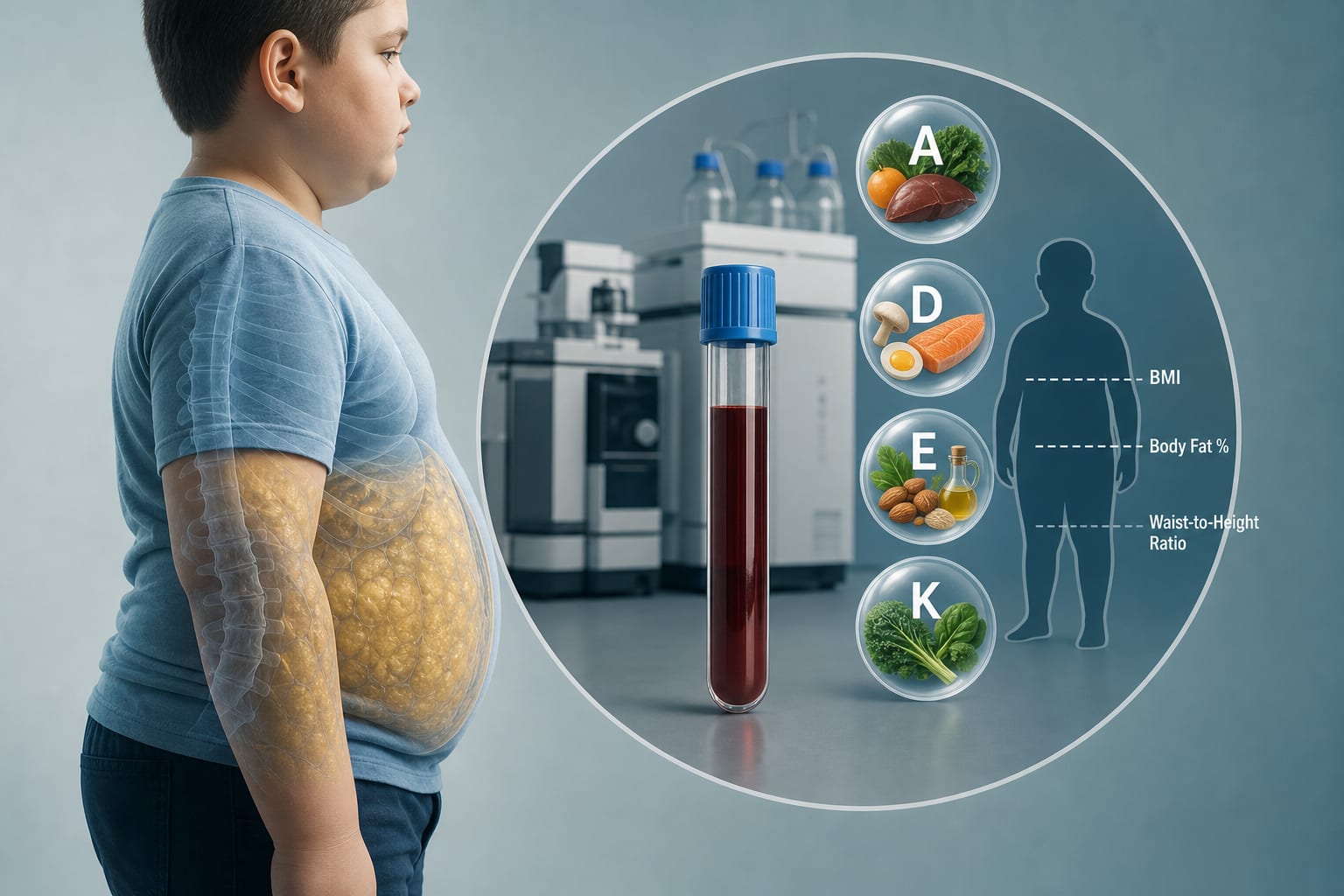
To examine the associations between serum levels of fat-soluble vitamins (A, D, E, and K) and obesity-related indicators in children, highlighting the significance of addressing vitamin deficiencies in combating childhood obesity.
Key Findings:
Vitamin D deficiency was significantly more prevalent in the obese group (62.50% vs. 28.85%, P < 0.001).
Vitamin D deficiency was associated with obesity in children aged 6–11 years (OR = 3.329, 95% CI: 1.618–6.854) and adolescents aged 11–17 years (OR = 4.890, 95% CI: 2.505–9.542).
Interpretation:
The study highlights a substantial association between fat-soluble vitamin deficiency, particularly vitamin D, and obesity in children, suggesting that vitamin status may be an important factor in obesity risk and public health interventions.
Limitations:
The study is cross-sectional, limiting causal inferences and potentially introducing biases.
The sample size may not be representative of all children in different regions.
Conclusion:
The findings underscore the need for further research on the role of fat-soluble vitamins in childhood obesity and the importance of specific nutritional interventions.