Hyperacute Interleukin-1β Production and Neutrophil Extracellular Trap Formation in the Cerebral Circulation of Stroke Patients with Large Vessel Occlusion - Summary - MDSpire
Coming Soon: Introducing MDSpire News. Learn more
Conexiant’s news site is now MDSpire News. Learn more

Rapid Release of Interleukin-1β and Neutrophil Extracellular Trap Formation in the Cerebral Circulation of Patients with Large Vessel Occlusion Stroke

  • By

  • Justine Münsterberg

  • Caspar Brekenfeld

  • Hanna Englert

  • Marius Piepke

  • Regine J. Dress

  • Martin Oertel

  • Tina Fischer

  • Romy Hackbusch

  • Mingming Zha

  • Haodi Cai

  • Christian Casar

  • Ines S. Schädlich

  • Leo Winter

  • Alina Jander

  • Karoline Degenhardt

  • Maxim Bester

  • Fabian Flottmann

  • Uta Hanning

  • Brigitte Holst

  • Anna Worthman

  • Johanna Hiefner

  • Berenike Rutz

  • Eckhard Schlemm

  • Götz Thomalla

  • Bettina H. Clausen

  • Ann M. Stowe

  • Immo Prinz

  • Thiruma V. Arumugam

  • Markus Glatzel

  • Thomas Renné

  • Jens Fiehler

  • Eva Tolosa

  • Tim Magnus

  • Mathias Gelderblom

  • June 22, 2026

Share

Objective:

To investigate the hyperacute detrimental postischemic immune response in patients with large vessel occlusion (LVO) using a translational liquid biopsy approach.

Approach:
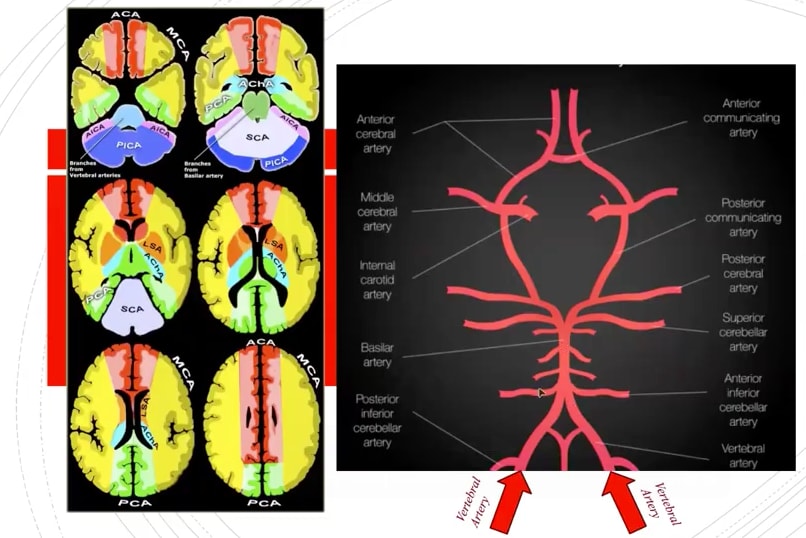
  • Study Design: Prospective enrollment of 54 patients with acute ischemic stroke caused by LVO of the middle cerebral artery within 24 hours after stroke onset, undergoing mechanical thrombectomy.
  • Sample Acquisition: Blood samples were collected from ischemic and nonischemic sites during mechanical thrombectomy to analyze immune responses.
  • Plasma Preparation: Whole blood was processed for plasma isolation and frozen for analysis.
  • Single-Cell RNA Sequencing: Peripheral blood mononuclear cells were isolated and sequenced to characterize immune cell responses.
  • Computational Analysis: Data analysis was performed using Seurat and SingleR for cell type annotation.
Key Findings:
  • Local production of IL-1β and NET formation are key hallmarks of the hyperacute intravascular immune reaction in stroke.
  • Immune cells from the intravascular space contribute to the postischemic immune response within the first few hours after stroke onset.
Interpretation:

The study provides insights into the hyperacute immune response in the human brain during LVO stroke.

Limitations:
  • The study is limited to a specific patient population undergoing mechanical thrombectomy.
  • Findings may not be generalizable to all ischemic stroke patients.
Conclusion:

The findings underscore the potential for targeted immunotherapies as an additive treatment to established recanalization procedures in patients with large infarct cores.

Original Source(s)

Related Content