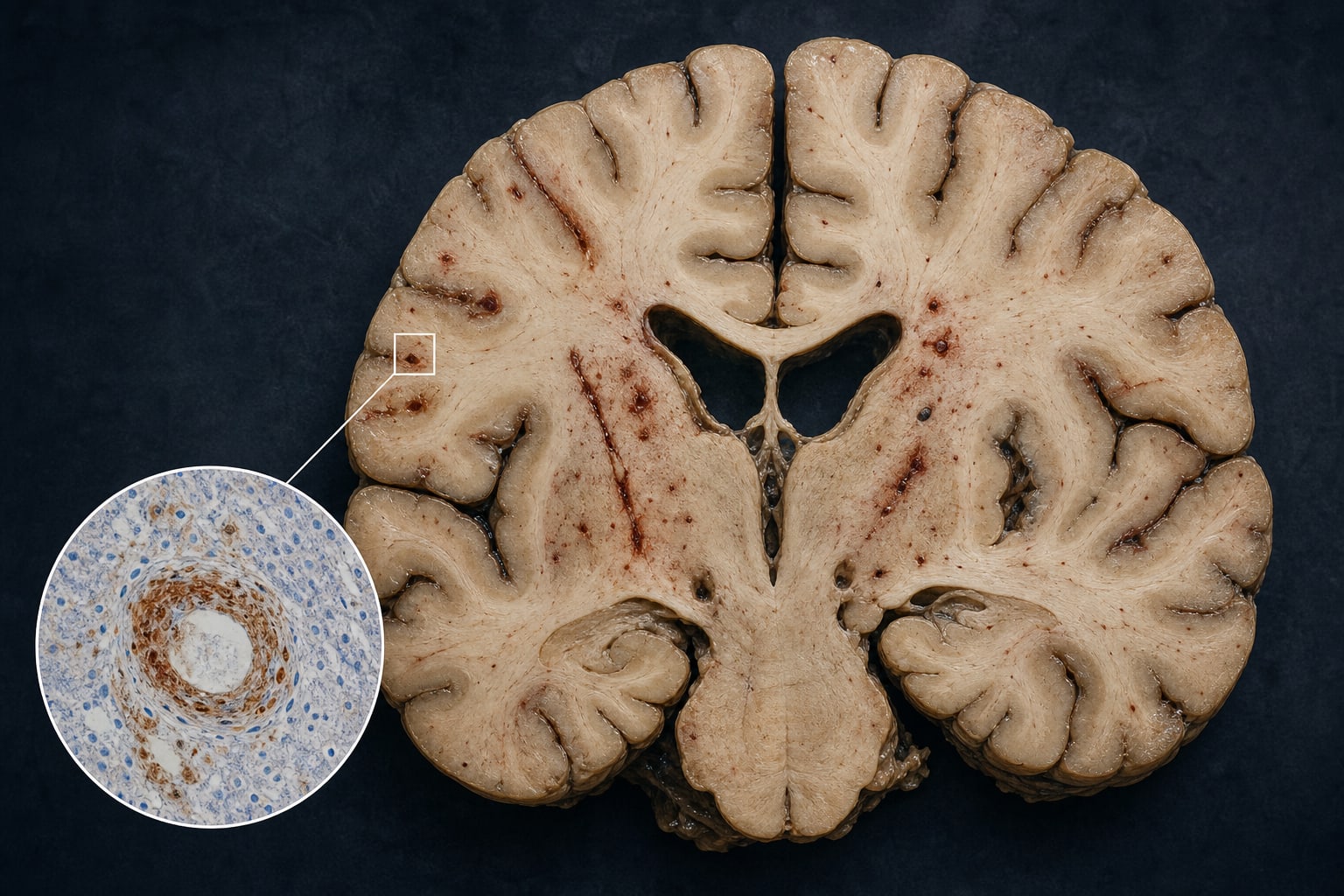
To describe the neuropathological changes associated with iatrogenic Alzheimer disease (iAD) in patients treated with cadaveric pituitary-derived human growth hormone (c-hGH), highlighting the significance of iatrogenic factors.
Key Findings:
Iatrogenic cerebral amyloid angiopathy (iCAA) and parenchymal Aβ pathology have been reported in patients treated with c-hGH, indicating significant clinical implications.
A compelling association exists between specific c-hGH preparations containing Aβ seeding activity and early-onset AD, suggesting a need for caution in treatment protocols.
Limited neuropathology showed only mild tauopathy in previously reported cases, raising questions about the full spectrum of iAD pathology.
Interpretation:
The findings suggest that iAD may represent a novel condition distinct from sporadic and inherited AD, potentially linked to specific medical treatments, warranting further investigation into its unique characteristics.
Limitations:
Limited neuropathological data available in previous reports, which may affect the robustness of conclusions drawn.
Challenges in establishing direct evidence of Aβ transmissibility in humans, which complicates the understanding of iAD.
Conclusion:
The study highlights the need for further investigation into iAD and its distinct characteristics compared to other forms of Alzheimer's disease, emphasizing the urgency for additional research.