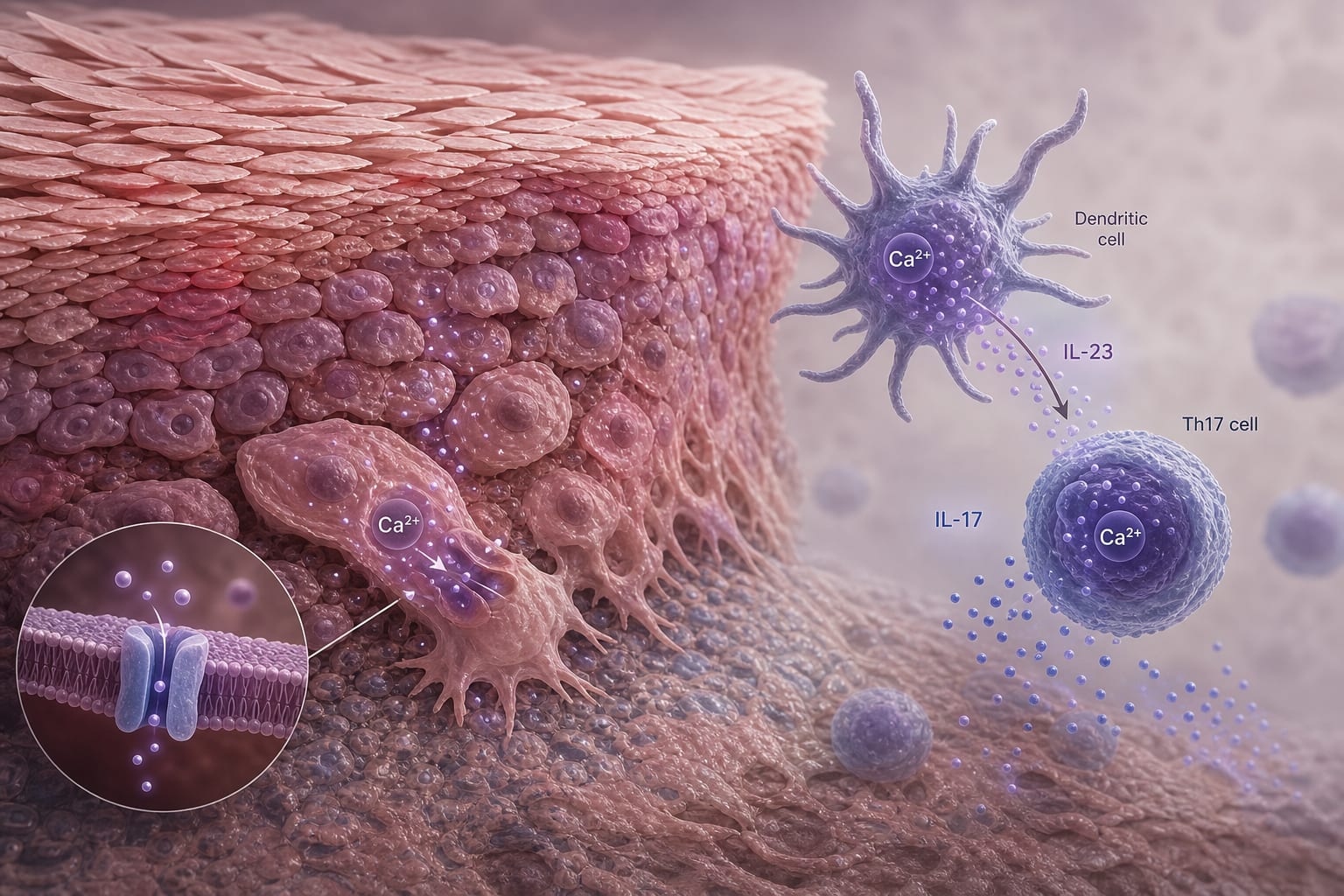
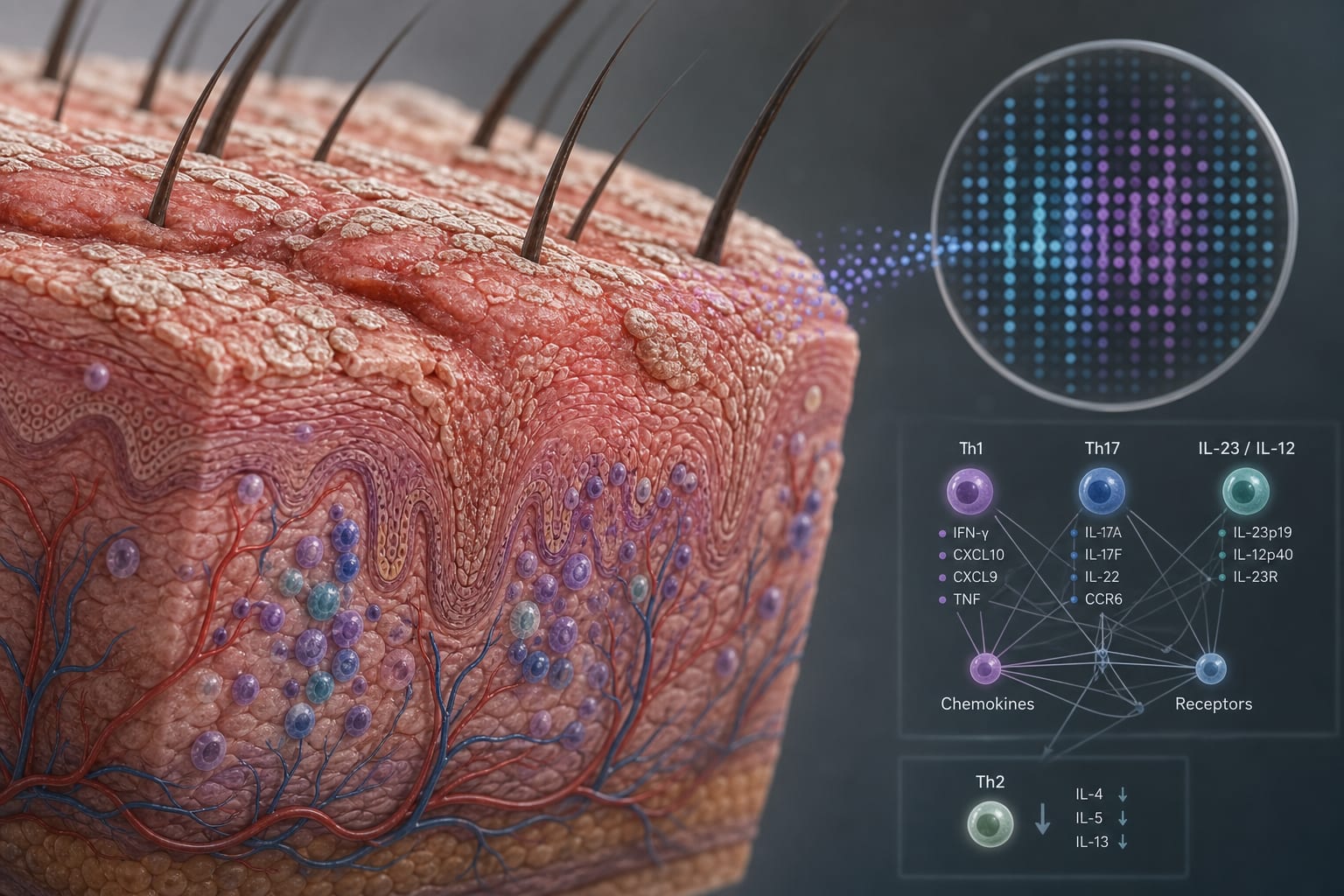
To summarize the mechanistic roles of calcium signaling dysregulation in psoriatic keratinocytes and immune effector cells.
Approach:
Pathological Features of Psoriasis: Describes the interplay between keratinocyte proliferation, differentiation, and immune dysregulation, highlighting the IL-23/IL-17 inflammatory axis as a key driver of the disease.
Calcium Signaling in Psoriasis: Explains the dual regulatory roles of calcium ions in keratinocyte differentiation and immune cell activation, emphasizing the context-dependent outcomes of calcium signaling.
SOCE Pathway: Details the significance of store-operated calcium entry (SOCE) in the psoriatic immune microenvironment, governing effector functions across various immune cells.
Core Thesis: Proposes the concept of compartment-specific bidirectional calcium dysregulation, where impaired calcium signaling in keratinocytes coexists with hyperactive signaling in immune cells.
Key Findings:
Calcium signaling is critical for keratinocyte differentiation and immune cell activation.
Dysregulation of calcium signaling contributes to the pathogenesis of psoriasis.
SOCE is a central mechanism for calcium influx in immune cells, influencing their functions.
A bidirectional calcium dysregulation pattern exists in psoriasis, affecting both keratinocytes and immune cells.
Interpretation:
Understanding calcium signaling dynamics may provide insights into psoriasis pathogenesis.
Limitations:
The review may not cover all aspects of calcium signaling in psoriasis.
Further research is needed to fully elucidate the therapeutic potential of targeting calcium signaling.
Conclusion:
This review reappraises the pathogenesis of psoriasis from the perspective of calcium signaling.
Application of newly proposed GRAPPA and EULAR criteria in a longitudinal cohort identified progressively smaller groups of patients with early psoriatic arthritis who experienced persistently worse patient-reported outcomes.