SARS-CoV-2-host and interactions: the dual roles of E3 ubiquitin ligases and ubiquitin-like modification mechanisms in viral infection - Summary - MDSpire
Conexiant’s news site is now MDSpire News. Learn more
Advertisement
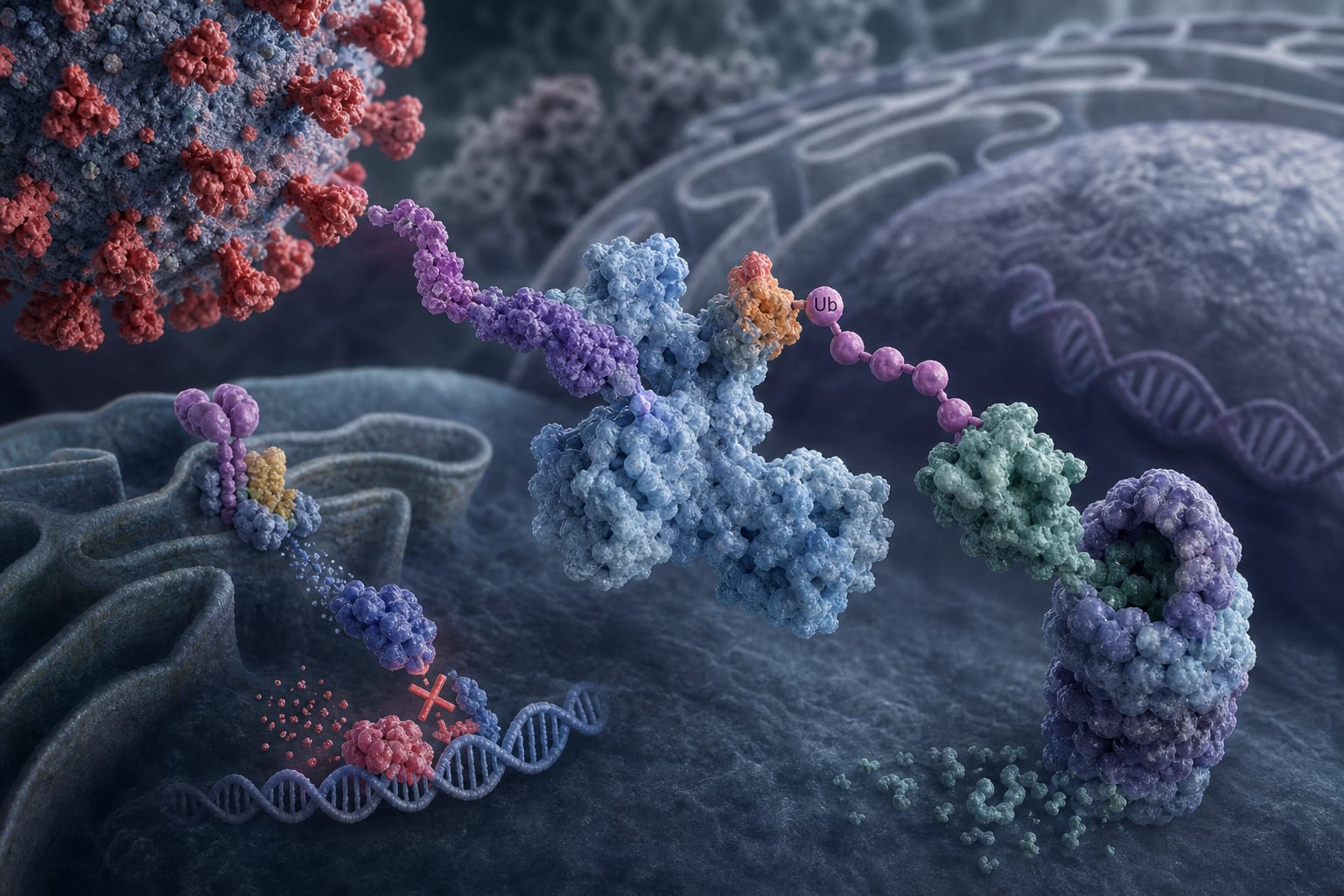
Interactions Between SARS-CoV-2 and Host Cells: The Critical Functions of E3 Ubiquitin Ligases and Ubiquitin-Like Modification Pathways in Viral Pathogenesis
To summarize the roles of E3 ubiquitin ligases in SARS-CoV-2 infection and discuss their mechanisms at the virus-host interface, highlighting their significance in viral pathogenesis.
Approach:
Key Findings:
E3 ubiquitin ligases are crucial for both antiviral defense and viral immune escape, with specific examples.
SARS-CoV-2 employs host E3 ligases to inhibit immune responses and promote viral replication, illustrating the mechanisms involved.
Differential expression of E3 ligases in various tissues affects COVID-19 severity and symptoms, with examples of specific ligases.
Interpretation:
The interplay between antiviral and proviral E3 ligases is critical in the pathogenesis of SARS-CoV-2, suggesting that targeting these pathways may offer new therapeutic strategies, which should be elaborated.
Limitations:
Current research primarily focuses on binary interactions between individual E3 ligases and viral proteins, with a call for more systemic studies.
The complexity of E3 ligase networks and their dual roles complicate therapeutic targeting, suggesting the need for innovative approaches.
Conclusion:
Understanding E3 ubiquitin ligases' roles in SARS-CoV-2 infection could lead to innovative antiviral therapies, emphasizing the importance of future research in this area.
Nearly 90% of patients who met algorithmic criteria for postacute sequelae of SARS-CoV-2 infection had at least 1 chronic or potentially chronic condition requiring ongoing clinical management.