Steroid-resistant bilateral facial nerve palsies, ophthalmoparesis, and multilevel thoracic radiculopathy as immune effector cell-associated late-onset neurotoxicity after cilta-cel CAR-T therapy: a case report and review of similar cases - Summary - MDSpire
Advertisement
Steroid-resistant bilateral facial nerve palsies, ophthalmoparesis, and multilevel thoracic radiculopathy as immune effector cell-associated late-onset neurotoxicity after cilta-cel CAR-T therapy: a case report and review of similar cases
To present a case of late-onset neurotoxicity following CAR-T therapy and review similar instances of immune effector cell-associated nerve palsies.
Approach:
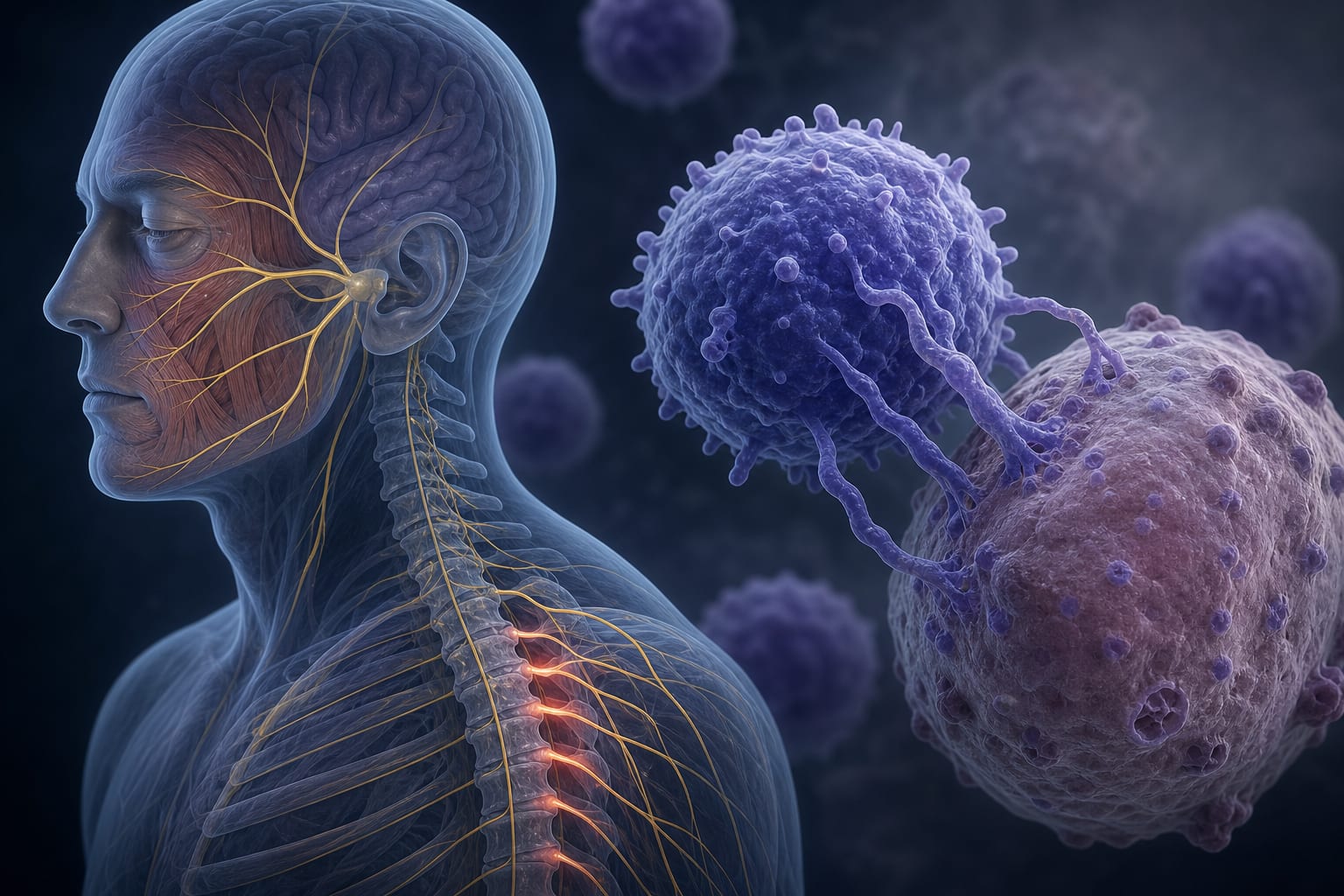
Case Presentation: A patient with refractory multiple myeloma developed diplopia, bilateral upward gaze limitation, abducens palsy, bilateral facial nerve palsy, and thoracic sensory radiculopathy post-CAR-T therapy, suspected to be delayed immune effector cell-associated nerve palsies (IEC-NPs).
Treatment Regimen: The patient was treated with intrathecal methotrexate and systemic cyclophosphamide after steroid resistance, leading to acute symptomatic improvement.
Key Findings:
The patient exhibited diplopia, bilateral upward gaze limitation, abducens palsy, bilateral facial nerve palsy, and thoracic sensory radiculopathy after CAR-T therapy.
Intrathecal methotrexate and systemic cyclophosphamide resulted in acute symptomatic improvement.
Interpretation:
This case contributes to the understanding of IEC-NPs and highlights treatment options for steroid-resistant cases.
Limitations:
The case is a single patient report, limiting generalizability to broader populations.
Long-term outcomes and potential recurrence of symptoms were not addressed in this report.
Conclusion:
The case illustrates the complexity of managing late-onset neurotoxicities following CAR-T therapy and suggests alternative treatment strategies for resistant cases.
Harold Burstein, MD, PhD, and Ana C. Garrido-Castro, MD discuss results from the Pumitamig + DB-1305/BNT325 trial, which were presented at the 2026 ESMO Breast Cancer Congress.