Posterior Reversible Encephalopathy Syndrome in a Military Service Member: A Rare Neurologic Sequela of Rhabdomyolysis - Summary - MDSpire

Acute Neurological Complications of Rhabdomyolysis: A Case of Posterior Reversible Encephalopathy Syndrome in a Military Personnel

  • July 7, 2026

Share

Objective:

To present a case of posterior reversible encephalopathy syndrome (PRES) as a rare neurological complication of rhabdomyolysis in a military service member.

Approach:
  • Case Presentation: A 19-year-old active-duty service member developed acute neurologic symptoms while being treated for rhabdomyolysis after intense physical training.
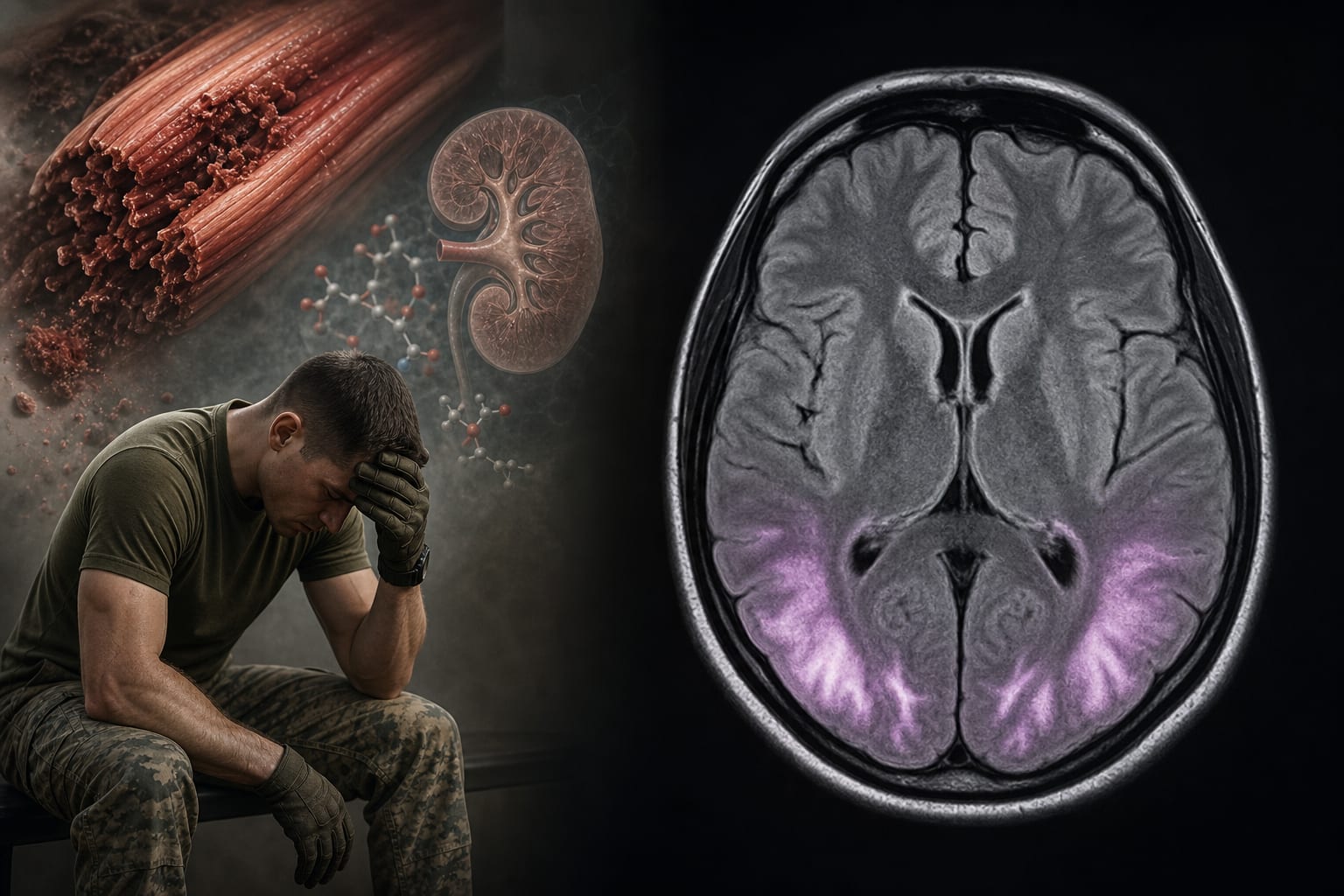
  • Clinical Evaluation: The patient exhibited severe headaches, blurred vision, and elevated blood pressure, leading to a diagnosis of PRES confirmed by MRI.
  • Management: The patient was treated with IV fluids, diuretics, and antihypertensive medications, resulting in symptom resolution and improved renal function.
Key Findings:
  • PRES can occur as a rare complication of rhabdomyolysis, particularly in military personnel due to high physical exertion.
  • The patient's symptoms included severe headaches, vision changes, and confusion, which were consistent with PRES.
  • MRI findings confirmed the diagnosis of PRES, showing bicortical posterior predominant diffusion restriction.
Interpretation:

Limitations:
  • The case report is based on a single patient, which may limit the generalizability of the findings.
  • The mechanisms of PRES in the context of rhabdomyolysis are not fully understood.
Conclusion:

This case highlights the importance of recognizing PRES as a potential complication of rhabdomyolysis in active-duty military personnel.

Original Source(s)

Related Content