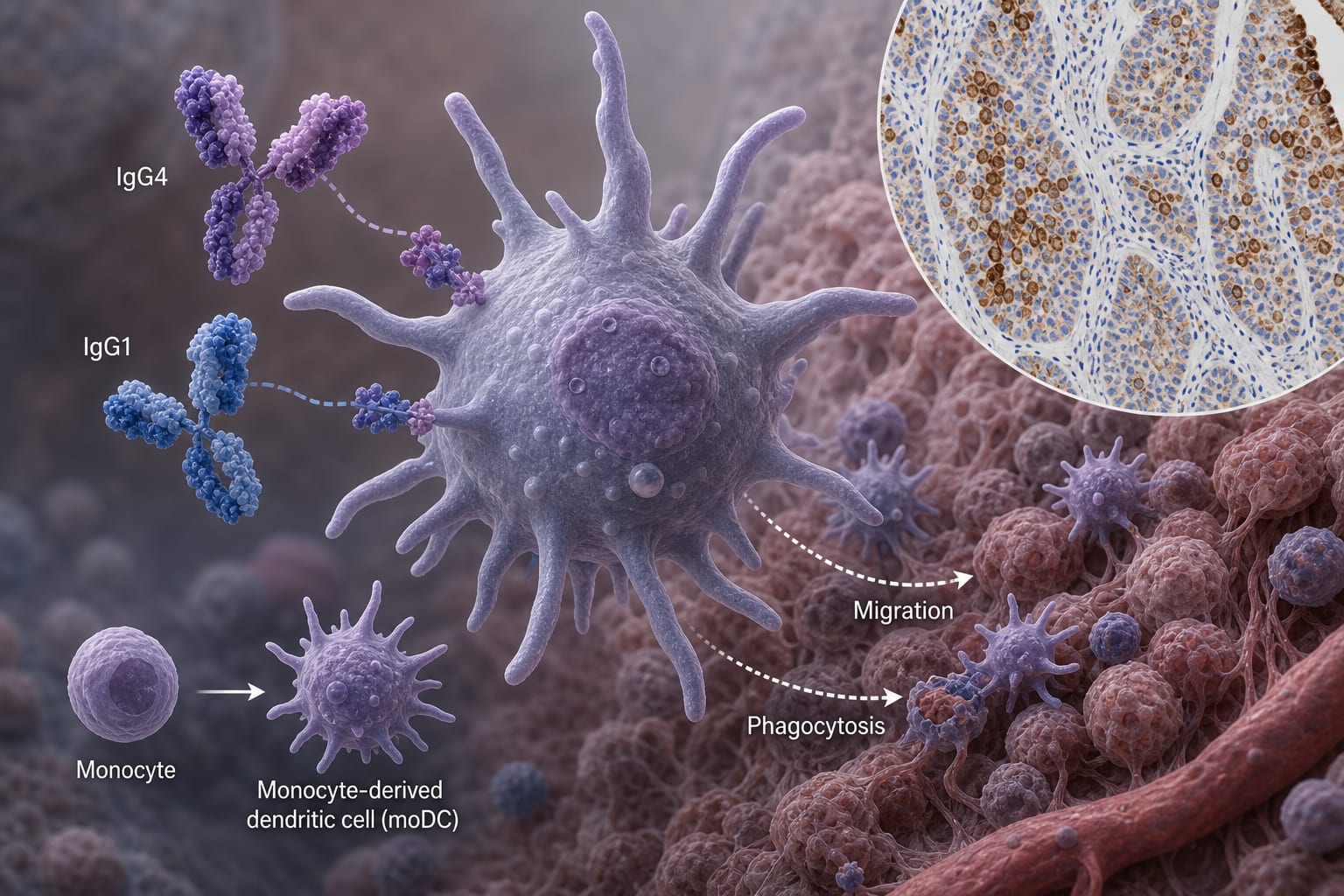
To characterize the structure of IgG4 and evaluate its effects on monocyte-derived dendritic cells (moDCs) in esophageal squamous cell carcinoma (ESCC), highlighting the significance of these effects in the context of tumor immunology.
Approach:
Key Findings:
Higher densities of IgG4⁺ and CD11c⁺ cells were found in ESCC tissues compared to adjacent normal tissues, suggesting a potential role in tumor progression.
Native IgG4 exhibited distinct glycosylation profiles, predominantly high-mannose glycosylation, which may influence its function.
IgG4 significantly promoted the migration and phagocytic capacity of moDCs compared to IgG1, indicating its potential role in immune modulation.
IgG4 purified from both IVIg and patient serum had comparable effects on moDC differentiation, suggesting consistency in its functional properties.
Interpretation:
IgG4-associated glycosylation features may influence the phenotypic and functional parameters of moDCs, indicating a need for further validation to understand their implications in ESCC.
Limitations:
The study is exploratory and requires validation in larger cohorts to confirm findings.
The underlying mechanisms and tissue-level relevance of findings need further investigation to establish clinical significance.
Conclusion:
The study provides insights into the role of IgG4 in modulating moDC activity in ESCC, highlighting the need for more comprehensive functional studies to explore its potential therapeutic implications.