Circulating Methylated SEPT9 for Detection of Hepatocellular Carcinoma in Cirrhosis - Summary - MDSpire
Coming Soon: Introducing MDSpire News. Learn more
Conexiant’s news site is now MDSpire News. Learn more

Detection of Hepatocellular Carcinoma in Cirrhotic Patients Using Circulating Methylated SEPT9 Markers

  • By

  • Abderrahim Oussalah

  • Maël Silva Rodriguez

  • Guillaume Conroy

  • Mouni Bensenane

  • Hélène Rousseau

  • Ahmet Ayav

  • Jean-Louis Guéant

  • Houda Camara

  • Cédric Baumann

  • Valérie Laurent

  • Jean-Pierre Bronowicki

  • SEPT9_CROSS Study Group

  • Vincent Haghnejad

  • Claire Geist

  • Raphaelle Riffault

  • Abdelbasset Nani

  • Julien Levy

  • Jonas Callet

  • September 1, 2026

Share

Objective:

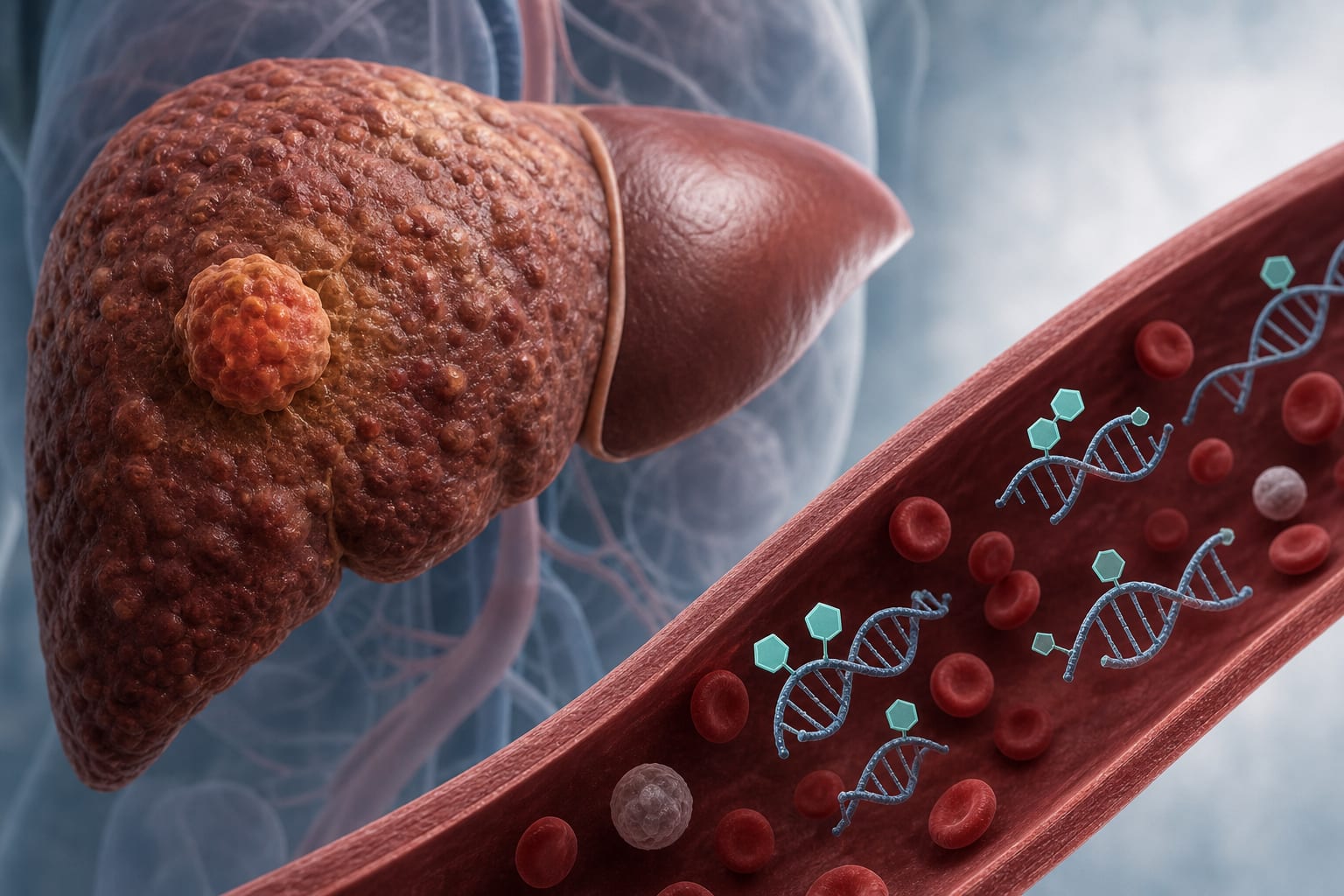
To assess the diagnostic accuracy of plasma methylated SEPT9 versus AFP for HCC detection among patients with cirrhosis and to determine whether methylated SEPT9 could enhance or complement AFP.

Approach:
  • Study Design: A prospective, blinded, cross-sectional diagnostic investigation conducted at University Hospital of Nancy and Metz-Thionville Hospital Center, France.
  • Participants: Patients with cirrhosis receiving routine HCC surveillance were enrolled. Major exclusions included previously treated HCC and other malignancies.
  • Diagnostic Methods: Methylated SEPT9 was measured using the Epi proColon 2.0 CE test. HCC diagnosis was based on AASLD and EASL criteria.
  • Analysis: Nine algorithms were examined, including single and combined biomarker approaches to favor sensitivity or specificity.
Key Findings:
  • Methylated SEPT9 showed promising diagnostic accuracy for detecting HCC in cirrhotic patients compared to AFP.
  • AFP alone had a sensitivity of 49% and specificity of 88%.
  • The study aimed to determine if methylated SEPT9 could improve detection rates compared to AFP.
Limitations:
  • The study did not assess imaging modalities, focusing solely on biomarker performance.
  • Exclusion criteria may limit generalizability to all cirrhotic patients.

Original Source(s)

Related Content