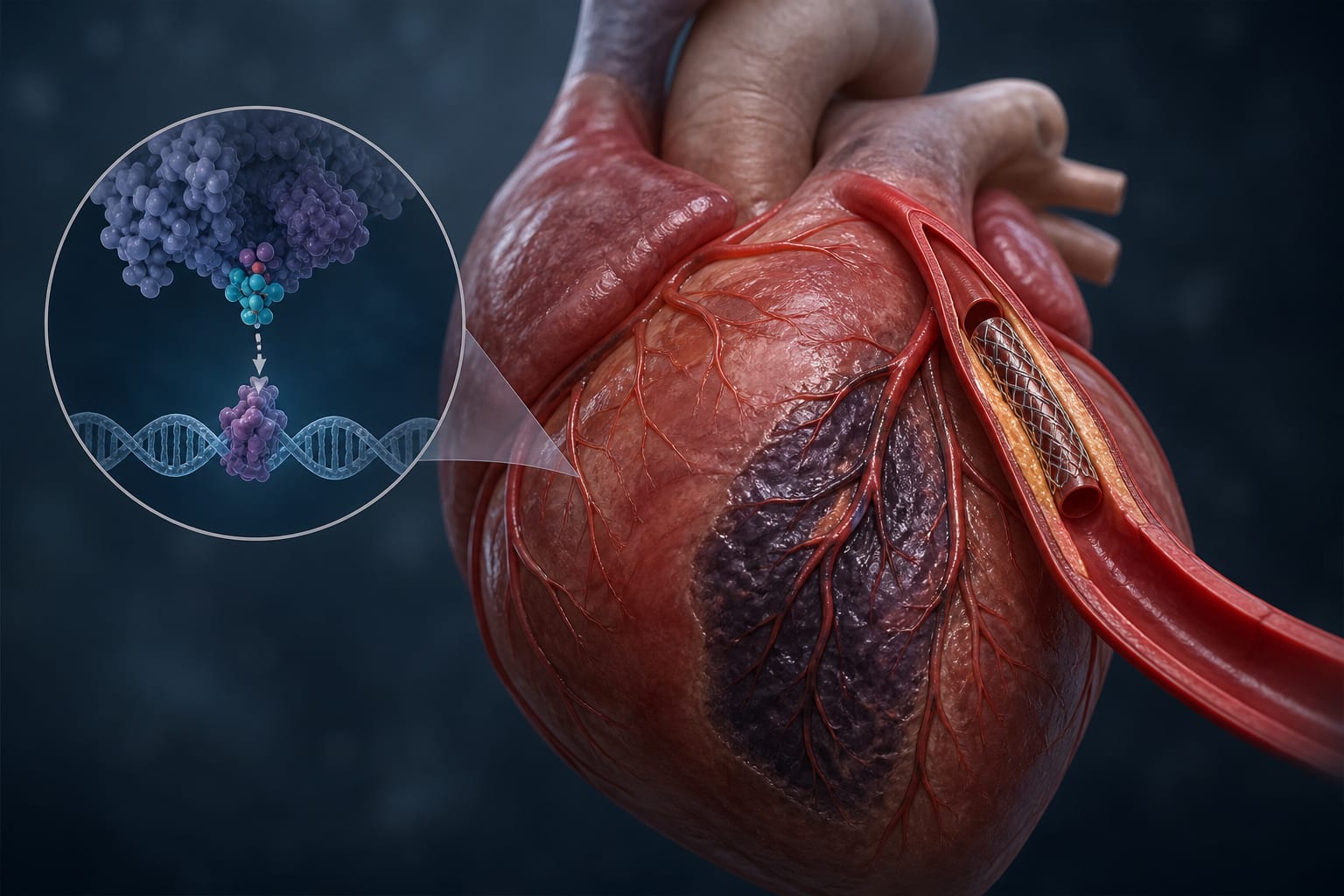
To assess whether starting roxadustat after primary PCI reduces infarct size and improves functional outcomes in patients with STEMI.
Approach:
Design and setting: Prospective, investigator-initiated, open-label randomized trial at Ruijin Hospital in Shanghai, China; enrollment ran from April 2021 through March 2024, with 1-year follow-up.
Participants and allocation: Eligible adults presenting within 12 hours of symptom onset and undergoing primary PCI were randomized 1:1 to roxadustat or standard care.
Intervention: Roxadustat was started within 2 hours after PCI at 100 mg three times weekly for 2 weeks. The control group received standard care without roxadustat.
Outcomes: The prespecified primary outcome was infarct size as a percentage of left ventricular volume, assessed by [68Ga]Ga-DOTA-FAPI-04 PET and MRI at a mean of 30 days. Secondary outcomes included cardiovascular events, myocardial injury markers, echocardiographic me…
Interpretation:
The provided article context describes the trial rationale and methods but does not report study results.
Limitations:
The supplied context does not include participant numbers enrolled, outcome estimates, or adverse-event results.
Conclusion:
The trial was designed to evaluate short-course roxadustat initiated soon after primary PCI; efficacy and safety findings cannot be summarized from the supplied context.
A VHA study across 11 vendors finds AI-generated primary care notes score lower than clinician-written notes, with the largest deficits in thoroughness, organization, and usefulness