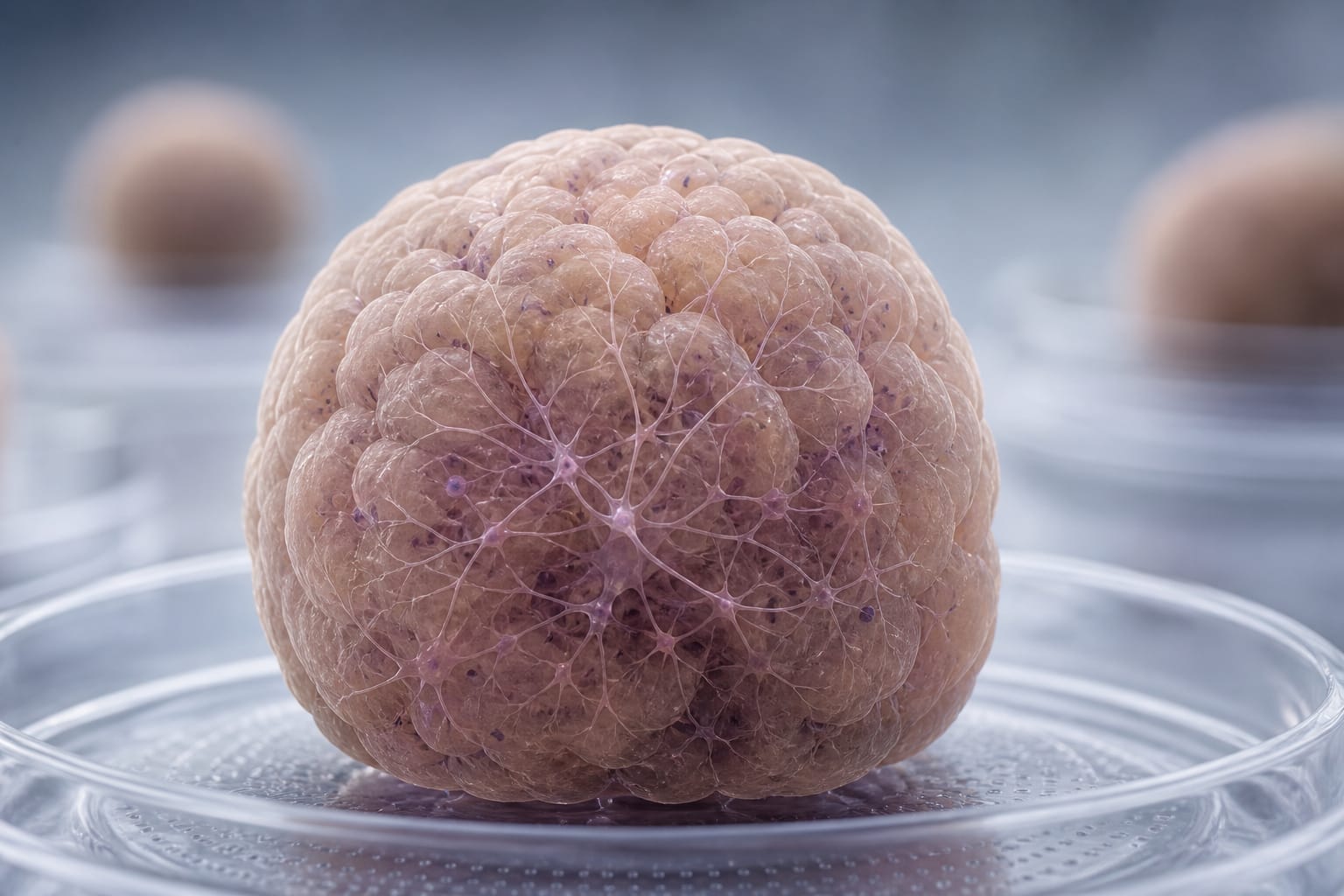
Maturation of Brain Organoids Influenced by a Realistic Developmental Timeline
-
August 19, 2026
Objective:
To investigate the maturation of brain organoids over an extended period, reflecting postnatal milestones, and their potential for studying neurodevelopmental disorders.
Approach:
- Research Methodology: Organoids were maintained for nearly six years, with assessments of gene expression, biological age, and structural characteristics at single-cell resolution.
- Transplantation Experiment: Neurons from older organoids were transplanted into younger ones to observe their behavior in a different developmental context.
Key Findings:
- Organoids exhibited characteristics of advanced brain development, reflecting postnatal milestones.
- The organoids developed at a realistic pace, with molecular and chronological ages converging.
- Functional maturation was demonstrated through sustained electrical signals for at least two years, indicating interconnections among neurons.
Interpretation:
The organoids possess a cell-intrinsic developmental clock that mirrors human brain development, allowing for the study of neurodevelopmental processes, as noted by the researchers.
Limitations:
- The study primarily focuses on cerebral cortex organoids, which may not fully represent other brain regions, and long-term effects and the full range of developmental complexities are still to be explored.
Conclusion:
The findings enhance understanding of organoid capabilities and open avenues for future research on brain maturation and developmental disorders, including increasing anatomical complexity and simulating developmental disorders.
Sources:
Based on findings from:
Brain organoid maturation is driven by a lifelike developmental clock
National Institutes Of Health (Nih), 2026.
https://www.nih.gov/news-events/news-releases/brain-organoid-maturation-driven-lifelike-developmental-clock
This content is an AI-generated, fully rewritten summary based on a published scholarly article. It does not reproduce the original text and is not a substitute for the original publication. Readers are encouraged to consult the source for full context, data, and methodology.