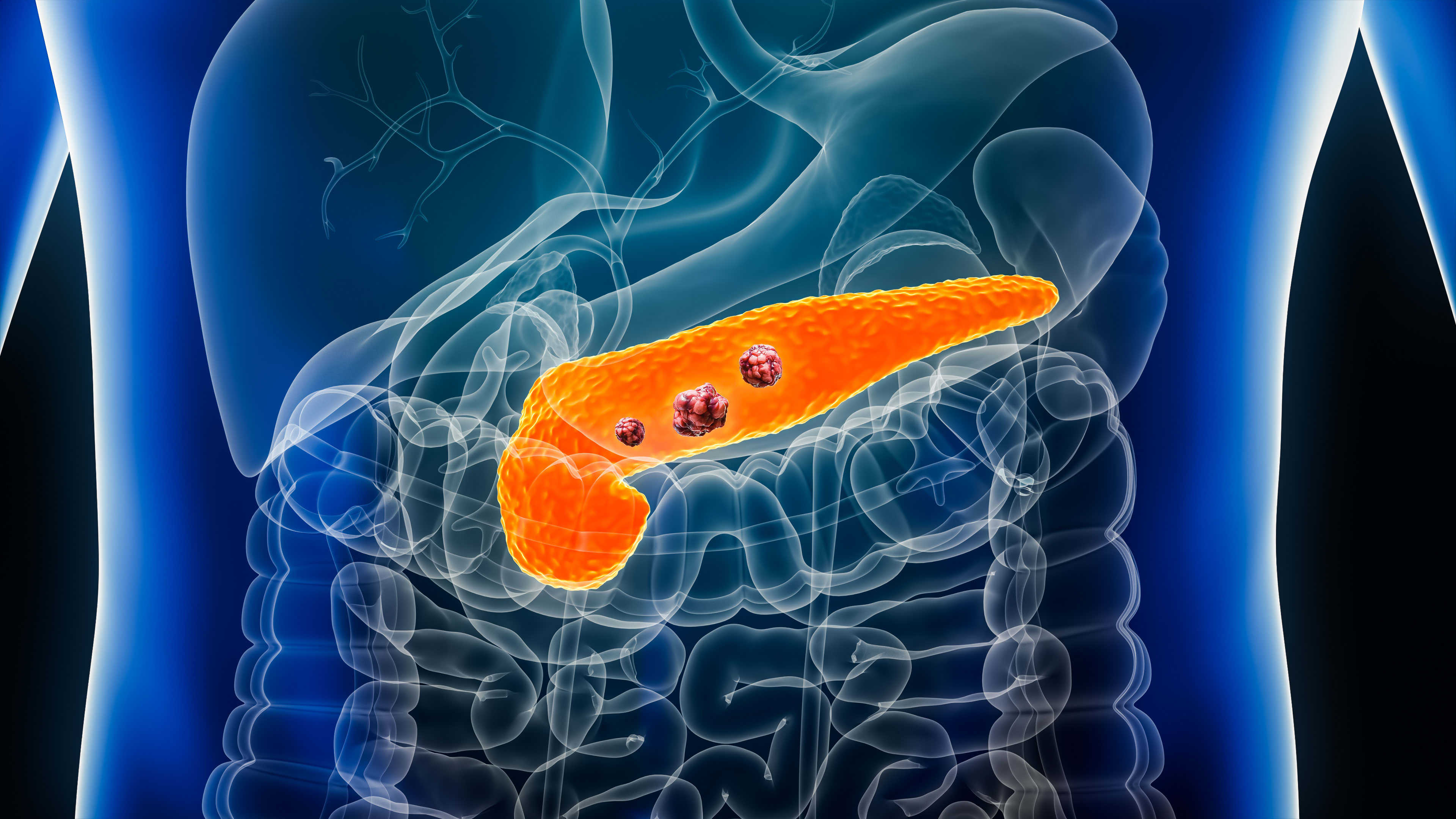
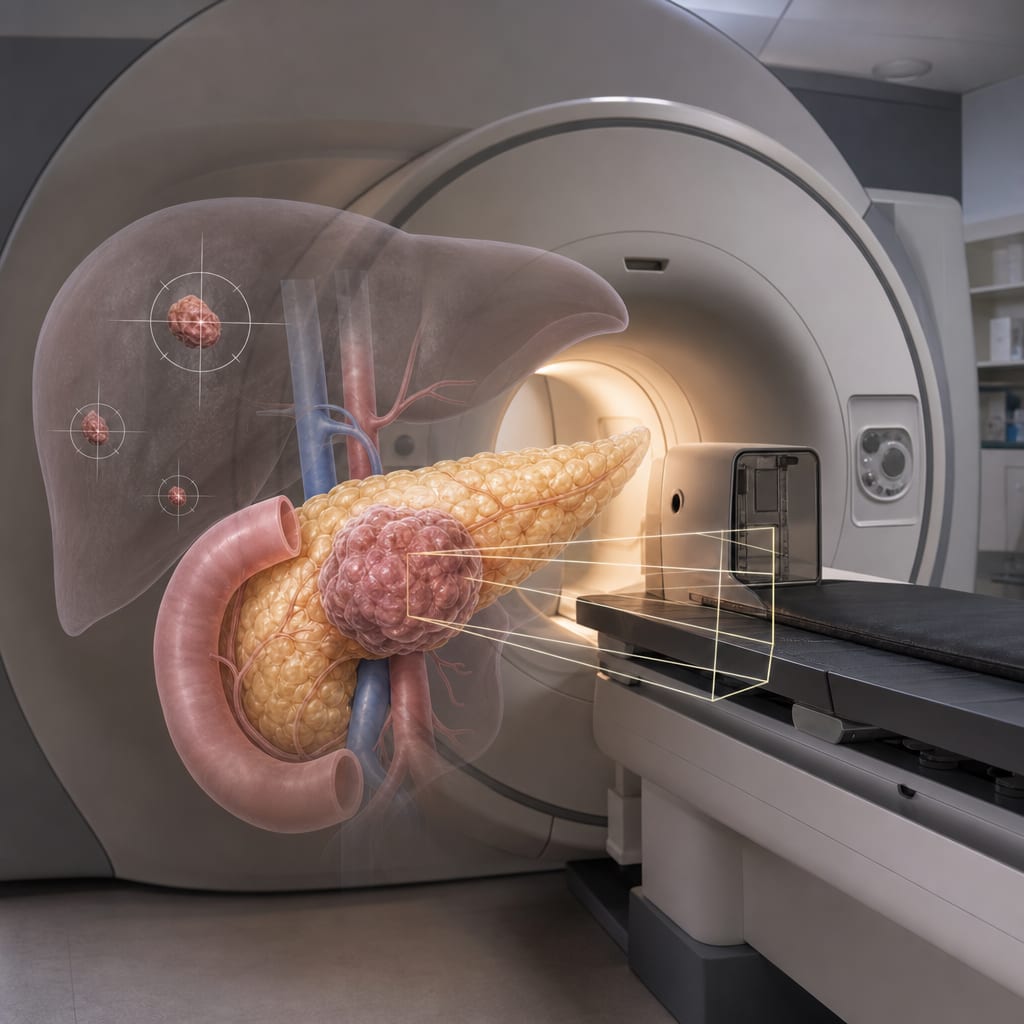
To evaluate the efficacy of a 47Sc-labeled affibody targeting PDGFRβ for SPECT imaging and radiotherapy in pancreatic cancer, highlighting its potential to improve patient outcomes.
Key Findings:
PDGFRβ is highly expressed in CAFs of pancreatic cancer, making it a suitable target for imaging and therapy.
47Sc has favorable properties for SPECT imaging and radiotherapy, including a suitable half-life and energy emissions.
The affibody showed high affinity and specificity for PDGFRβ, enhancing its potential for targeted imaging and treatment, with binding affinities comparable to existing agents.
Interpretation:
The study highlights the potential of using 47Sc-labeled affibodies for improved imaging and therapeutic strategies in pancreatic cancer, leveraging the unique characteristics of the tumor microenvironment to enhance patient outcomes.
Limitations:
The study primarily focuses on in vitro and preclinical models, which may not fully replicate human responses; further research is needed to bridge this gap.
Further clinical trials are needed to validate the safety and efficacy of the 47Sc-labeled affibody in patients, with a focus on long-term outcomes.
Conclusion:
The 47Sc-labeled PDGFRβ-targeting affibody shows promise for enhancing the diagnosis and treatment of pancreatic cancer, warranting further investigation in clinical settings to confirm its efficacy and safety.
In the phase 3 PANOVA-3 trial, adding Tumor Treating Fields therapy to gemcitabine and nab-paclitaxel was associated with improved overall survival and delayed pain progression in adults with locally advanced pancreatic cancer.