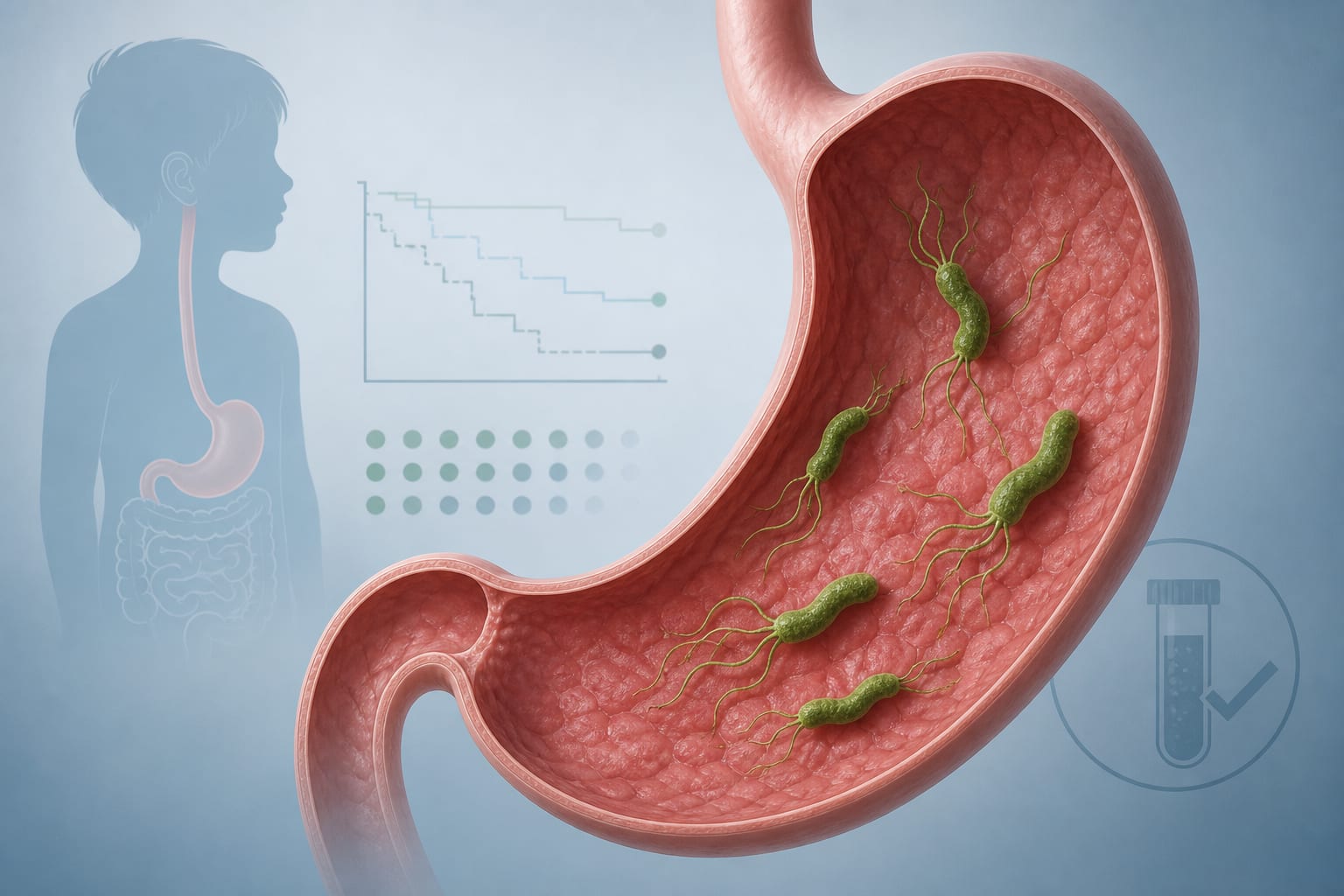
Commentary: Assessment of treatment effectiveness, follow-up results, and recurrence patterns in children with Helicobacter pylori infection - Summary - MDSpire
To examine the recurrence of Helicobacter pylori infection in children following eradication therapy and the implications of interpreting recurrence data based on the study's findings.
Approach:
Definition of Recurrence: Recurrence is defined as H. pylori reappearing after an initially negative post-treatment test, with recrudescence and reinfection as underlying biological mechanisms.
Study Design Considerations: The study evaluated eradication only four weeks post-treatment, which may lead to false-negative results and misinterpretation of recurrence.
Testing Protocols: Proper preparation for UBT is crucial, including avoiding certain medications prior to testing, which was not fully addressed in the study.
Strain Typing: The absence of bacterial strain typing limits the ability to distinguish between recrudescence and reinfection.
Key Findings:
14 out of 102 children (13.7%) tested positive for H. pylori after being initially considered successfully eradicated, according to the study.
Recurrence is linked to environmental exposure and household transmission among younger children, as suggested by the study.
The study's findings should be treated as hypotheses due to methodological limitations outlined in the commentary.
Interpretation:
The interpretation of recurrence must differentiate between biological mechanisms to avoid mislabeling treatment outcomes, which could affect future research and clinical practices, as highlighted in the study.
Limitations:
The study did not differentiate between recrudescence and reinfection.
Initial testing was conducted too early, potentially leading to false negatives.
Lack of detailed medication exposure information prior to UBT.
Conclusion:
Understanding the distinction between recurrence and its underlying mechanisms is essential for accurate assessment of treatment efficacy and epidemiological implications.