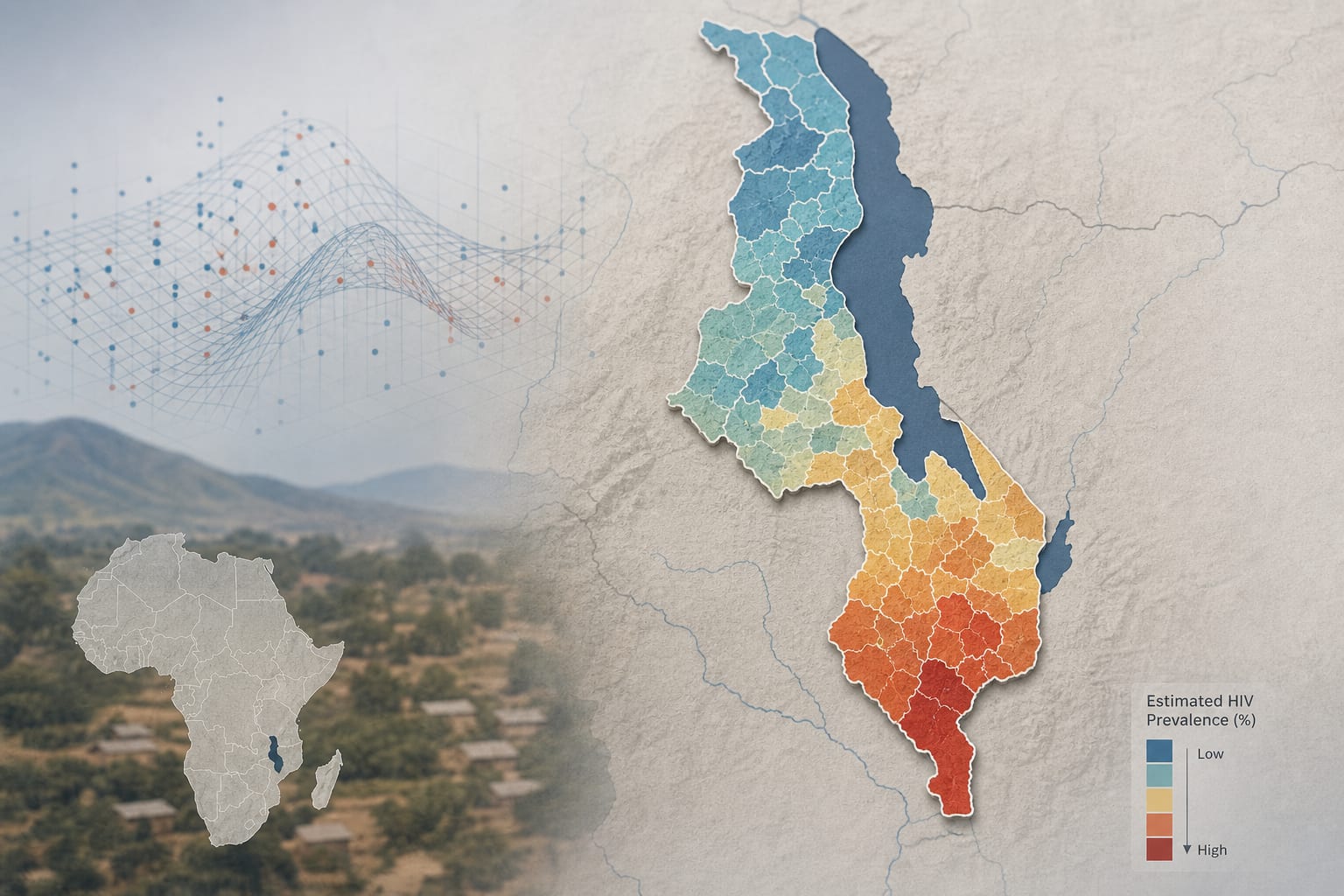
To analyze HIV prevalence in Malawi using individual-level biomarker data and spatial modeling.
Approach:
Data Analysis: Utilized individual-level HIV biomarker data from the 2016 Malawi Demographic and Health Survey and applied generalized additive models (GAMs) with Shapley value decomposition.
Mapping: Generated high-resolution maps of predicted HIV prevalence using thin-plate spline smoothing to visualize differences across districts.
Key Findings:
HIV prevalence is highest in southern Malawi, with varied patterns in central and northern regions.
Sociodemographic factors such as age, education, sex, and household characteristics primarily drive HIV variation in most districts.
Interpretation:
The study provides sub-national evidence for targeted HIV prevention, testing, and treatment efforts, emphasizing the need for interventions tailored to geographic and sociodemographic contexts.
Limitations:
The study relies on cross-sectional data, which may limit causal inferences.
Potential unmeasured confounding factors may influence the results.
Conclusion:
The findings highlight the importance of integrating geographic and sociodemographic factors in HIV intervention strategies in Malawi.