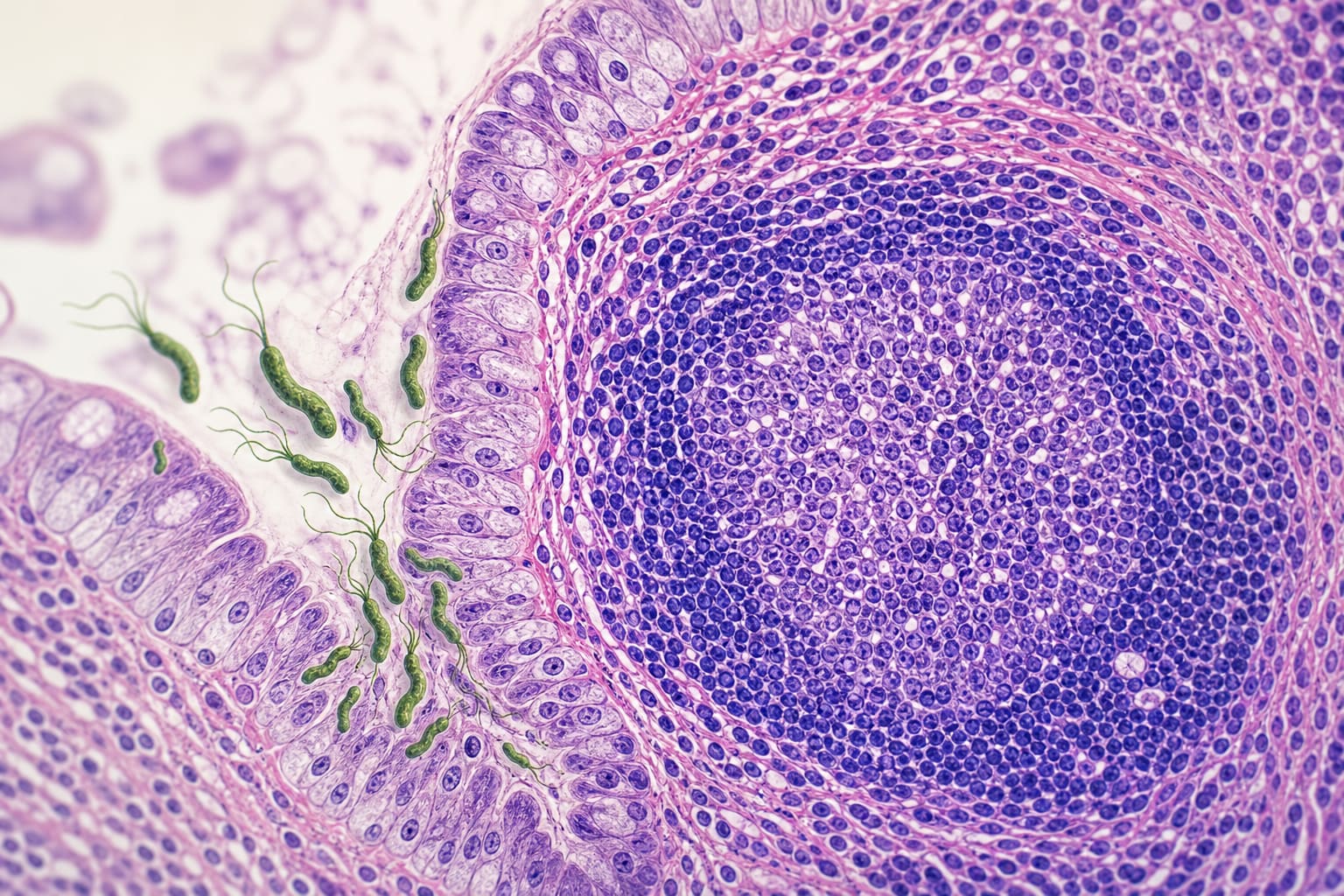
To evaluate the efficacy of frontline Helicobacter pylori eradication (HPE) treatment in patients with early-stage extragastric MALT lymphoma.
Approach:
Study Design: A prospective phase II trial was conducted with patients having histologically confirmed marginal zone lymphoma of the MALT subtype, assessing tumor response after a 2-week HPE regimen.
Patient Enrollment: 26 patients were enrolled, with HP infection confirmed through various tests before treatment.
Treatment Protocol: Patients received a sequential HPE regimen consisting of lansoprazole, amoxicillin, clarithromycin, and metronidazole.
Follow-Up: Patients were monitored for tumor response and underwent regular follow-ups based on their response status.
Key Findings:
Overall response rate (ORR) was 65.4%, with 38.5% achieving complete remission (CR) and 26.9% achieving partial remission (PR).
Median time to CR was 6 months, with a median duration of lymphoma-free survival of 78.8 months for CR patients.
7-year event-free survival rate was 76.5%, and overall survival rate was 95.8%.
Interpretation:
The findings suggest that HPE can be an effective first-line treatment for patients with early-stage extragastric MALT lymphoma, leading to significant tumor response rates. The high overall survival and event-free survival rates indicate that HPE may provide long-term benefits for patients in this cohort.
Limitations:
The small sample size of 26 patients limits the generalizability of the findings. Additionally, the study did not differentiate between active and past HP infection in serology tests, which may affect the interpretation of treatment efficacy. The short duration of follow-up may not capture long-term outcomes, and the single-center design may introduce bias.
Conclusion:
Despite the promising results, the small sample size of 26 patients limits generalizability. Additionally, the lack of differentiation between active and past HP infection in serology tests may affect the interpretation of treatment efficacy. Further studies with larger cohorts are needed to confirm these findings and optimize treatment strategies.