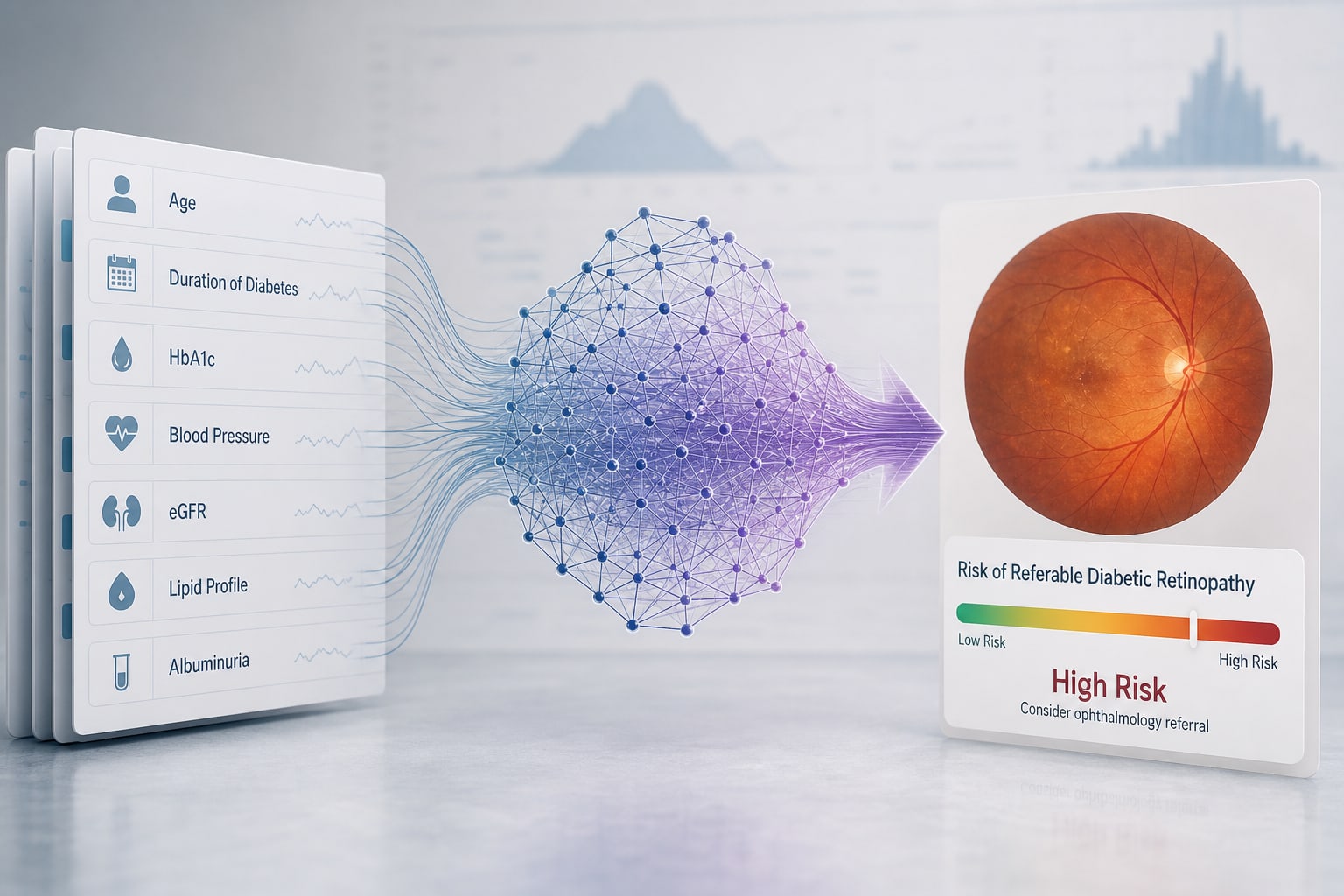
To develop and validate a machine learning algorithm for predicting referable diabetic retinopathy (RDR) using standard clinical data without ophthalmic imaging.
Key Findings:
The random forest model achieved an AUROC of 0.932, with a sensitivity of 85.8% and specificity of 91.2%.
Age was the most significant predictor of RDR, followed by diabetes duration and fasting glucose.
Interpretation:
The random forest model effectively identifies RDR using accessible clinical data, which could enhance early detection and referral processes.
Limitations:
The study was conducted at a single tertiary institution, which may limit generalizability.
The reliance on clinical data may miss cases that would be identified through imaging.
Conclusion:
The developed machine learning model can serve as a practical tool for early RDR identification, especially in resource-limited settings.
US claims data showed rising prevalence of diabetic retinal disease in type 1 and type 2 diabetes, while incidence declined in type 1 diabetes and moved closer to type 2 rates by 2022.