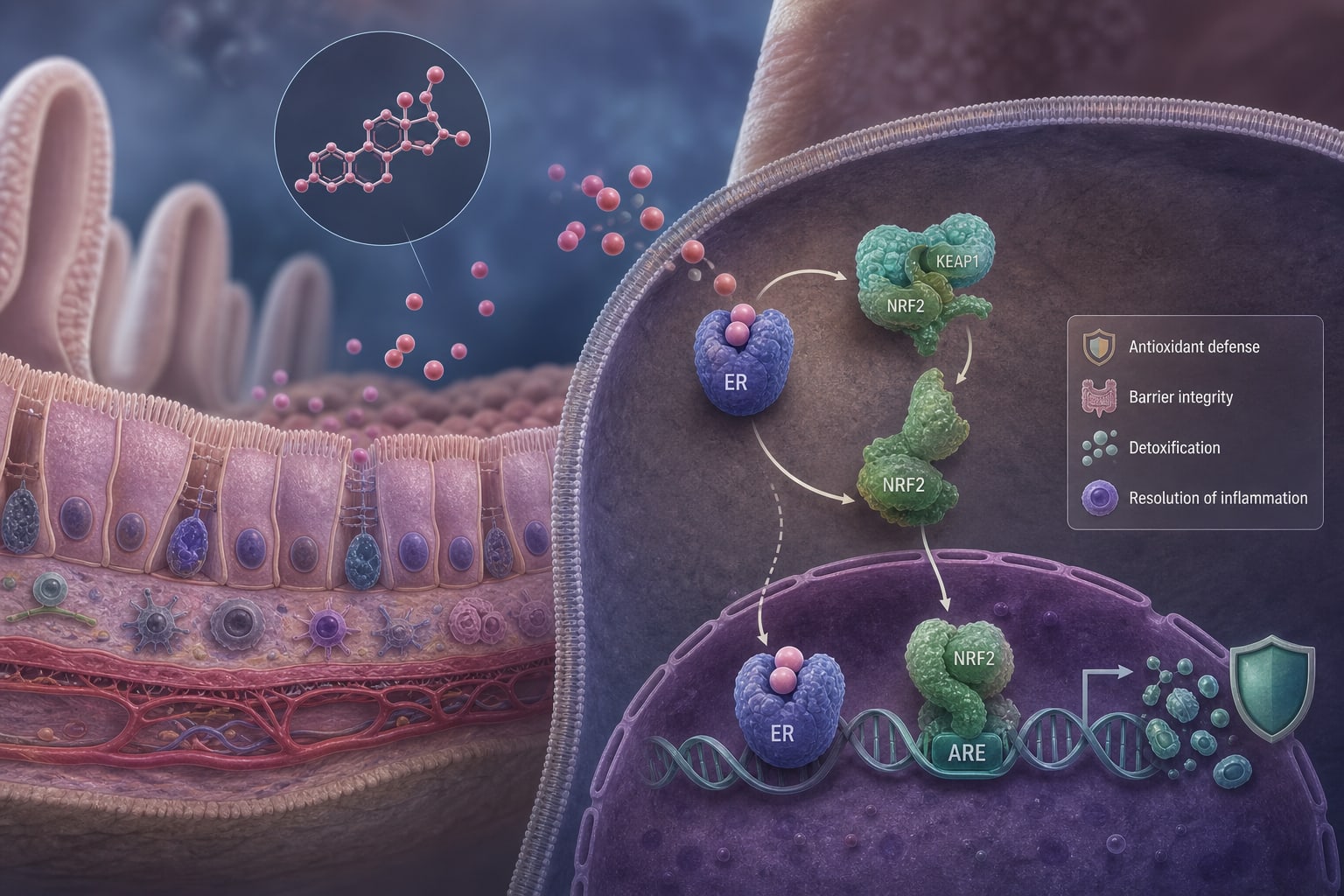
To synthesize current evidence on estrogen signaling and NRF2 function in the gastrointestinal tract, focusing on their interactions and roles in intestinal homeostasis.
Approach:
Review of Evidence: The article reviews existing literature on the roles of estrogen and NRF2 in the gut, integrating findings from both intestinal and extra-intestinal models.
Discussion of Mechanisms: It discusses the molecular mechanisms underlying estrogen–NRF2 interplay and the potential contributions of the microgenderome.
Key Findings:
Estrogen receptors are present in intestinal cells and influence colonic physiology and pathology.
NRF2 is a master regulator of the oxidative stress response and plays a role in maintaining intestinal homeostasis.
Sex differences significantly impact intestinal function and disease mechanisms, highlighting the need for inclusive research models.
Interpretation:
The interplay between estrogen signaling and NRF2 may contribute to gut homeostasis.
Limitations:
The modulatory loop between estrogen and NRF2 signaling is not fully explored.
Historical reliance on male animal models limits understanding of female physiology and disease mechanisms.
Conclusion:
Understanding estrogen receptor–NRF2 crosstalk may inform new therapeutic strategies for gastrointestinal and metabolic disorders.