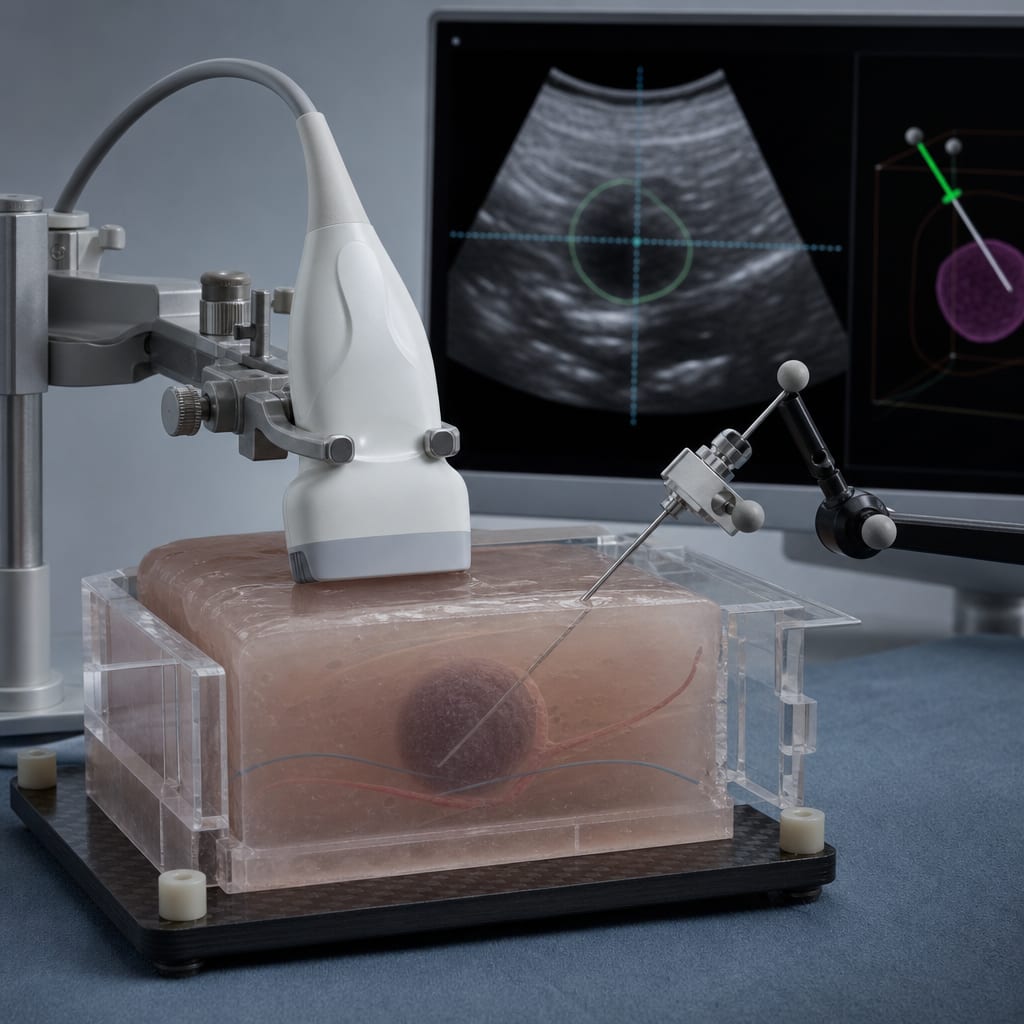
To assess the accuracy and precision of an internally developed surgical navigation configuration for pediatric oncology in a controlled phantom environment, highlighting its potential impact on surgical outcomes.
Key Findings:
The navigation system achieved a mean centerline Dice score of 0.85 and a mean surface distance error of 0.78 mm, indicating high accuracy in tumor localization.
Phantom designs effectively mimicked human tissue acoustic properties for accurate ultrasound imaging, supporting the reliability of the navigation system.
Interpretation:
The developed surgical navigation system shows promise for enhancing surgical outcomes in pediatric oncology by improving tumor localization accuracy, which could lead to better surgical precision and patient prognosis.
Limitations:
The study was conducted in a controlled phantom environment, which may not fully replicate clinical scenarios, potentially limiting the generalizability of the results.
Further clinical validation is required to assess real-world applicability and to identify any unforeseen challenges in actual surgical settings.
Conclusion:
The internally developed ultrasound navigation system demonstrates potential for improving surgical precision in pediatric tumor resections, warranting further clinical investigation to validate its efficacy in real-world applications.