To review current innovations in AI applications within ophthalmology, emphasizing their potential to improve patient outcomes, and discuss their clinical impact while outlining future directions for research and implementation.
Approach:
Key Findings:
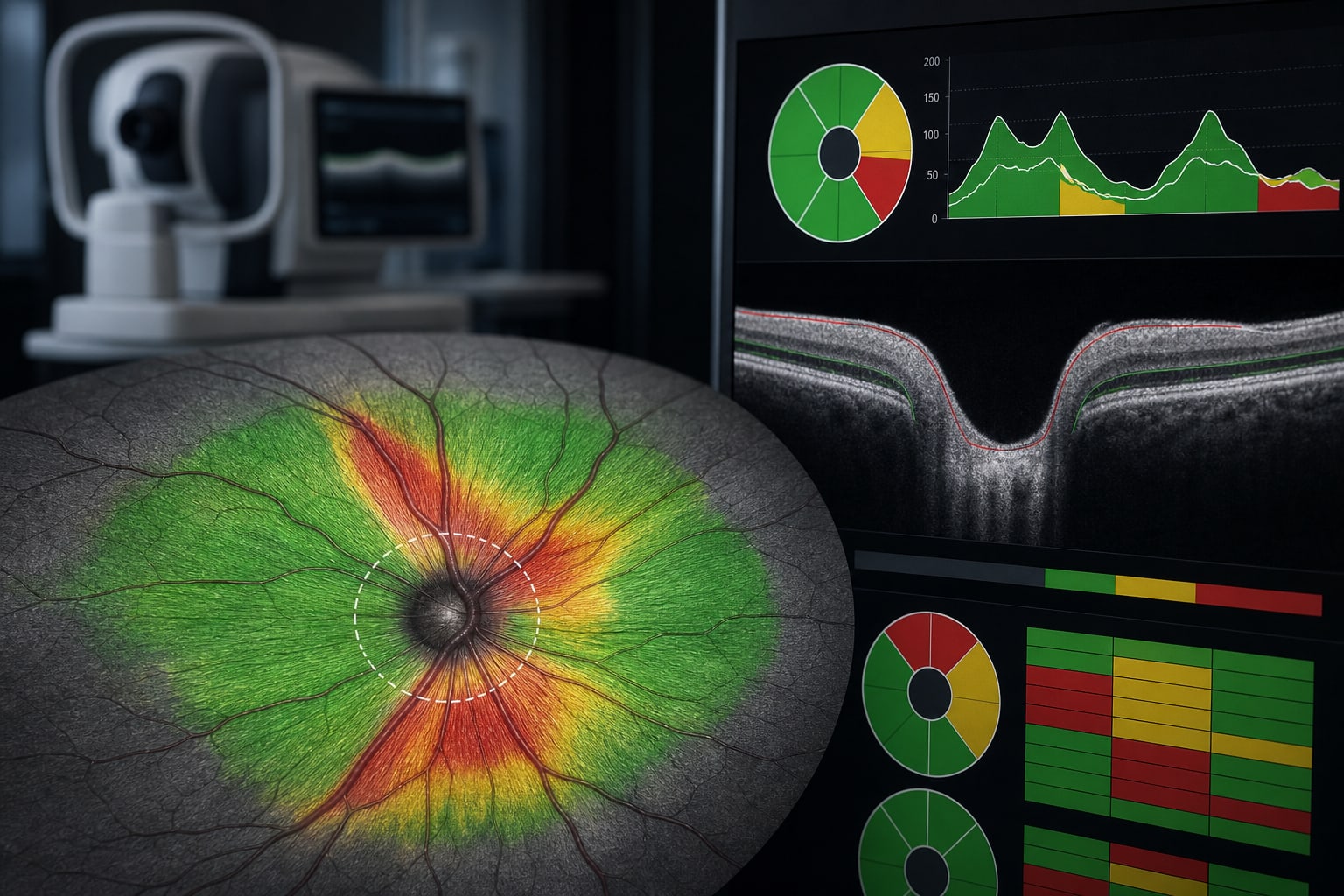
AI has shown high diagnostic accuracy in identifying retinal diseases.
Ophthalmology ranks among the leading specialties for FDA-cleared AI devices.
There is a gap between regulatory approval and real-world implementation of AI systems.
AI applications extend beyond diagnostics to include surgical planning and patient engagement.
Interpretation:
AI has the potential to significantly enhance ophthalmic care through improved diagnostics and expanded access, but challenges in integration, ethical considerations, and workflow adaptation must be addressed.
Limitations:
Limited widespread routine clinical integration of AI systems.
Challenges in algorithm generalizability and data privacy.
Integration of AI into existing clinical workflows remains a significant challenge.
Conclusion:
The next phase of AI in ophthalmology will involve multimodal learning systems and integration into global eye-care networks, necessitating collaboration among clinicians, data scientists, regulators, and industry stakeholders.