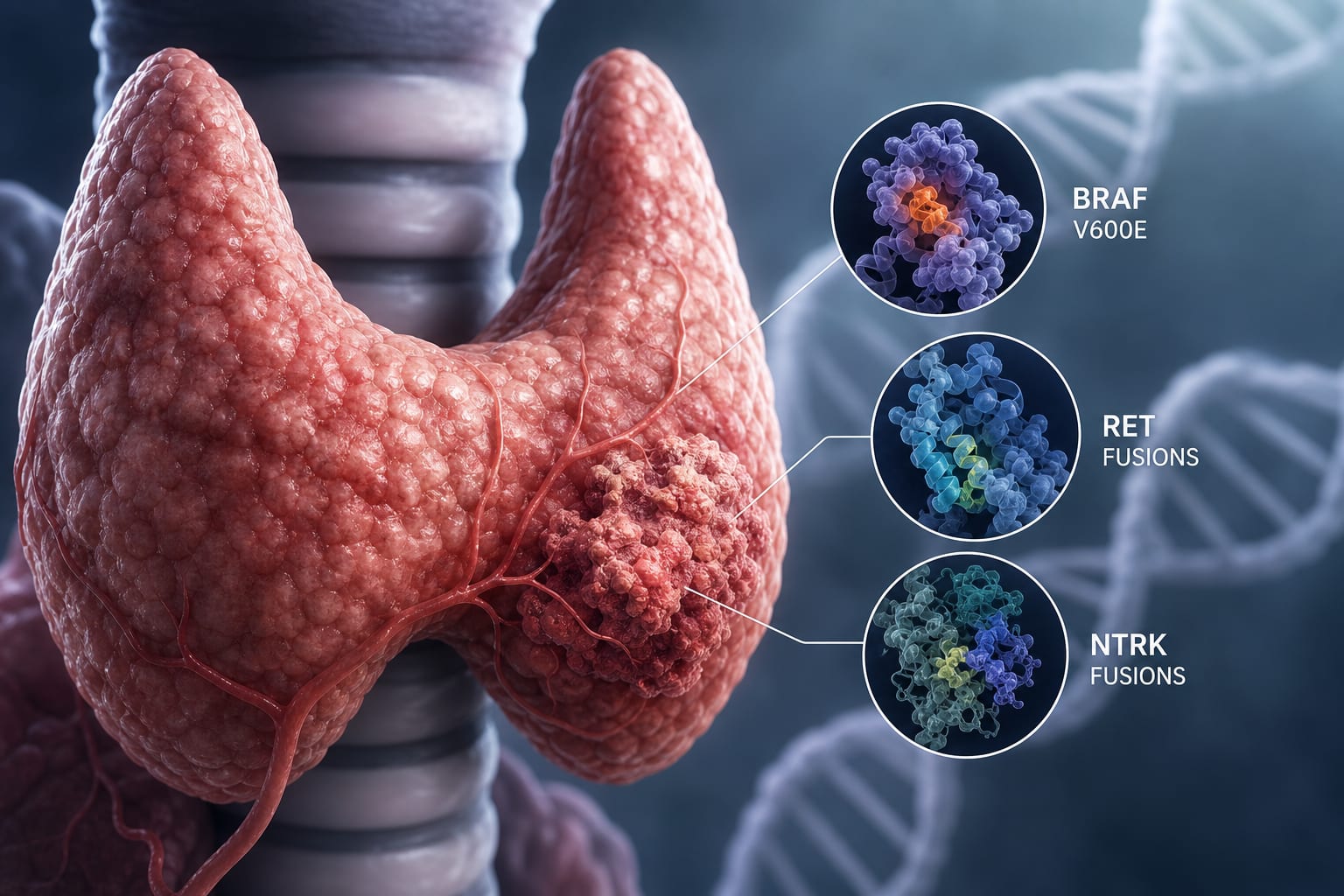
To summarize key actionable molecular alterations in thyroid cancer and examine how molecular profiling can be translated into practical, subtype-specific targeted treatment strategies for advanced, recurrent, or radioiodine-refractory disease, emphasizing the importance of precision medicine.
Key Findings:
Identification of genomic drivers like BRAF V600E, RET mutations/fusions, and NTRK fusions has transformed thyroid cancer management, with clear clinical implications for treatment selection.
Interpretation:
The therapeutic approach in thyroid cancer is evolving towards molecularly matched, combination-based, and adaptively sequenced strategies, highlighting the need for ongoing research.
Limitations:
The review does not include a formal meta-analysis or systematic risk-of-bias assessment, and it excludes studies not directly related to thyroid cancer targeted therapy, which may introduce biases.
Conclusion:
Early and comprehensive genomic profiling is essential for optimizing treatment selection and expanding precision therapy options across disease subtypes, underscoring the urgency for clinical implementation.