To report a case of retinal capillary hemangioblastoma (RCH) regression in a patient with von Hippel–Lindau (VHL) disease following treatment with systemic belzutifan.
Approach:
Case Presentation: A 49-year-old female with VHL disease and a history of retinal capillary hemangioblastoma was treated with systemic belzutifan after developing new retinal lesions and renal mass growth.
Treatment and Monitoring: Belzutifan was initiated at 120 mg daily, later adjusted due to elevated liver function tests. The patient was monitored for changes in retinal lesions and visual acuity.
Key Findings:
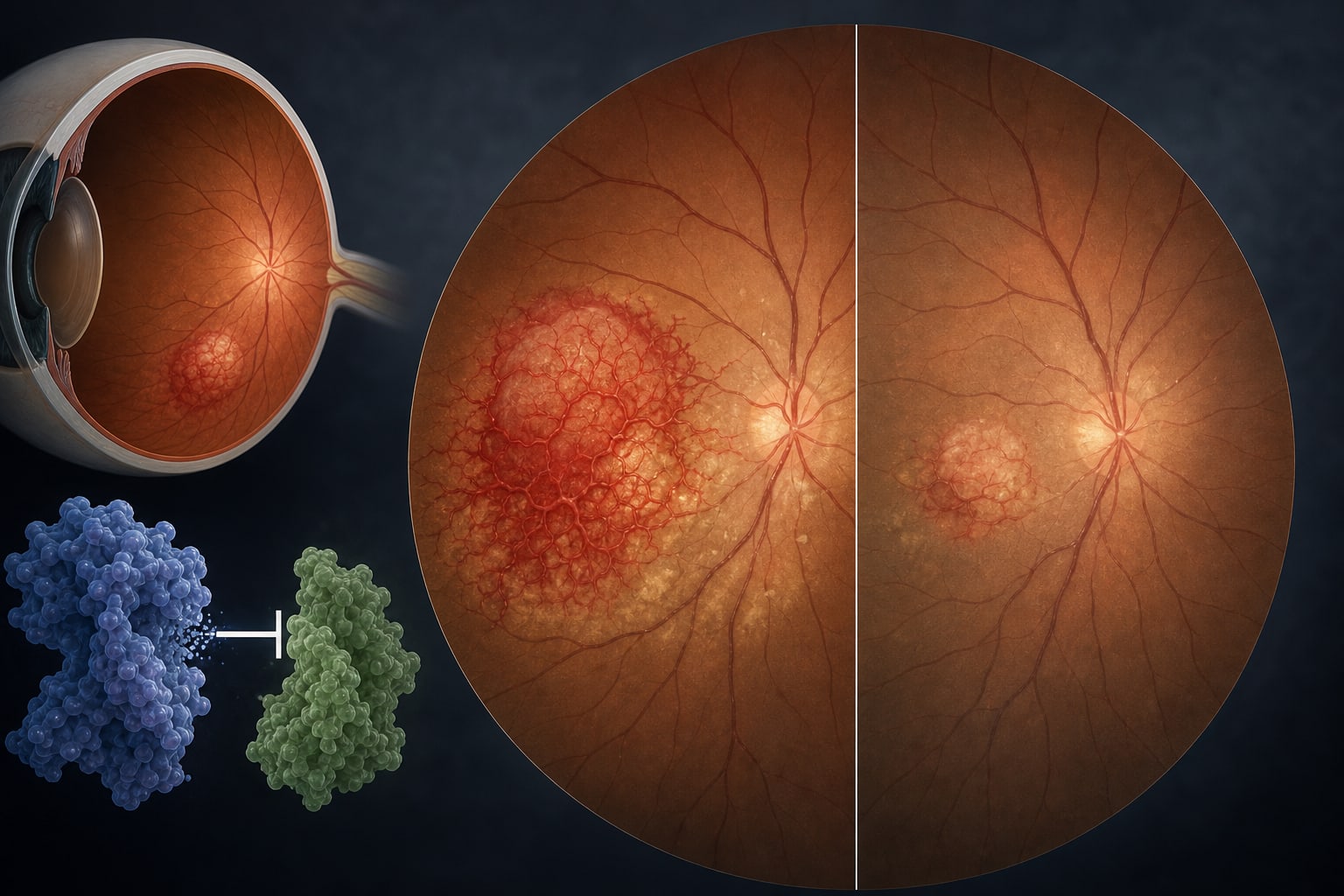
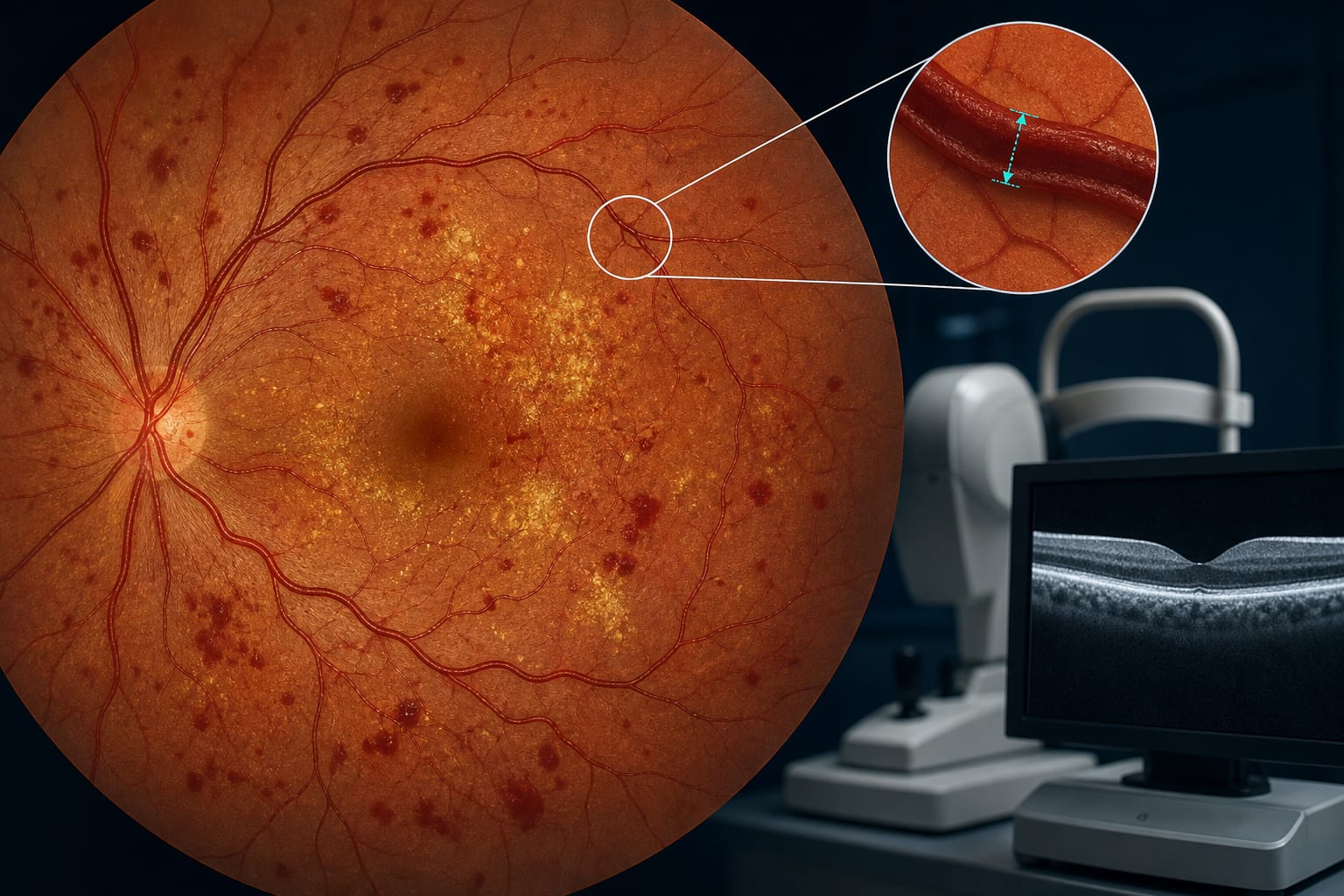
After four months of belzutifan treatment, a reduction in the size of retinal lesions was observed, along with decreased perfusion and vascularity.
Lesion sizes decreased from 0.138 mm2 to 0.071 mm2, with maintained visual acuity of 20/16 in both eyes.
No new metastases were reported in follow-up imaging of the kidneys.
Interpretation:
Systemic belzutifan therapy for VHL disease may induce regression of retinal capillary hemangioblastomas.
Limitations:
The study is based on a single case report, limiting generalizability.
Long-term effects and safety of belzutifan in this context require further investigation.
Conclusion:
This case suggests that belzutifan may be a treatment option for retinal capillary hemangioblastomas in patients with VHL disease.