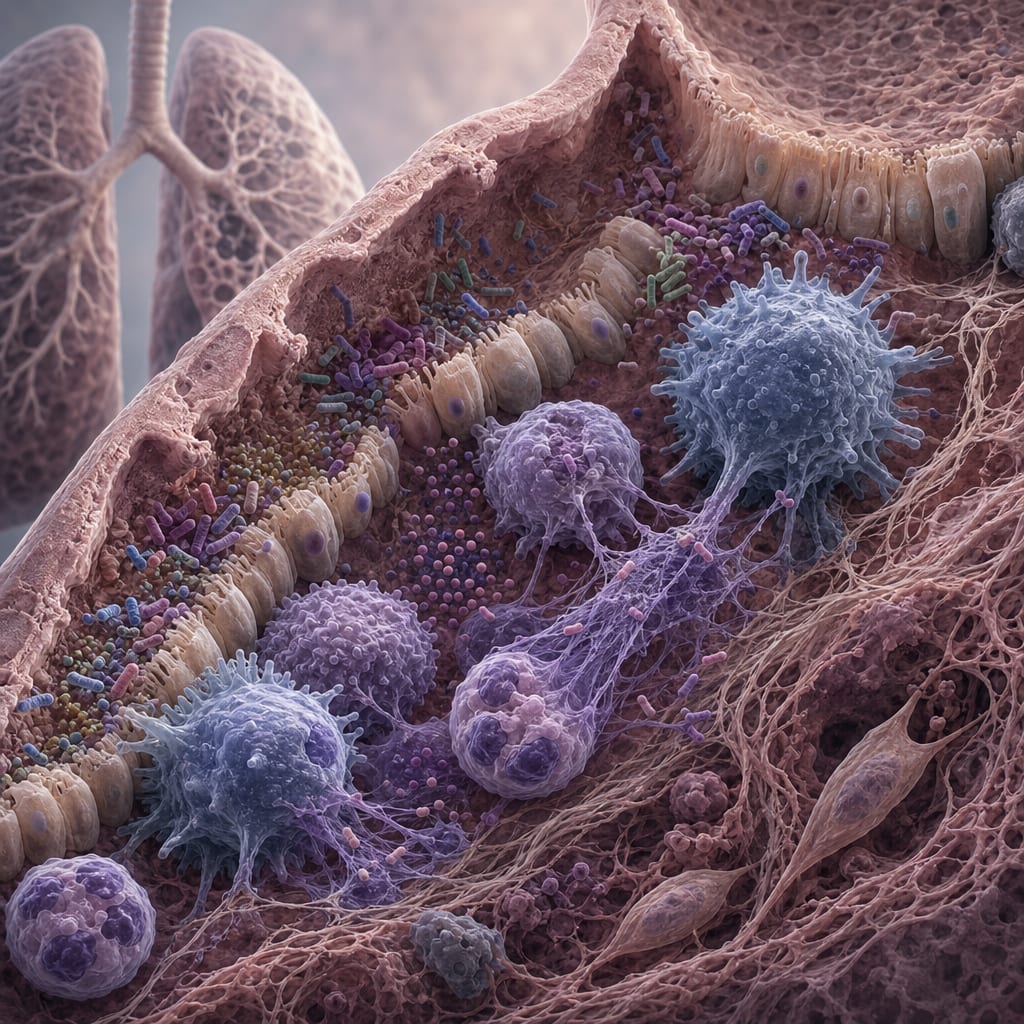
To propose a framework for understanding microbiome-immune interactions in acute exacerbations of idiopathic pulmonary fibrosis (AE-IPF) and their implications for disease progression, particularly in relation to treatment outcomes.
Key Findings:
The distal lung microbiome is not sterile and shows ecological imbalance in IPF, which may exacerbate disease.
Increased microbial load correlates with poorer clinical outcomes in IPF, suggesting a need for targeted interventions.
Ongoing microbial stimulation and epithelial damage may enhance immune responses, leading to maladaptive repair mechanisms that worsen the condition.
SPP1-associated macrophage pathways may contribute to compromised host defense, indicating potential therapeutic targets.
Interpretation:
The interactions between the microbiome and innate immunity in AE-IPF suggest a complex amplification cycle that may influence disease progression and response to treatment, necessitating further exploration.
Limitations:
Direct in situ evidence of microbiome-immune interactions in AE-IPF is limited, with few studies providing comprehensive data.
Existing studies often confound results due to variability in sampling techniques and treatment histories, complicating the interpretation of findings.
Conclusion:
The proposed amplification model highlights the urgent need for further research into microbiome-immune interactions to inform clinical strategies in AE-IPF, potentially improving patient outcomes.