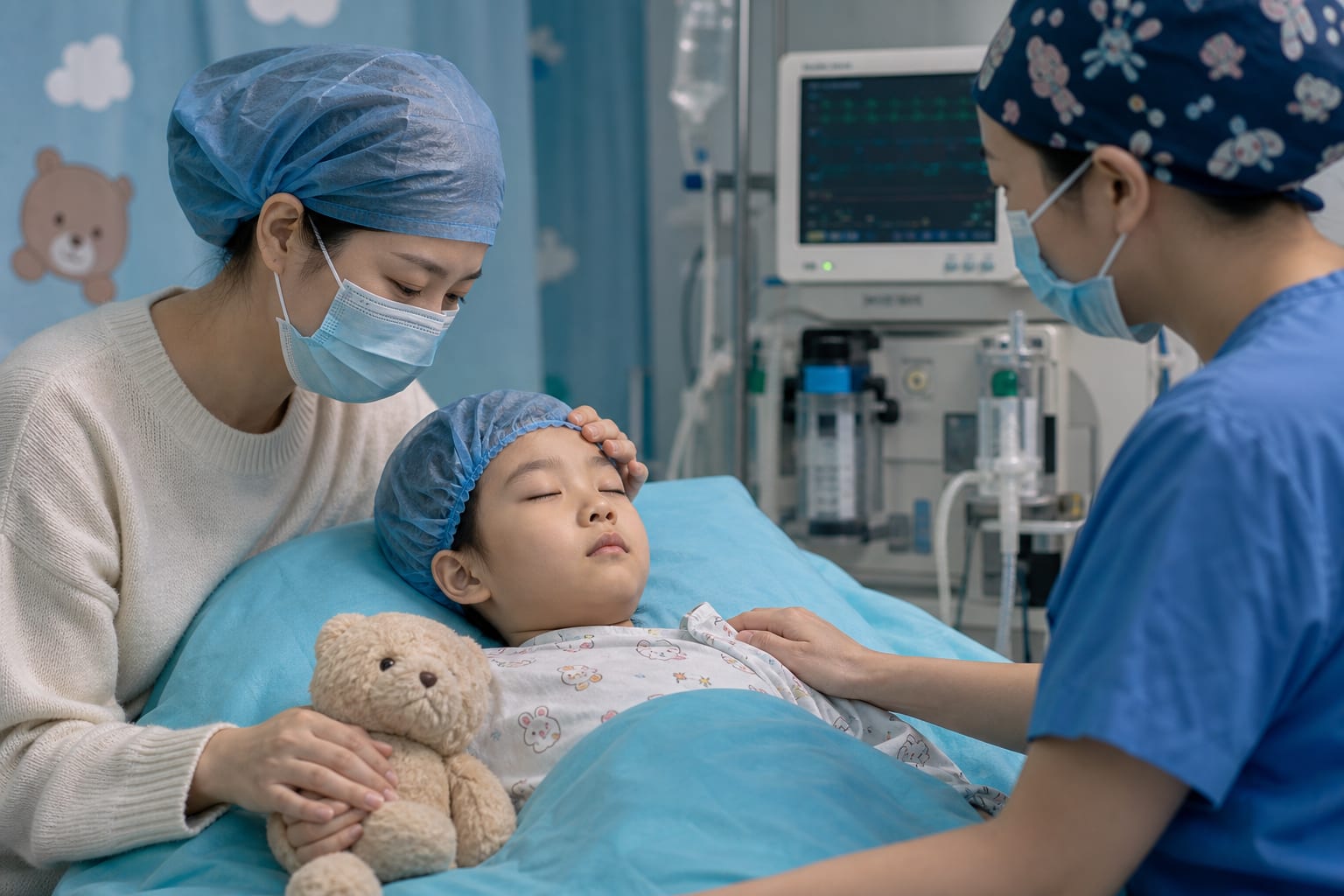
To investigate the current implementation of and key barriers to perioperative comfort therapy in pediatric anesthesia in China.
Approach:
Key Findings:
150 valid responses were collected, predominantly from tertiary A-grade hospitals (79.3%).
Preoperative visits were universally implemented (100%), with high rates of preoperative education (95.3%) and fasting instructions (94.0%).
Non-routine premedication was reported by 59.3% of hospitals, with dexmedetomidine, midazolam, and ketamine/esketamine as the main agents.
Non-pharmacological interventions were widely adopted, including comfort toys or picture books (84.4%), play therapy (44.2%), and educational videos (36.1%), but virtual reality was rarely used (9.5%).
Parental presence during anesthesia induction was permitted in 30.0% of hospitals, with emotional distress (75.3%) and increased workload (73.3%) cited as barriers.
Interpretation:
Current pediatric perioperative anesthesia management in China is insufficient in addressing children's psychological well-being, with notable gaps in anxiety assessment and parental presence during procedures.
Limitations:
The study relied on convenience sampling, which may not represent all pediatric anesthesia practices in China.
Responses were collected from a limited number of hospitals, primarily tertiary facilities, potentially skewing the findings.
Only 34.0% of hospitals used standardized scales to assess emergence delirium.
Conclusion:
The study highlights significant shortcomings in pediatric perioperative comfort strategies in China, particularly in anxiety management and parental involvement.