Long-Term Efficacy of Lutonix in a Real-World Femoropopliteal Patients With Peripheral Arterial Disease: Insights From the SAFE-DCB US Registry - Summary - MDSpire
To report the 3-year real-world effectiveness and safety outcomes from the Lutonix SAFE-DCB Registry.
Approach:
Study Design: Prospective, multicenter real-world registry assessing the safety and efficacy of Lutonix 035 DCB Catheter in a heterogeneous patient population over 36 months.
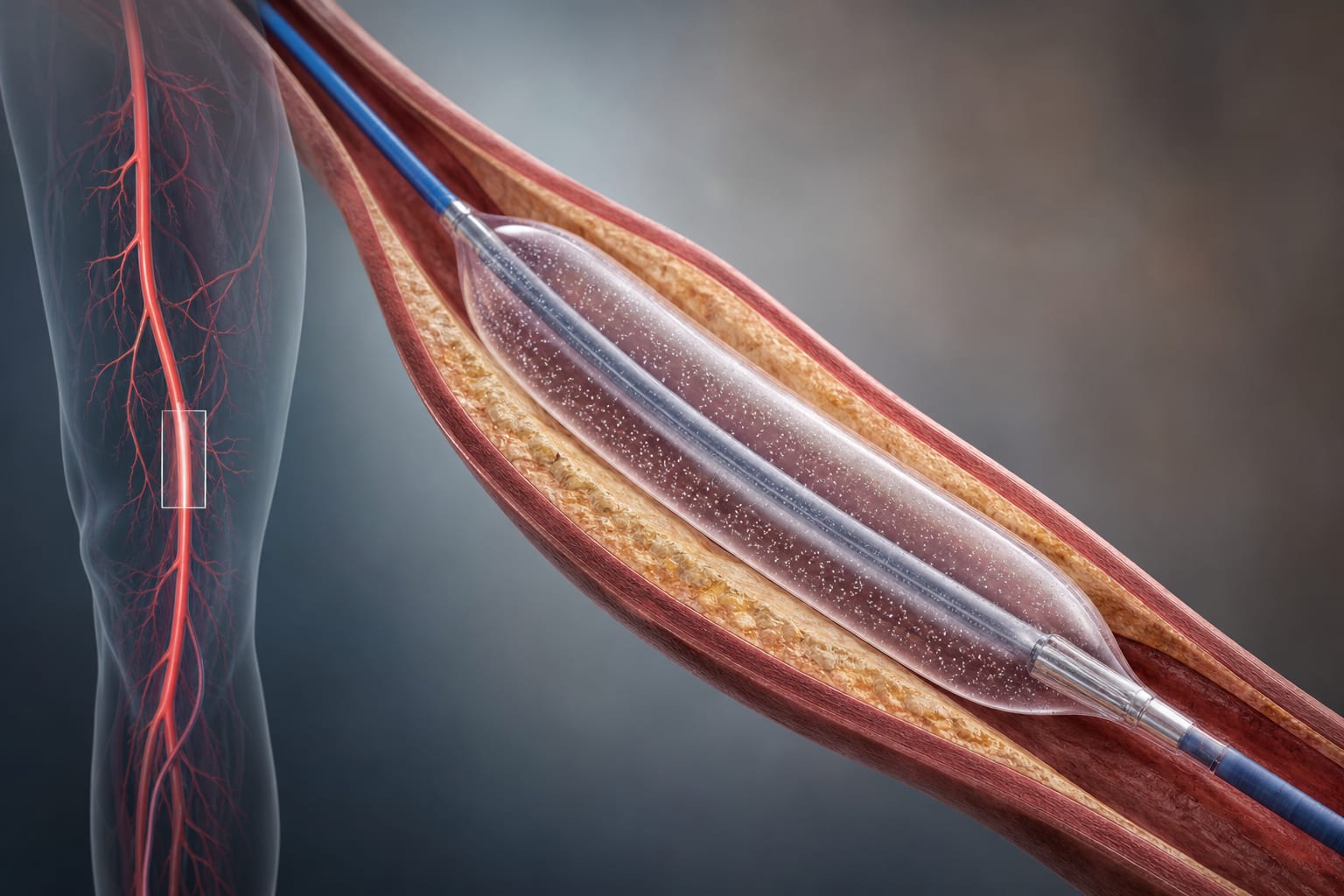
Device Description: Lutonix 035 DCB Catheter is a drug-coated PTA dilatation catheter delivering paclitaxel to reduce restenosis.
Endpoints: Primary effectiveness: freedom from target lesion revascularization (TLR) at 12 months. Primary safety: freedom from composite of device/procedure-related perioperative death, major amputation, and target vessel revascularization (TVR).
Statistical Analysis: Analyses based on per-protocol population, summarizing baseline characteristics and outcomes using descriptive statistics.
Key Findings:
The Lutonix DCB demonstrated long-term effectiveness in a real-world population with femoropopliteal disease.
The study included a broad patient population, reflecting current clinical practice.
Interpretation:
Limitations:
The study may have inherent biases due to its observational design.
Exclusion criteria may limit generalizability to all patient populations.
Conclusion:
The Lutonix SAFE-DCB Registry offers valuable data on the long-term safety and effectiveness of Lutonix DCB in treating femoropopliteal peripheral arterial disease.