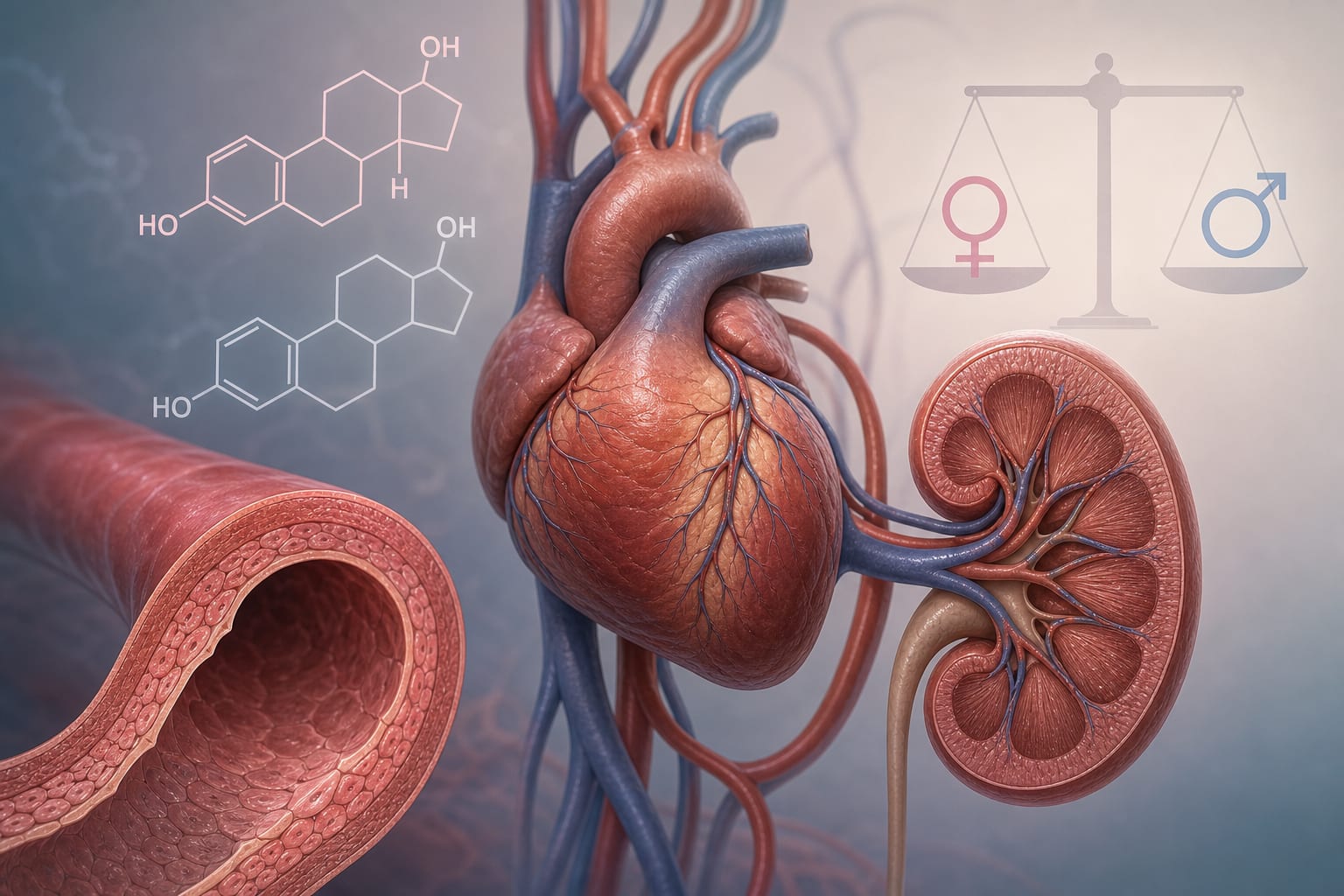
To explore the effects of sex hormone signaling on cardiovascular and renal health across different life stages.
Approach:
Study on Perimenopausal and Postmenopausal Women: Investigated clinical parameters between perimenopausal women with CVD and postmenopausal women with CVD, reporting higher BMI, waist-to-hip ratio, and blood pressure in postmenopausal women.
Meta-Analysis on eGDR and CVD Risk: Analyzed the prognostic utility of estimated glucose disposal rate (eGDR) in relation to cardiovascular disease risk, finding higher baseline eGDR levels associated with reduced risk of CVD, stroke, and CHD.
Study on Atrial Fibrillation and Corin Biomarkers: Examined corin as a potential biomarker for left atrial reverse remodeling in patients with atrial fibrillation post-catheter ablation, noting sex differences in corin concentrations.
Review of Progesterone's Role: Summarized the unclear contributions of progesterone compared to estrogen and testosterone on cardiovascular and renal health.
Study on Gender-Affirming Hormonal Therapy: Conducted echocardiographic assessments in transgender individuals undergoing gender-affirming hormonal therapy, highlighting the need for further research on long-term cardiovascular effects.
Key Findings:
Postmenopausal women exhibit higher BMI, waist-to-hip ratio, and blood pressure compared to perimenopausal women.
Higher baseline eGDR levels are associated with reduced risk of CVD, stroke, and CHD.
Corin concentrations differ by sex in relation to left atrial reverse remodeling after catheter ablation.
The role of progesterone in cardiovascular and renal health remains poorly understood.
Long-term effects of gender-affirming hormonal therapy on cardiovascular health in transgender individuals require further study.
Interpretation:
Further research is needed on the roles of sex hormones in cardiovascular and renal health, particularly in women during menopause and in transgender individuals.
Limitations:
Key molecular mechanisms and clinical implications of sex hormones are still poorly understood.
Limited studies exist on the long-term effects of gender-affirming hormonal therapy on cardiovascular health.
Conclusion:
Further investigation is required to clarify the roles of sex hormones in cardiovascular and renal health.