Incidence, prevalence, and prognostic impact of sarcopenia on hepatic and cardiovascular outcomes in non-cirrhotic metabolic dysfunction–associated steatotic liver disease - Summary - MDSpire
Advertisement
Incidence, prevalence, and prognostic impact of sarcopenia on hepatic and cardiovascular outcomes in non-cirrhotic metabolic dysfunction–associated steatotic liver disease
To evaluate temporal trends in the incidence and prevalence of sarcopenia among patients with MASLD and assess its association with specific hepatic and cardiovascular outcomes.
Approach:
Key Findings:
Among 1,232,337 patients with MASLD, 714 had documented sarcopenia.
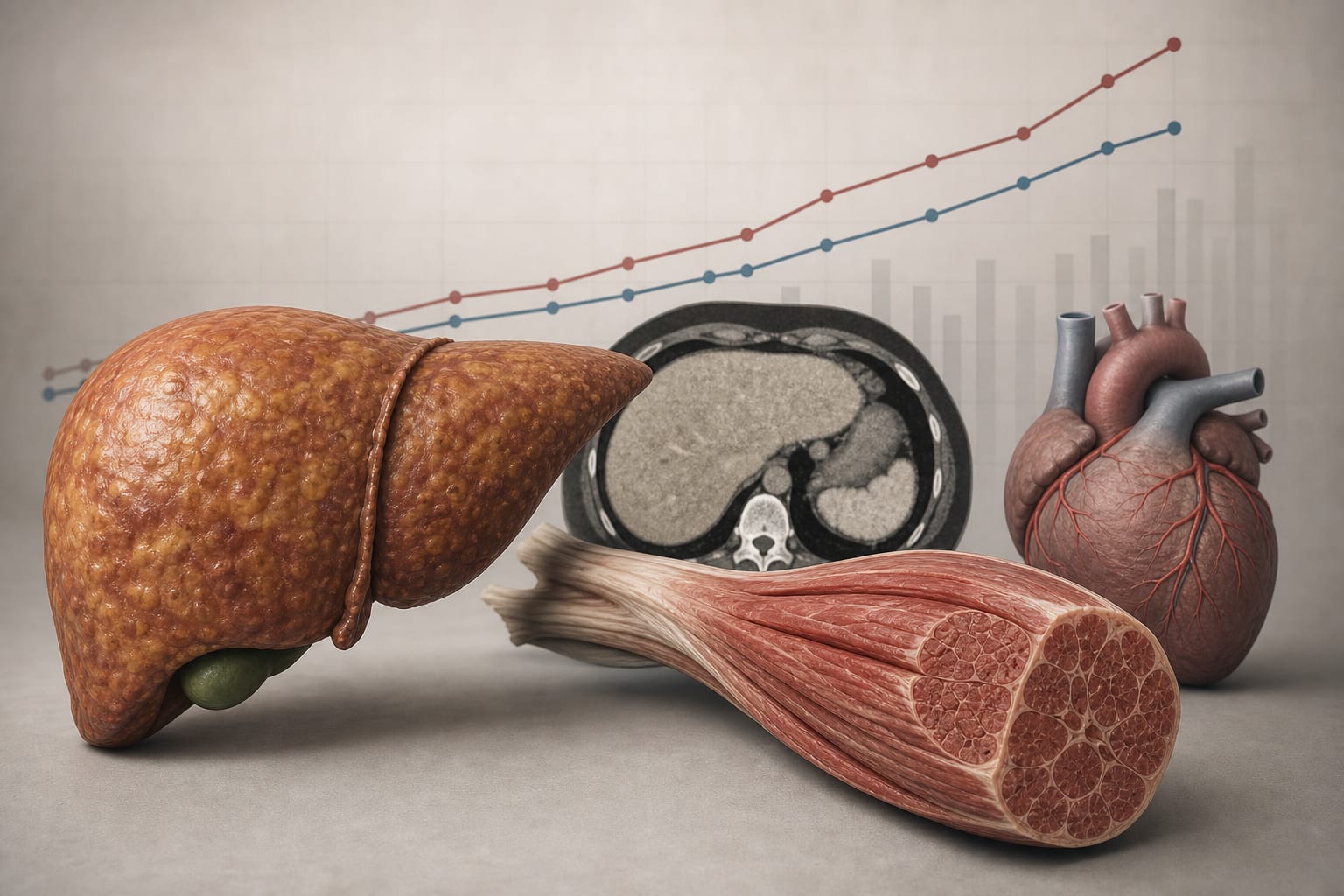
Both incidence and prevalence of sarcopenia increased steadily over the study period.
Sarcopenia was associated with higher odds of cirrhosis (OR 4.46), hepatic decompensation (OR 5.18), and all-cause mortality (OR 2.36).
Sarcopenic MASLD patients had increased risk of major adverse cardiovascular events, including heart failure, ischemic heart disease, atrial fibrillation, cerebrovascular events, and thrombotic disorders.
Sarcopenia is an increasingly prevalent condition in MASLD and a powerful independent predictor of adverse hepatic and cardiovascular outcomes in non-cirrhotic disease.
Limitations:
The study is retrospective and may be subject to biases inherent in electronic health record data.
Longitudinal data may not capture all relevant variables influencing outcomes, including potential confounding factors.
Conclusion:
Sarcopenia identification and management are crucial for improving long-term outcomes in MASLD, emphasizing the need for early intervention strategies.