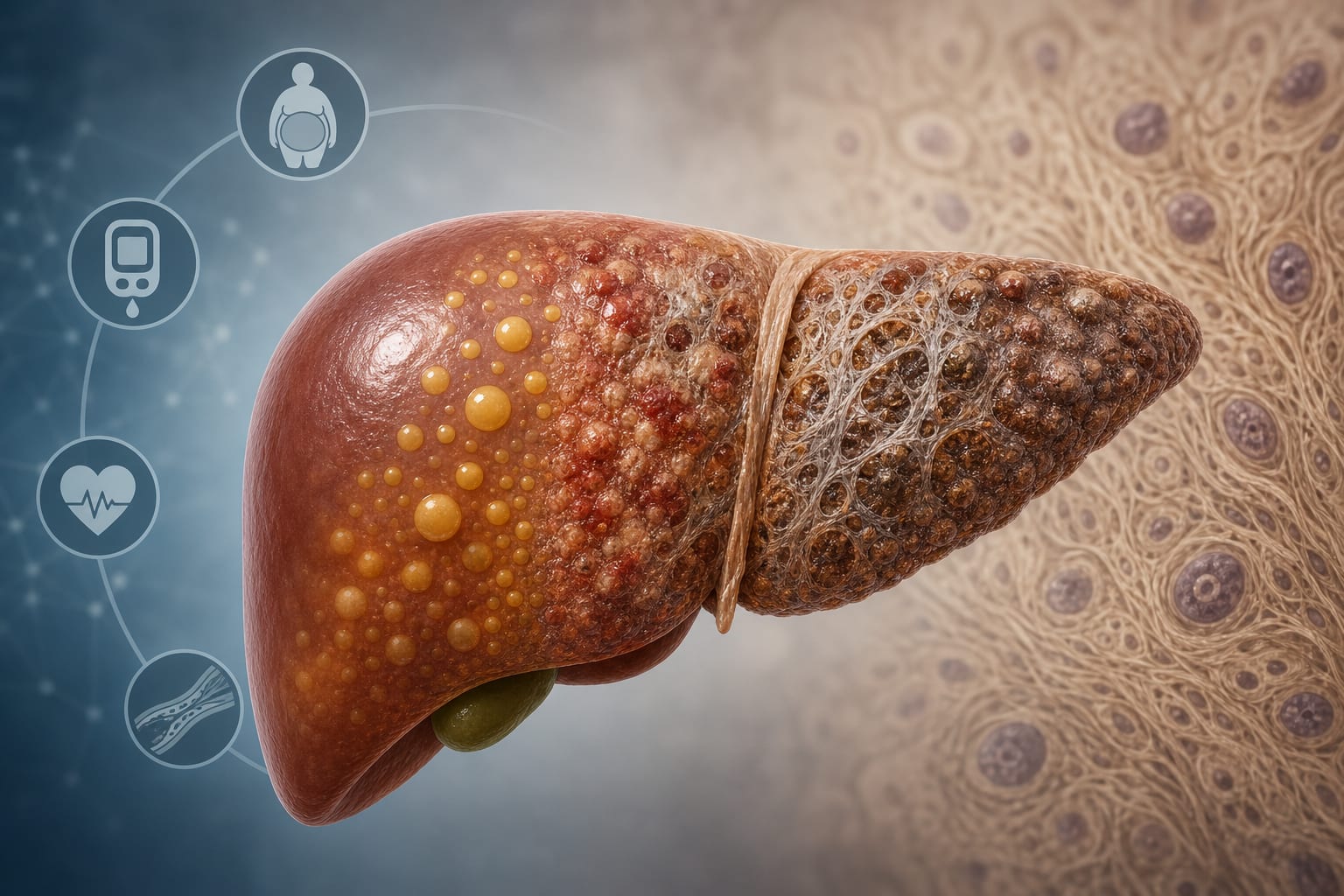
To summarize the burden and systemic complications of metabolic dysfunction-associated steatotic liver disease (MASLD), focusing on hepatic fibrosis detection and treatment options.
Approach:
Review of MASLD: The review discusses the epidemiology, risk factors, and treatment innovations related to MASLD and its progression to fibrosis, highlighting endocrine influences that modulate hepatic steatosis and disease severity.
Pharmacotherapy Overview: Emerging pharmacotherapies targeting metabolic stress, inflammation, and fibrogenesis are synthesized, including incretin-based agents and metabolic modulators, along with combination strategies and candidate agents with potential direct antifibrotic activity.
Fibrosis Staging: The importance of fibrosis staging and non-invasive risk stratification in clinical decision-making is emphasized, particularly for patients with moderate-to-advanced fibrosis.
Key Findings:
MASLD is the most prevalent chronic liver disease globally, affecting over 30% of adults.
Fibrosis severity is a critical predictor of liver-related events and mortality.
Approximately 25%-33% of patients with metabolic dysfunction-associated steatohepatitis (MASH) will experience fibrosis progression.
The primary cause of hepatocellular carcinoma (HCC) is shifting towards MASLD, with a significant proportion of cases occurring without cirrhosis, indicating a need for targeted surveillance strategies.
Interpretation:
Fibrosis in MASLD is a key determinant of mortality and requires careful risk stratification for effective management.
Limitations:
Current evidence on MASLD's role as an independent risk factor for cardiovascular disease is debated, indicating a high-risk group requiring risk stratification and holistic prevention.
Surveillance strategies for HCC may not adequately target patients with moderate-to-advanced fibrosis.
Conclusion:
The review highlights the need for stage-specific, mechanism-informed treatment regimens to achieve meaningful fibrosis regression in MASLD.