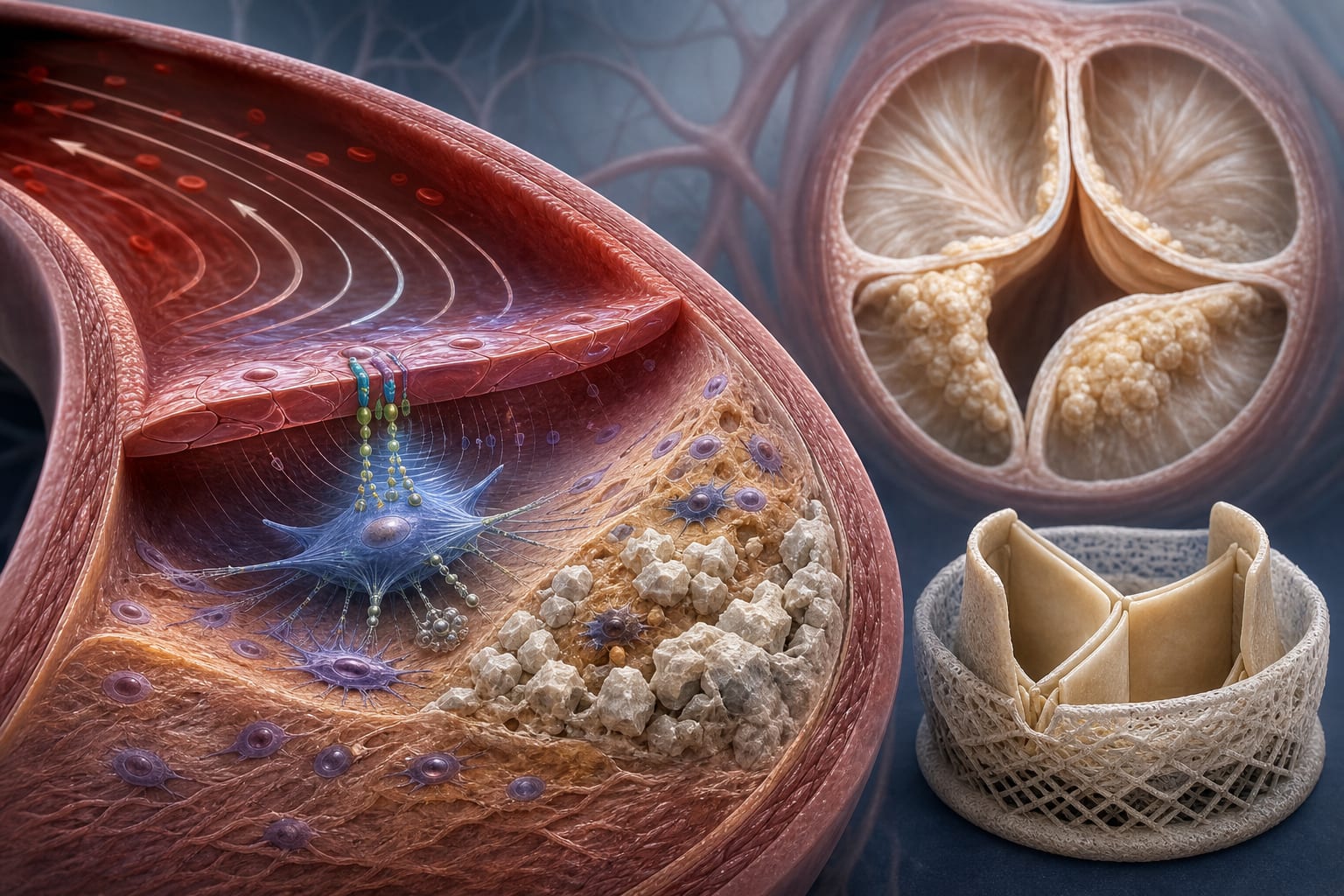
To explore the impact of biomechanics and mechanotransduction on cardiovascular calcification and its implications for disease progression and clinical practice, emphasizing their significance in improving patient outcomes.
Key Findings:
RHu ratio correlates with CCTA–ICA concordance, aiding in the assessment of calcified plaques and improving diagnostic accuracy.
Higher vertebral volumetric bone mineral density is associated with lower coronary artery calcium scores, suggesting a potential link between bone health and cardiovascular risk.
Microcalcifications reduce the mechanical properties of atherosclerotic plaque caps, increasing failure risk and highlighting the need for targeted therapies.
Cyclic mechanical loading is a dominant factor in the structural deterioration of bioprosthetic heart valves, indicating a need for improved design strategies.
Interpretation:
The studies collectively emphasize the need to integrate biomechanics with clinical tools to improve understanding and management of cardiovascular diseases.
Limitations:
The studies are limited by their specific cohorts and may not be generalizable to all patient populations; for instance, the age and health status of participants may influence outcomes.
Some findings may not account for all potential confounding factors in the relationships studied, such as genetic predispositions or lifestyle factors.
Conclusion:
The editorial highlights the critical role of biomechanics and mechanotransduction in cardiovascular health and disease, advocating for further research in this area to enhance clinical applications and patient outcomes.