Retrospective clinical study of endoscopic transfrontal approach vs. transSylvian-transinsular craniotomy for hypertensive intracerebral hemorrhage in basal ganglia: efficacy comparison and value of anatomical cognition of Sylvian fissure - Summary - MDSpire
Conexiant’s news site is now MDSpire News. Learn more
Advertisement
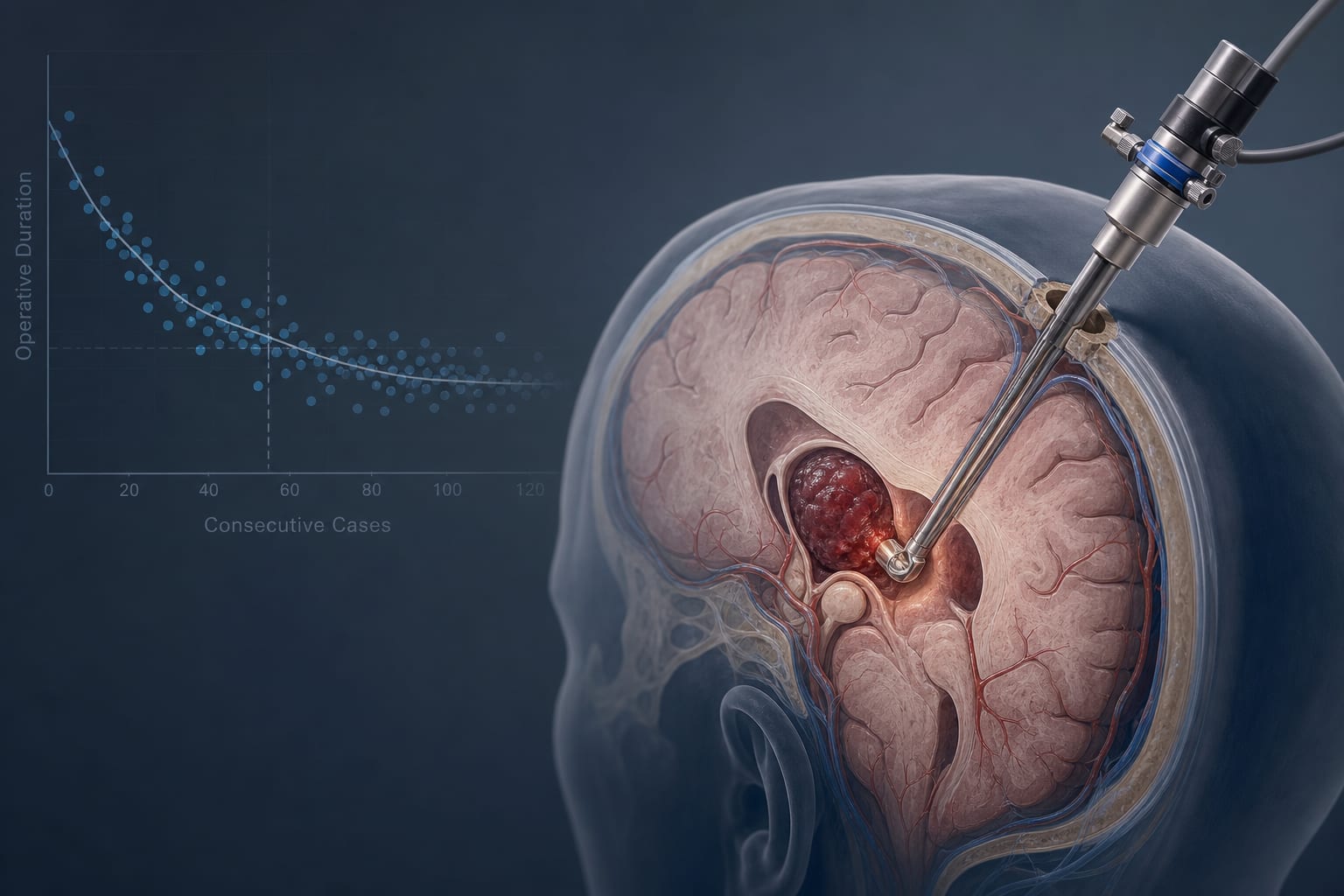
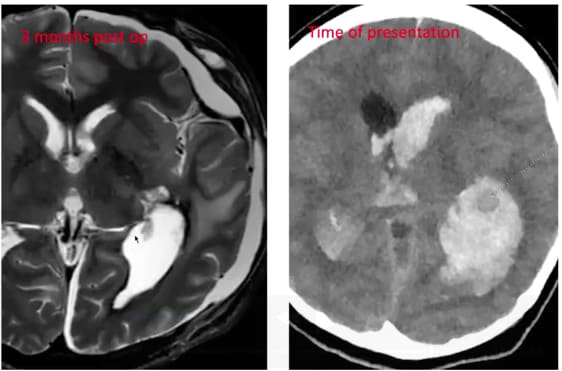
Comparative Analysis of Endoscopic Transfrontal Approach and TransSylvian-Transinsular Craniotomy for Hypertensive Intracerebral Hemorrhage in the Basal Ganglia: Efficacy and the Role of Sylvian Fissure Anatomy in Surgical Outcomes
To compare the efficacy of endoscopic transfrontal and transSylvian-transinsular hematoma evacuation for basal ganglia hypertensive intracerebral hemorrhage (HICH), identify independent prognostic factors, and explore the value of the latter in improving young doctors’ anatomical cognition of the Sylvian fissure.
Approach:
Key Findings:
No significant differences in hematoma clearance rate (89.2 ± 7.5% vs. 87.6 ± 8.2%), postoperative rebleeding rate (4.0% vs. 5.0%), and 3-month favorable prognosis rate (62.0% vs. 58.8%) between the two groups.
The endoscopic group had shorter operation time, less intraoperative blood loss, and lower complication rate.
Preoperative GCS score, hematoma volume, intraoperative blood loss, and postoperative pulmonary infection were identified as independent prognostic factors.
Young doctors’ anatomical cognition scores significantly improved postoperatively.
Interpretation:
Both surgical approaches have comparable efficacy for basal ganglia HICH.
Limitations:
The study is observational and retrospective in nature.
Sample size may limit the generalizability of findings.
Conclusion:
Both approaches are effective for HICH management.
This Neuroscience Grand Rounds session, led by Muhammad Osama, MD, provides a pediatric neurosurgeon’s perspective on arteriovenous malformations (AVMs) in children, rare but high-risk vascular lesions that can lead to seizures, neurological deficits, or life-threatening hemorrhage.