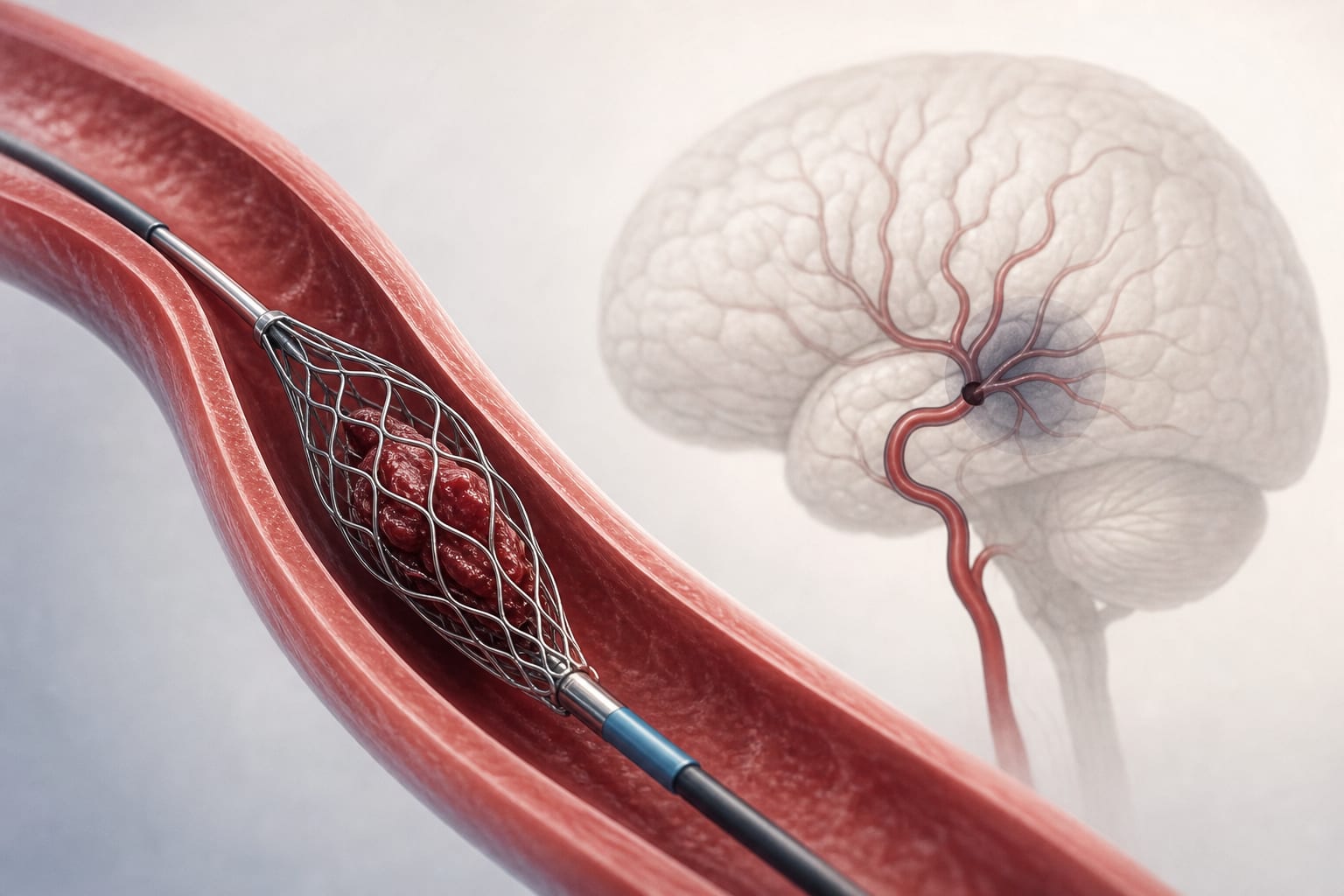
To compare health-related quality of life (HRQoL) outcomes between endovascular thrombectomy (EVT) alone and bridging therapy in patients with large-vessel occlusion stroke, and to assess the effect of baseline severity on these outcomes.
Key Findings:
Overall HRQoL at 90 days was similar between EVT alone (median EQ-5D 0.84) and bridging therapy (median EQ-5D 0.85).
Baseline stroke severity modified the treatment-EQ-5D association, with bridging therapy associated with higher EQ-5D in moderate-to-severe stroke (NIHSS 16–20) and severe stroke (NIHSS 21–42).
Exploratory analyses indicated bridging therapy favored patients with near-complete independence (BI 91–100), while EVT alone was associated with lower EQ-5D in those with favorable functional outcomes (mRS 0–2).
EVT alone showed lower odds of symptom-free Mobility and Usual activities in near-independent patients, and a treatment-by-baseline severity interaction was noted for Anxiety/depression.
Interpretation:
HRQoL at 90 days was comparable overall between treatment strategies, but varied by baseline stroke severity and functional outcomes, as indicated by the study findings.
Limitations:
The study is a secondary analysis and may not capture all relevant patient-centered outcomes.
Exploratory analyses may introduce biases.
Conclusion:
The findings indicate that treatment effects on HRQoL differ by baseline stroke severity.