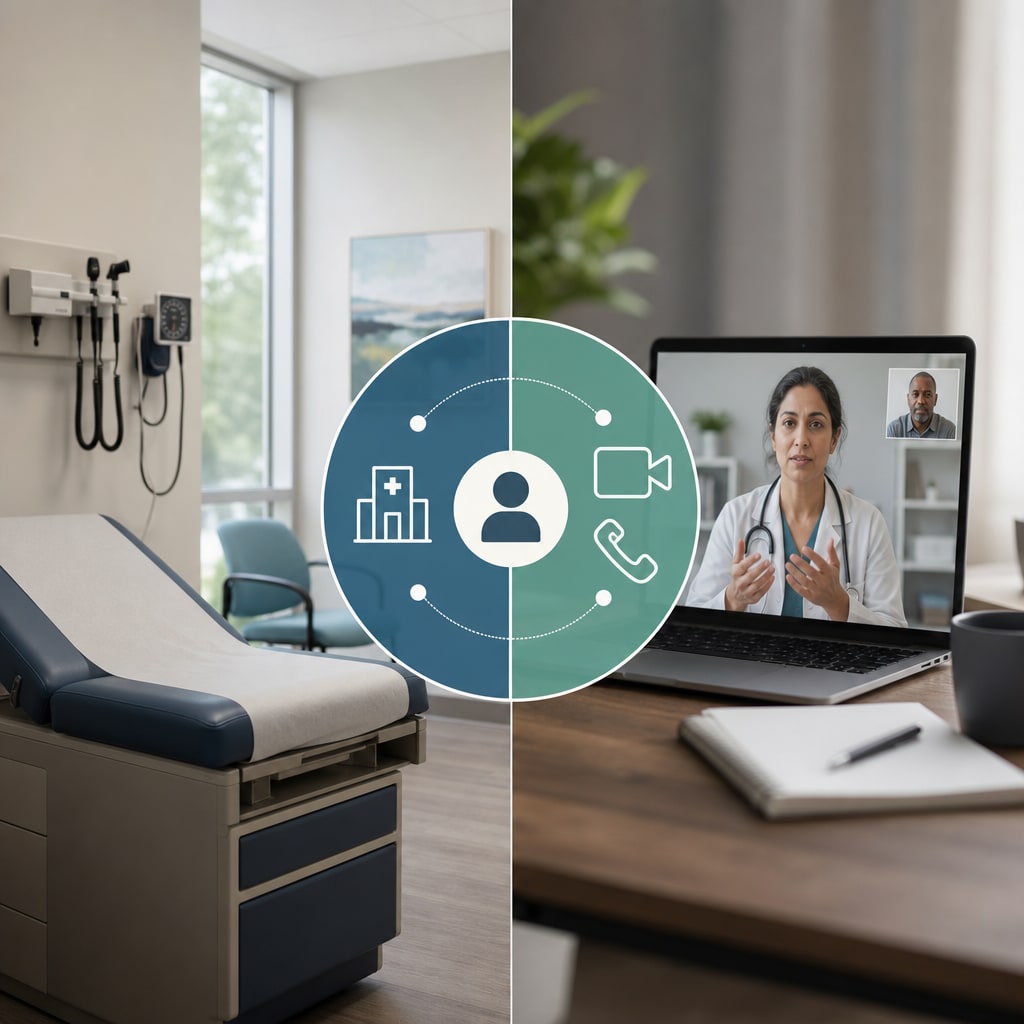
To evaluate the association between primary care visit modality (in-person, video, or audio-only) and subsequent healthcare utilization, including prescription orders and follow-up visits, highlighting the importance of understanding telehealth's impact on healthcare delivery.
Key Findings:
Telemedicine visits were associated with lower rates of medication prescribing compared to in-person visits, raising questions about the adequacy of care.
Higher rates of follow-up healthcare use were observed after telemedicine visits, suggesting a need for ongoing patient engagement.
Differences in telemedicine utilization were noted among disadvantaged patient groups, indicating potential disparities in access to care.
Interpretation:
The study suggests that the mode of primary care visit impacts subsequent healthcare utilization, with telemedicine potentially leading to different prescribing and follow-up patterns compared to in-person visits.
Limitations:
Retrospective design may limit causal inferences and introduce selection bias.
Findings may not be generalizable beyond the studied healthcare system, necessitating further research in diverse settings.
Conclusion:
Understanding the implications of telemedicine on healthcare utilization is crucial as it becomes a standard practice in healthcare delivery, and further research is needed to validate these findings across different healthcare systems.
Longitudinal Swedish study finds physicians and nurses reporting problem drinking or illicit drug use had about twice the risk of rating their care as poor 1 year later