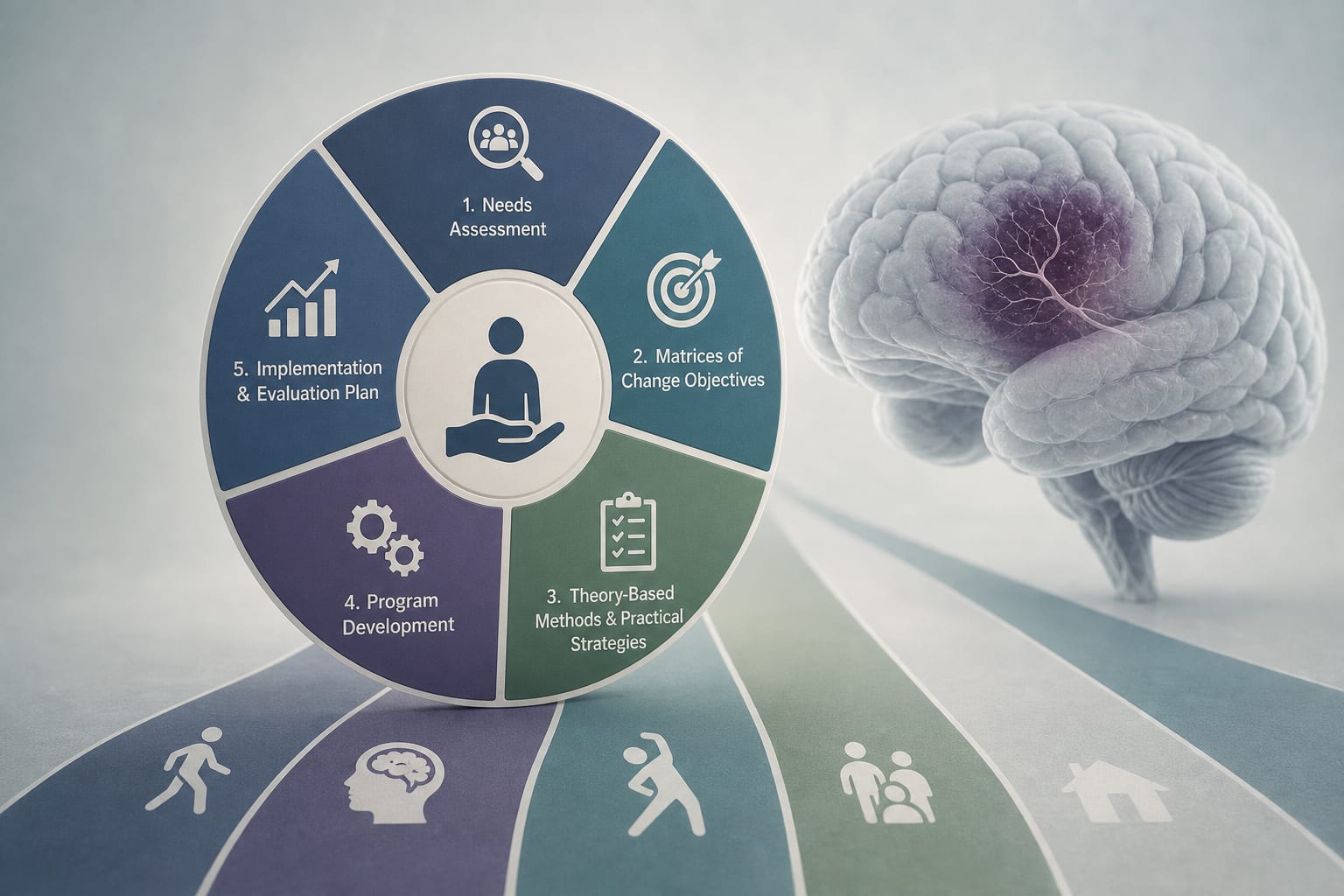
To identify and characterize the application of the Intervention Mapping (IM) framework in developing behavioral interventions for stroke survivors and evaluate the methodological reporting quality of its application.
Approach:
Systematic Search: A systematic search was conducted in multiple databases for studies employing IM to guide the development of behavioral interventions for stroke survivors.
Study Inclusion: Studies were included irrespective of design, focusing on intervention design, implementation processes, methodological quality, and outcome evaluations.
Key Findings:
Nine studies were included with methodological quality ratings from 'moderate' to 'strong.'
Three patterns of IM application were identified: full application of all six steps, partial application focusing on the development phase, and deep integration with co-design methodologies.
All interventions integrated behavior change theories and were multi-level, multi-component, and contextually tailored.
Delivery formats included face-to-face counseling, telehealth coaching, digital toolkits, and video-based education.
Six studies reported feasibility evaluations showing high acceptability and appropriateness.
No studies reported long-term hard clinical outcomes.
Reporting transparency regarding operational details of Steps 2 and 3 was suboptimal in some studies.
Interpretation:
IM provides a structured framework for developing and implementing behavioral interventions in stroke rehabilitation, enhancing theoretical grounding and implementation rigor.
Limitations:
Lack of long-term clinical outcome reporting.
Suboptimal reporting transparency in some studies.
Conclusion:
Future research should deepen the internalization of IM’s technical core and advance interventions into large-sample, long-term efficacy trials.