Addressing Research Deficiencies in Emerging Fungal Infections: Awareness is No Longer the Limiting Factor
-
By
-
Jon Salmanton-García
-
September 8, 2026
Objective:
To examine how awareness of fungal diseases has evolved and to identify the major remaining gaps in surveillance, diagnostics, treatment access, clinical trials, and specialist capacity for emerging and severe fungal infections.
Approach:
- Historical Context: The editorial describes how fungal diseases were historically overlooked, with limited clinical attention, funding, and specialist expertise concentrated in relatively few centers, while noting that recognition of fungal disease has increased substantially in recent years.
- WHO and Global Policy: The authors highlight the 2022 WHO fungal priority pathogen list of 19 species, subsequent WHO reports on available diagnostics and treatments, inclusion of fungal pathogens in the 2024 UN high-level meeting declaration on antimicrobial resistance, and expansion of global fungal disease guidelines and case definitions.
Key Findings:
- Severe fungal disease is estimated to be associated with approximately 3.8 million deaths annually, including about 2.5 million deaths considered directly attributable to fungal disease.
- Awareness has improved, but major deficiencies remain in reliable case counting, laboratory capacity, access to diagnostics, and research infrastructure.
- Antifungal resistance continues to evolve, including terbinafine resistance in Trichophyton indotineae, increasing echinocandin resistance, and environmentally selected azole resistance in Aspergillus fumigatus.
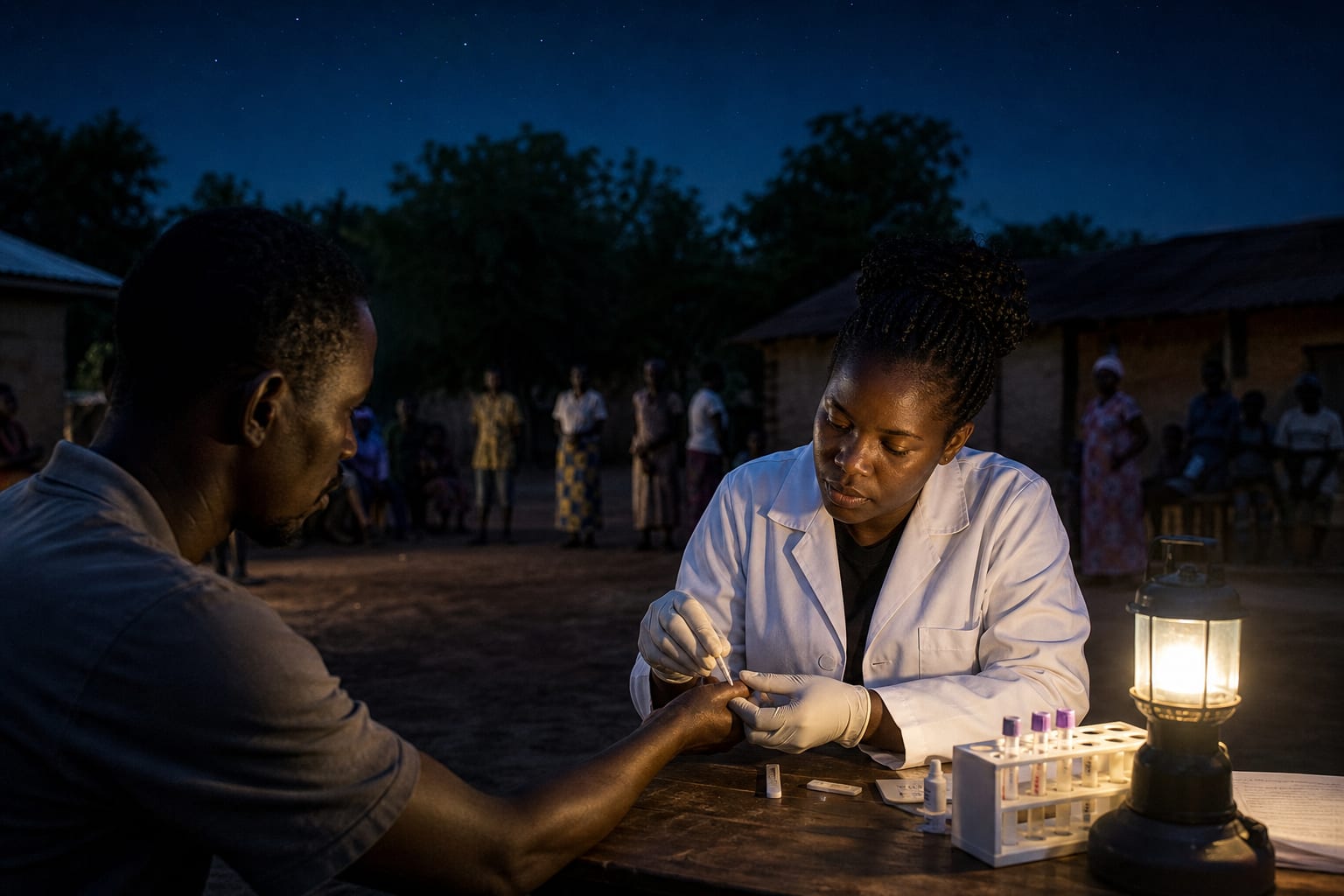
- The editorial identifies four major unmet needs: better disease surveillance and case counting, broader access to fungal diagnostics, stronger clinical trials in the patients most in need, and greater specialist workforce capacity.
Interpretation:
The editorial argues that awareness is no longer the principal barrier in fungal disease. Instead, the major constraints are inadequate surveillance data, uneven diagnostic access, limitations in clinical trial design and enrollment, and shortages of trained mycology specialists. Despite greater international recognition and expanded guidance, mortality from severe fungal disease remains high.
Limitations:
- The editorial emphasizes that fungal disease surveillance remains incomplete because invasive fungal diseases are notifiable in only a small number of countries and fungal pathogens are largely absent from national antimicrobial resistance surveillance systems.
- Diagnostic capacity varies substantially between regions, with some centers lacking access to tests such as galactomannan, beta-D-glucan, fungal polymerase chain reaction, mass spectrometry identification, and susceptibility testing.
- Clinical trials remain difficult to conduct because recruitment is slow, patient populations are heterogeneous, and endpoint selection can limit conclusions, leaving patients with the highest mortality among the least studied.
- Specialist mycology expertise is limited and unevenly distributed worldwide, and fungal disease funding and infrastructure have not matched the scale of the problem.
Conclusion:
Fungal diseases have gained substantially greater clinical and policy attention, but persistent gaps in surveillance, diagnostics, research, and specialist capacity continue to limit progress. The authors argue that fungal infections and antifungal resistance should be incorporated into existing infectious disease surveillance, diagnostic, and research infrastructure rather than treated as separate problems.
Based on findings from:
Emerging fungal infections and research gaps: awareness is no longer the bottleneck
Jon Salmanton-García. International Journal Of Infectious Diseases, 2026.
https://www.sciencedirect.com/science/article/pii/S1201971226007435
This content is an AI-generated, fully rewritten summary based on a published scholarly article. It does not reproduce the original text and is not a substitute for the original publication. Readers are encouraged to consult the source for full context, data, and methodology.