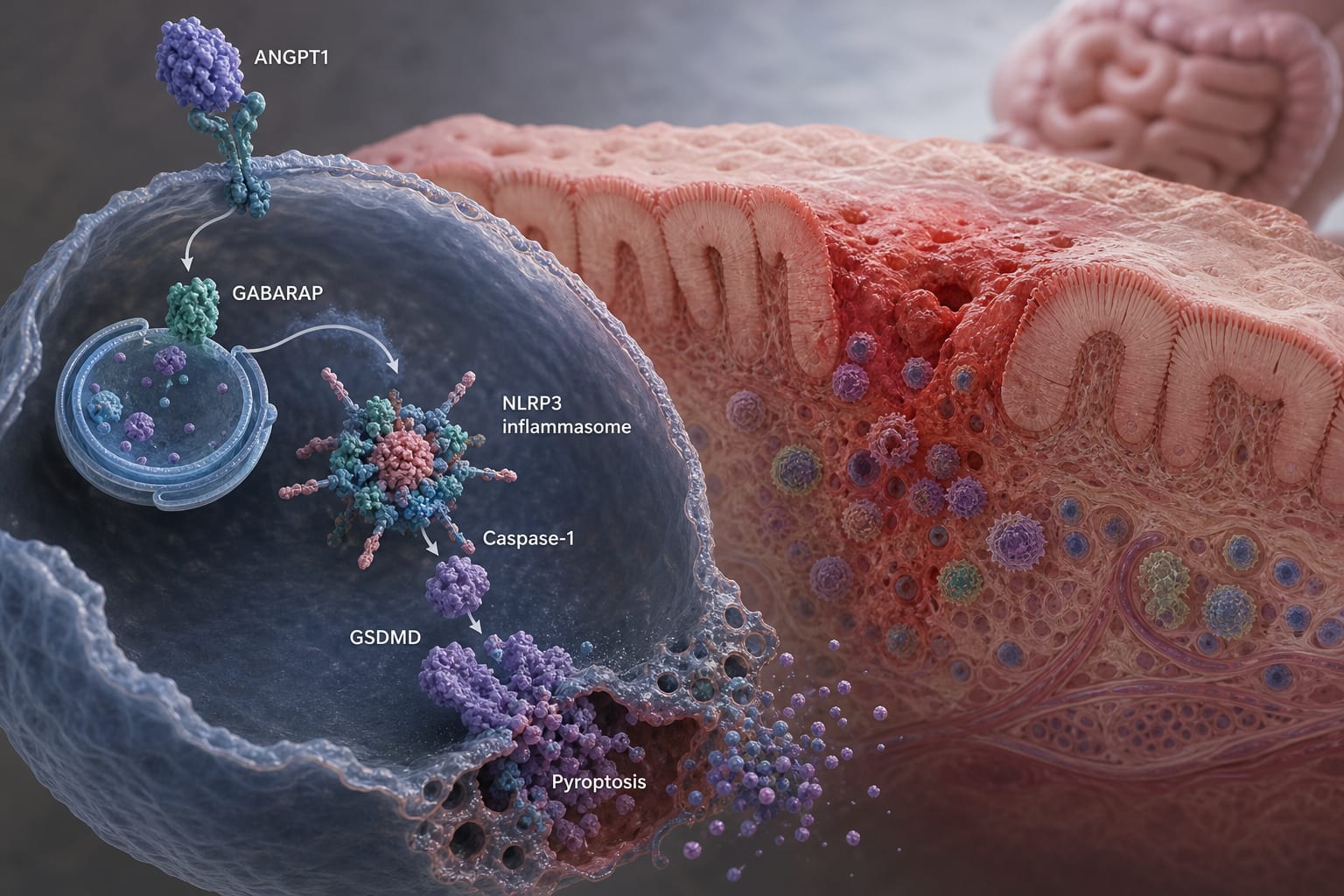
To explore the association of the ANGPT1–GABARAP axis with NLRP3 inflammasome-mediated pyroptotic signaling in Crohn's disease (CD) and its potential implications for treatment.
Approach:
Key Findings:
GABARAP was identified as a protective candidate for CD, with higher levels associated with decreased disease risk (OR = 0.563, P = 0.038), suggesting a potential target for therapeutic intervention.
A genetic association between ANGPT1 and GABARAP was suggested, with GABARAP partially mediating the ANGPT1–CD association (22.97% mediation proportion), indicating a complex interplay in disease mechanisms.
DSS-induced colitis showed reduced ANGPT1 and GABARAP expression, increased NLRP3 expression, and elevated levels of IL-1β, IL-18, and LDH, highlighting the inflammatory response.
Silencing GABARAP or ANGPT1 enhanced pyroptotic signaling, while rhANGPT1 treatment partially restored GABARAP expression and attenuated these responses, suggesting therapeutic potential.
Interpretation:
The findings indicate a potential role for the ANGPT1–GABARAP axis in regulating NLRP3 inflammasome-mediated pyroptosis in CD.
Limitations:
The upstream molecular signals associated with NLRP3 activation in CD remain insufficiently defined, and potential biases in the MR approach should be considered.
Further investigation is needed to validate the therapeutic relevance of the ANGPT1–GABARAP axis and its role in clinical settings.
Conclusion:
The study provides a genetically informed framework for understanding pyroptosis-related inflammatory signaling in Crohn's disease, with implications for future therapeutic strategies.