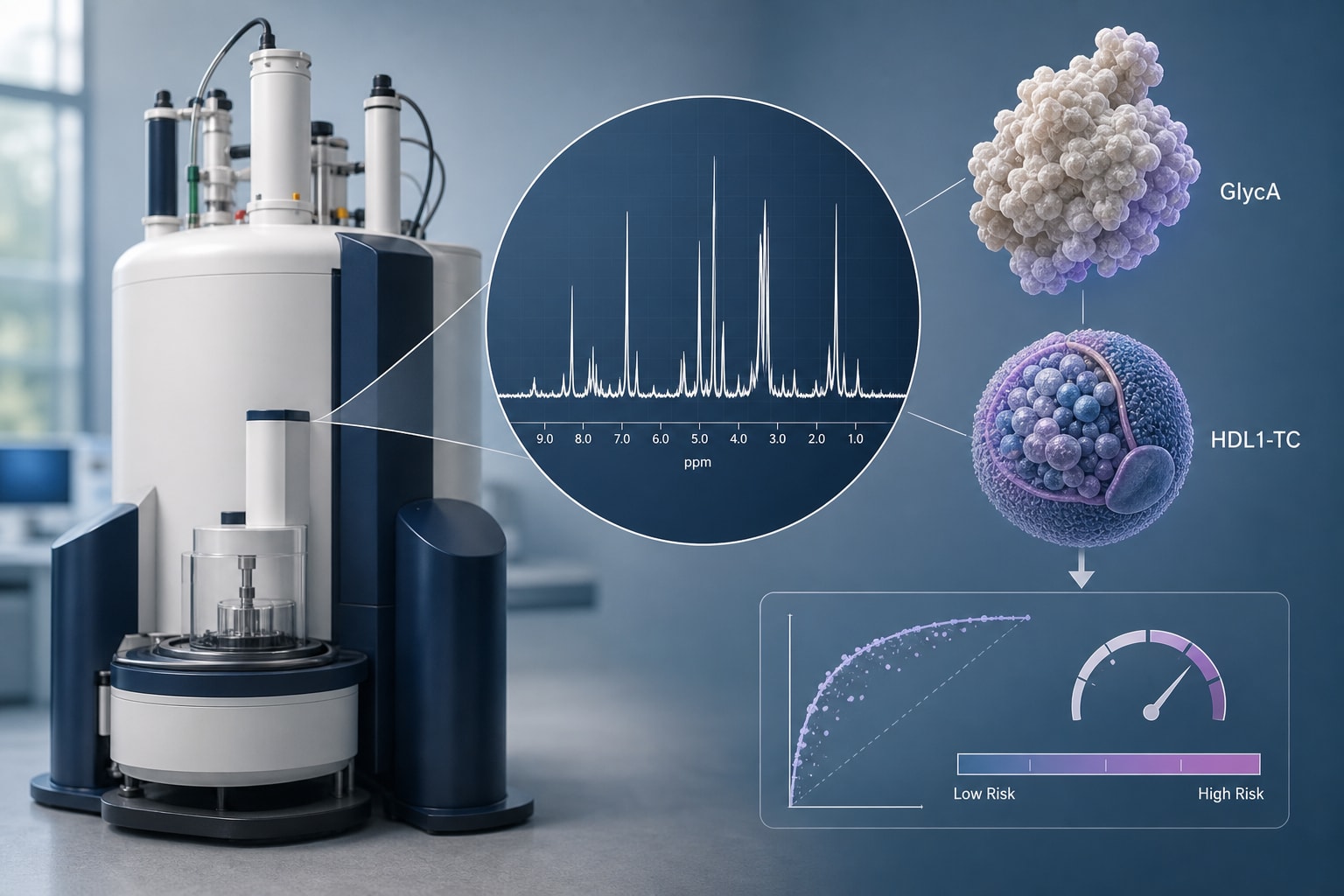
To evaluate the significance of NMR-derived GlycA and lipoprotein subfractions, particularly HDL1-TC, for stratifying complication risk in type 2 diabetes mellitus (T2DM).
Key Findings:
Age, diabetes duration, fasting plasma glucose, GlycA, and HDL1-TC were retained in the risk assessment model, indicating their relevance in predicting complications.
The model demonstrated good fit (χ² = 7.141, P = 0.521) and discrimination (AUC = 0.82, 95% CI: 0.756–0.873), suggesting its reliability.
Calibration showed a mean absolute error (MAE) of 0.021, indicating high accuracy.
The model provided a higher net benefit compared to HbA1c/hs-CRP, highlighting its potential for clinical application.
Interpretation:
The model integrating GlycA, HDL1-TC, and clinical factors effectively stratifies T2DM complication risk, potentially improving patient management.
Limitations:
Causal inference and temporal prediction cannot be established due to the cross-sectional design, which limits the ability to draw definitive conclusions about causality.
Conclusion:
The study presents a promising model for T2DM complication risk stratification based on GlycA and HDL1-TC, which could enhance clinical decision-making.