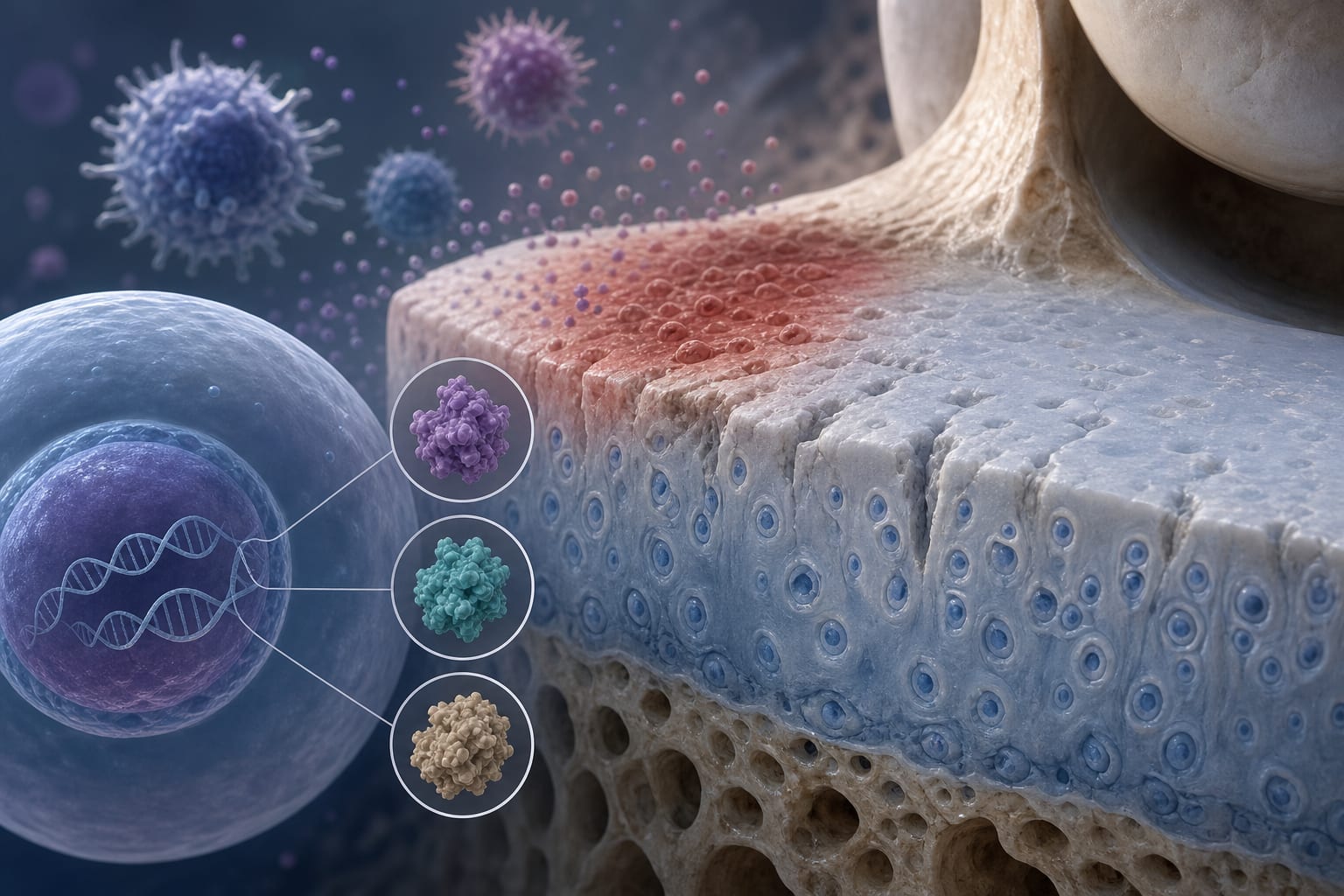
To explore the potential of denosumab as a disease-modifying osteoarthritis drug (DMOAD) and address critical questions regarding its clinical application, emphasizing the significance of these inquiries.
Key Findings:
Denosumab blocks RANKL signaling, reducing inflammation and promoting cartilage health.
In a phase 2a trial, denosumab significantly improved joint scores and reduced new erosive joints in hand OA.
Safety profile showed a high incidence of adverse events, but no new safety signals were identified; further investigation into the nature of these events is warranted.
Interpretation:
The mechanistic findings suggest denosumab may effectively target multiple pathways involved in OA pathology, but further validation in well-phenotyped human cohorts is necessary.
Limitations:
Mechanistic studies primarily conducted in animal models and in vitro, with limited translation to human disease; specific examples of this gap should be noted.
Phase 2a trial results require confirmation in larger, multicenter studies.
Conclusion:
Denosumab shows promise as a DMOAD in OA, but further research is needed to establish its long-term safety and efficacy, particularly addressing the critical questions identified.
A long-term cohort study found that obesity was not associated with worse patient-reported outcomes or higher reoperation rates following total ankle replacement in optimized surgical candidates.