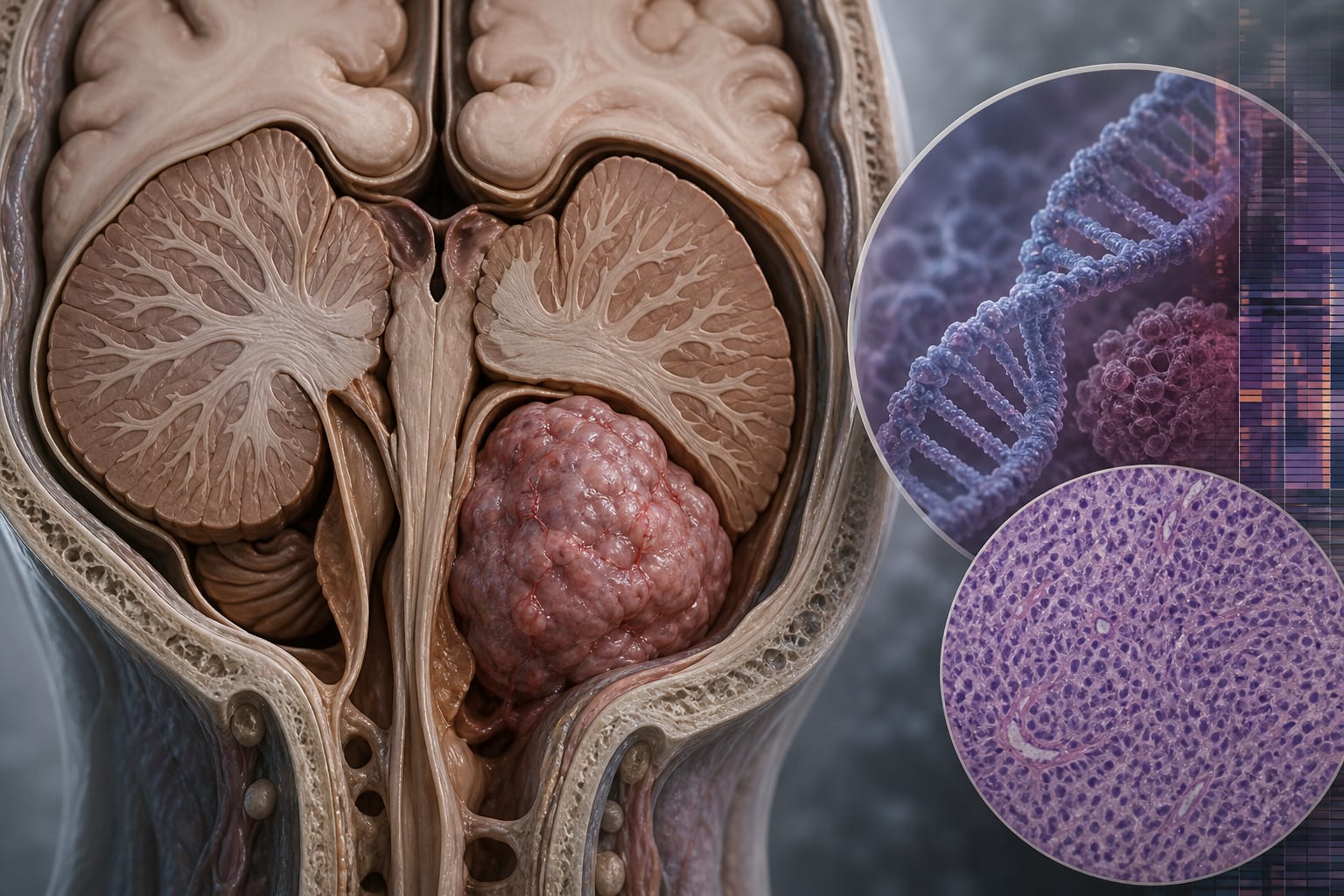
To identify risk factors for post-radiation neurocognitive decline and endocrine dysfunction in brain tumor patients receiving cranial irradiation, emphasizing the significance of these factors in patient management.
Key Findings:
Radiation-induced neurocognitive dysfunction can affect various cognitive domains, impacting patient quality of life.
Vascular injury is a significant factor in radiation-induced neurocognitive decline, suggesting a target for intervention.
No validated biomarkers exist to predict neurocognitive decline prior to cranial irradiation, indicating a gap in current clinical practice.
Interpretation:
The study hypothesizes that vascular and dementia-related risk factors may help identify patients at risk for developing neurocognitive dysfunction after cranial irradiation, potentially guiding preventive strategies.
Limitations:
Retrospective design may introduce bias; future studies should consider prospective designs.
Reliance on MMSE, which has known limitations in assessing cognitive impairment; alternative assessments should be explored.
Lack of formal and prospective definitions for patient and physician assessments of cognitive decline; standardization is needed.
Conclusion:
Identifying risk factors for neurocognitive decline post-radiation could optimize patient management and quality of life, underscoring the need for further research in this area.