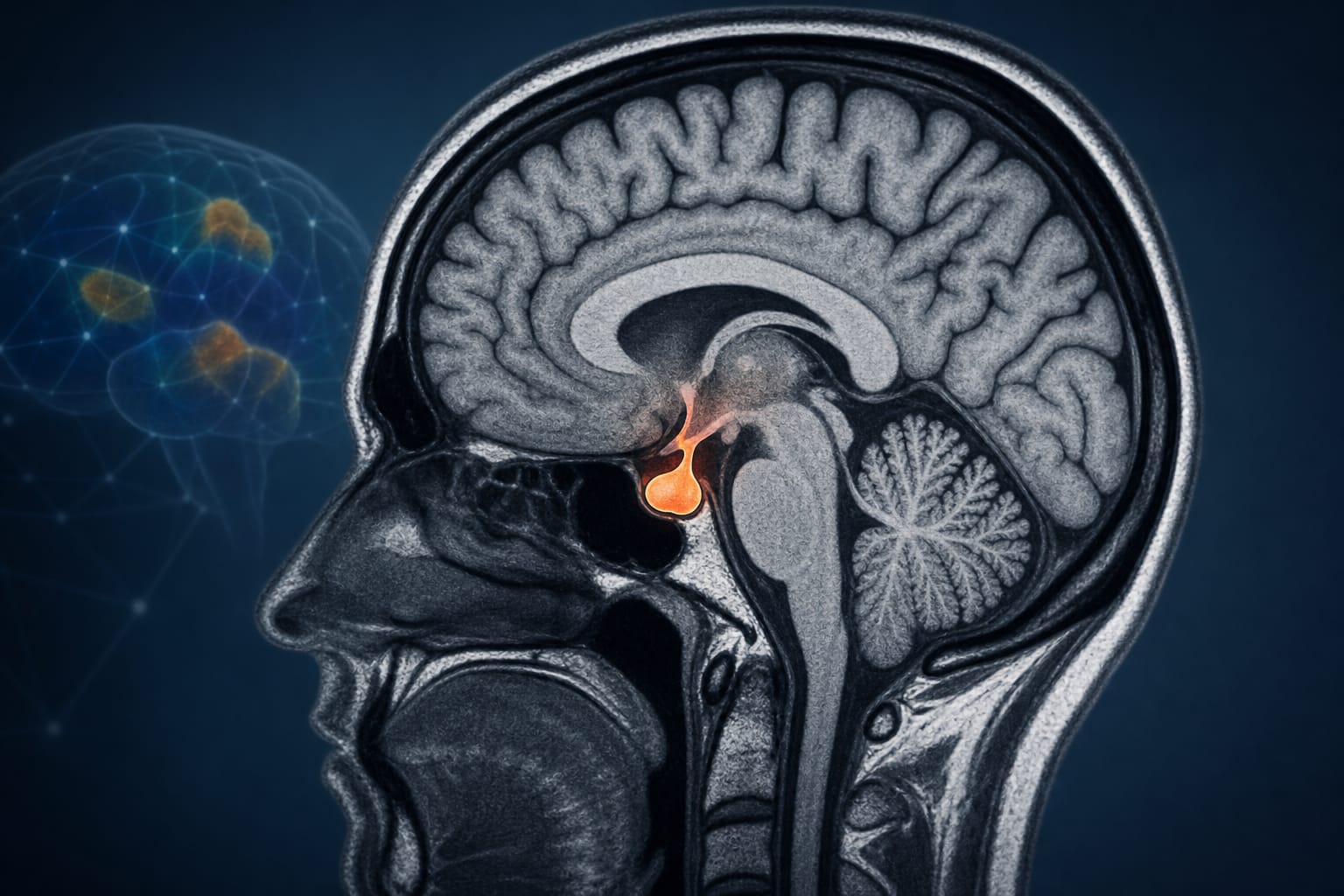
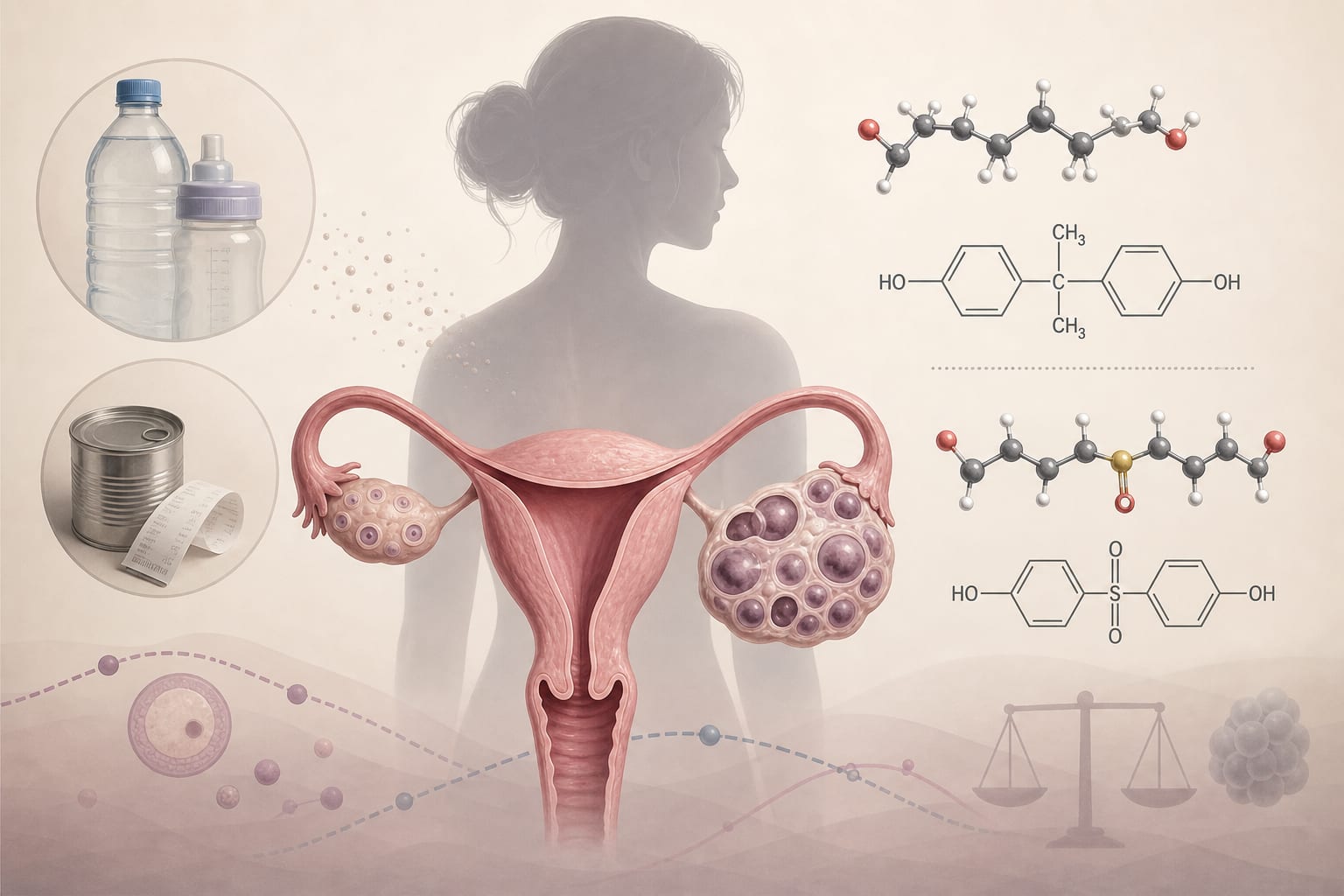
To examine neuroimaging alterations and cerebral functional changes in patients with PCOS and their relationships with endocrine-metabolic profiles, behavioral patterns, cognitive performance, and emotional regulation, highlighting the significance of these relationships for understanding PCOS.
Approach:
Key Findings:
Enlargement of the pituitary gland excluding the infundibular stalk, indicating potential hormonal dysregulation.
Reduction in gray matter volume, which may correlate with cognitive deficits.
Damage to the corpus callosum within white matter, suggesting impaired inter-hemispheric communication.
Elevated μ-opioid receptor binding capacity in emotion-related brain regions, potentially linking to emotional dysregulation.
Altered activity in the right orbitofrontal cortex under sympathetic activation, which may affect decision-making processes.
Interpretation:
Neuroimaging changes indicate dysfunction of the limbic system circuitry, potentially underlying affective and cognitive symptoms in PCOS, which may inform treatment strategies.
Limitations:
Current investigations are limited in scope and somewhat controversial, often lacking comprehensive data and exhibiting methodological flaws such as small sample sizes or selection bias.
Conclusion:
Further investigations are warranted to address unresolved mechanistic questions related to PCOS, particularly focusing on longitudinal studies and diverse populations.
by Ningxiao Jiang, Jie Deng, Changjin Bao, Hongmei Yin, Xianghui Zhang, Yanxia Ding, Shinan Zhang, Yingjiang Xu, Xinghua Diao, Kexin Lu, Jun Liu, Lei Han