Accuracy of splenic stiffness measurement for predicting clinically significant varices in children with portal hypertension: a systematic review and diagnostic test accuracy meta-analysis - Summary - MDSpire
Conexiant’s news site is now MDSpire News. Learn more
Advertisement
Evaluating the Diagnostic Performance of Splenic Stiffness Measurement in Identifying Clinically Significant Varices in Pediatric Patients with Portal Hypertension: A Systematic Review and Meta-Analysis of Diagnostic Test Accuracy
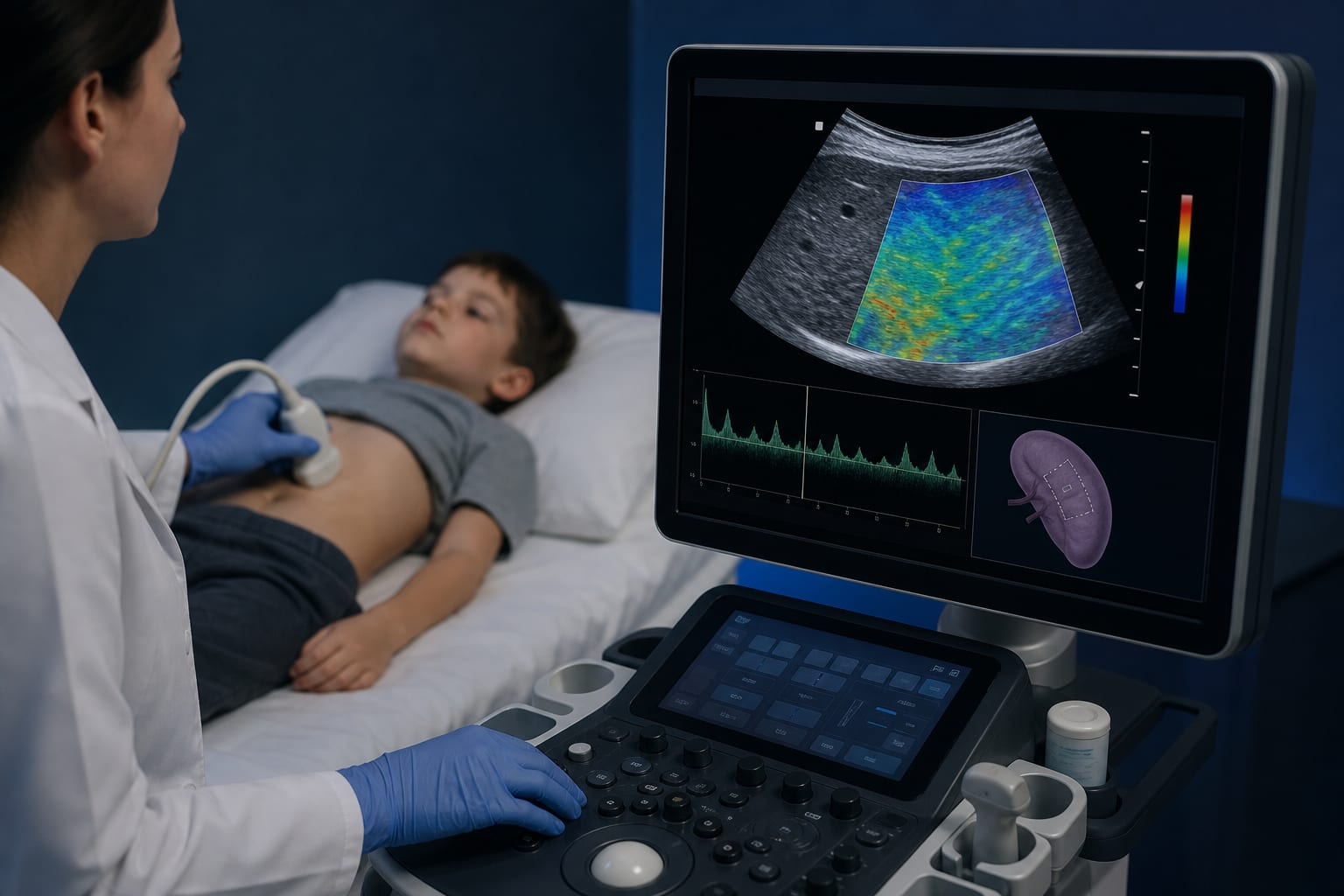
To evaluate the diagnostic accuracy of splenic stiffness measurement (SSM) for detecting clinically significant varices (CSV) in children with portal hypertension (PHTN).
Approach:
Design: Systematic review and diagnostic test accuracy meta-analysis.
Data Sources: MEDLINE, Embase, and Scopus were searched from inception to 31 July 2025.
Eligibility Criteria: Included studies with children diagnosed with PHTN, using SSM as the index test and oesophagogastroduodenoscopy as the reference standard.
Data Extraction and Synthesis: Two reviewers independently extracted data; Bayesian random-effects bivariate model was used for analysis.
Key Findings:
In chronic liver disease (CLD), summary sensitivity was 83.0% (95% CrI 69.9% to 91.0%) and specificity was 75.7% (60.8%–85.2%).
In non-cirrhotic portal hypertension (NCPH), sensitivity was 92.5% (82.7%–97.0%) and specificity was 80.3% (57.6%–92.7%).
Low certainty for CSV detection in CLD and moderate certainty for sensitivity in NCPH.
Interpretation:
Limitations:
Low certainty of evidence for CSV detection in CLD.
Variability in underlying aetiologies of PHTN among included studies may affect the generalizability of the findings.
Conclusion:
Further well-designed, aetiology-specific studies are needed to establish the role of SSM in the clinical pathway.