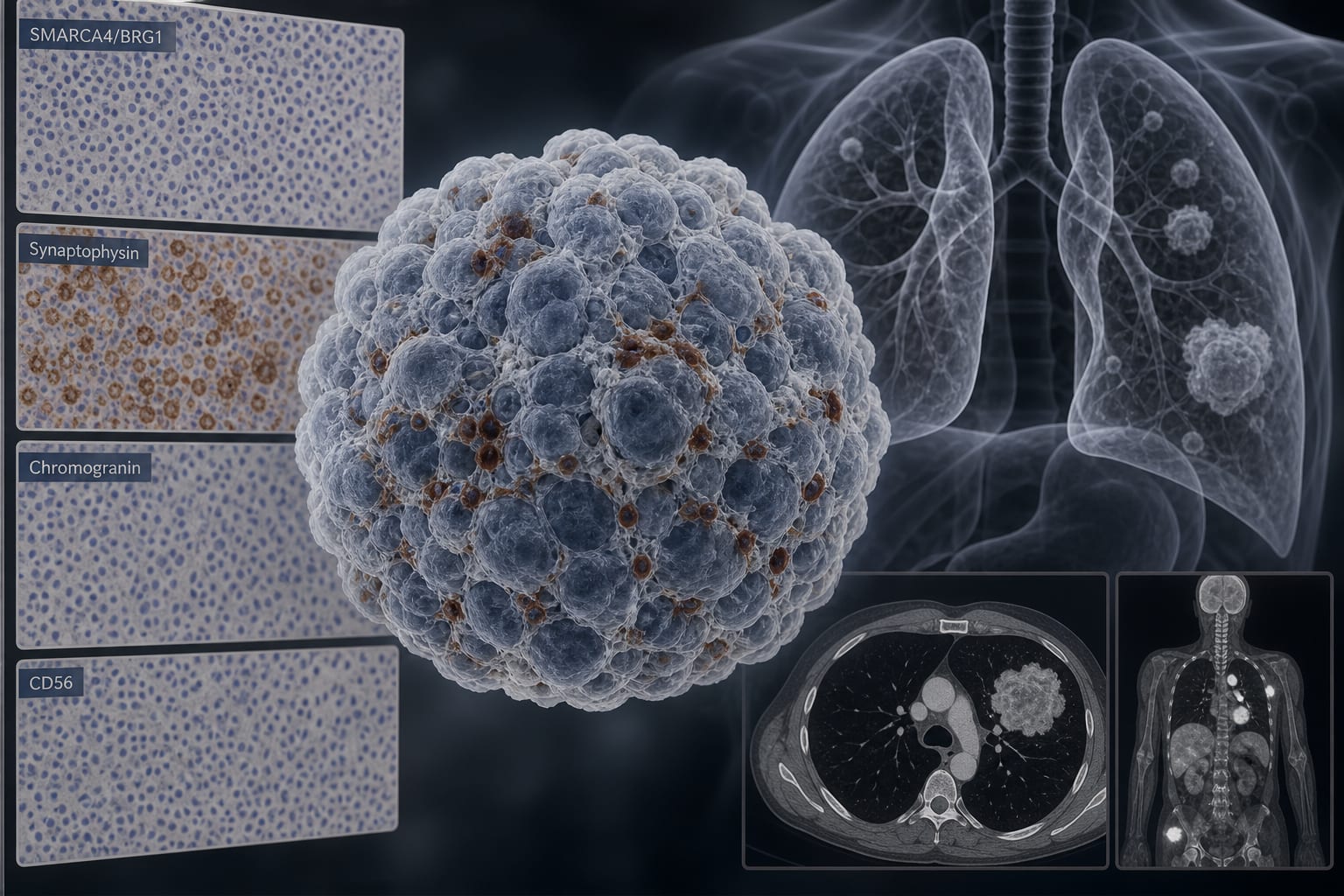
To report a case of SMARCA4-deficient undifferentiated thoracic tumor (SMARCA4-UT), a rare and aggressive malignancy, with isolated synaptophysin expression and discuss its diagnostic challenges and treatment considerations.
Key Findings:
The patient exhibited complete loss of SMARCA4/BRG1 and isolated synaptophysin positivity, with a Ki-67 index of approximately 60%, indicating high proliferation.
The patient achieved a partial response lasting over 12 months after treatment with nab-paclitaxel, carboplatin, and a PD-1 inhibitor.
Isolated synaptophysin positivity may reflect limited lineage de-repression rather than true neuroendocrine differentiation.
Interpretation:
Isolated synaptophysin positivity in SMARCA4-UT may represent a relevant phenotype with potential therapeutic implications, warranting further investigation.
Limitations:
The study is based on a single case report, limiting generalizability and potential biases.
Further studies are needed to clarify the diagnostic value of isolated synaptophysin positivity and its association with treatment response.
Conclusion:
The case highlights the diagnostic challenges posed by isolated synaptophysin expression in SMARCA4-UT and suggests potential clinical benefit from chemoimmunotherapy, emphasizing the need for further research.