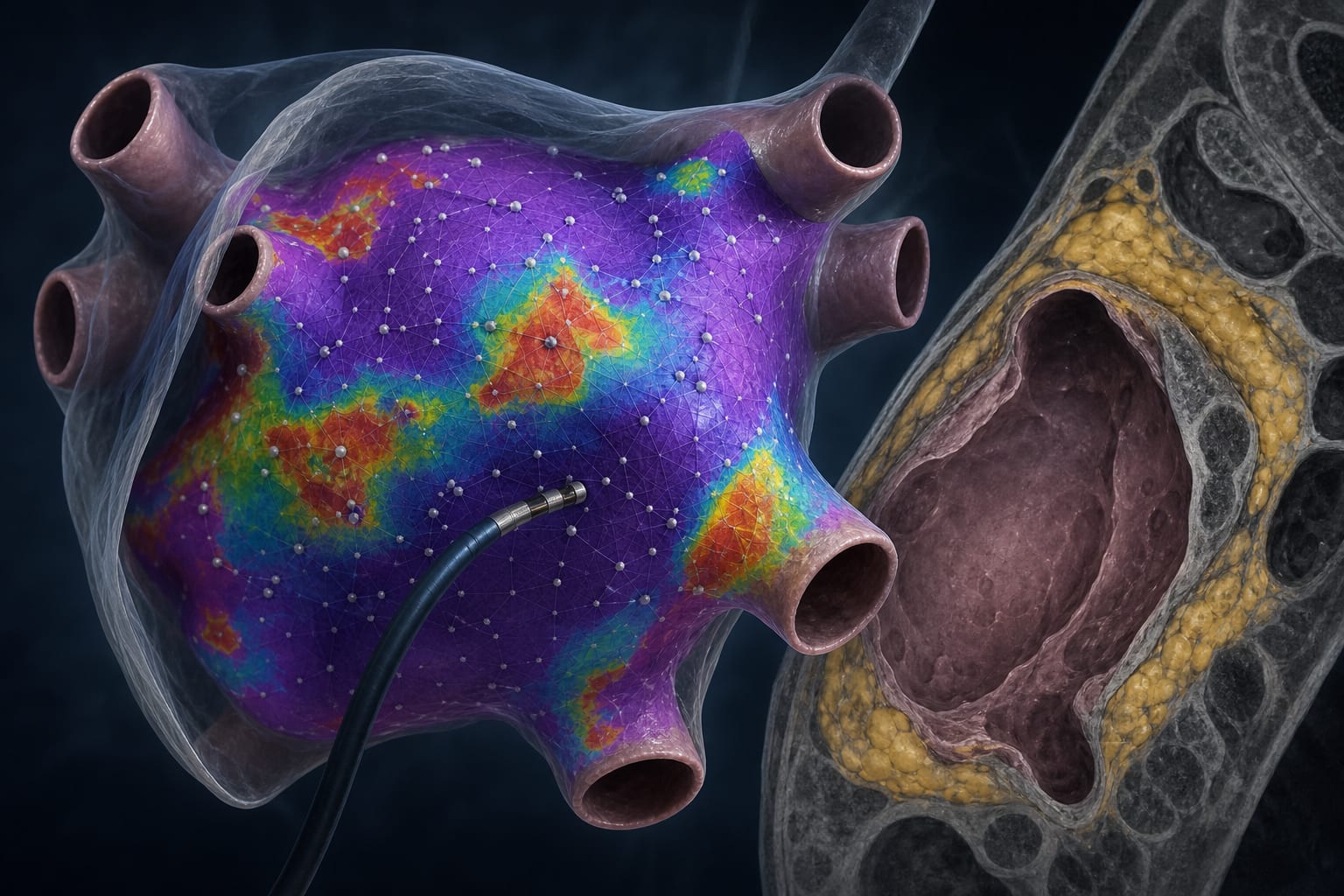
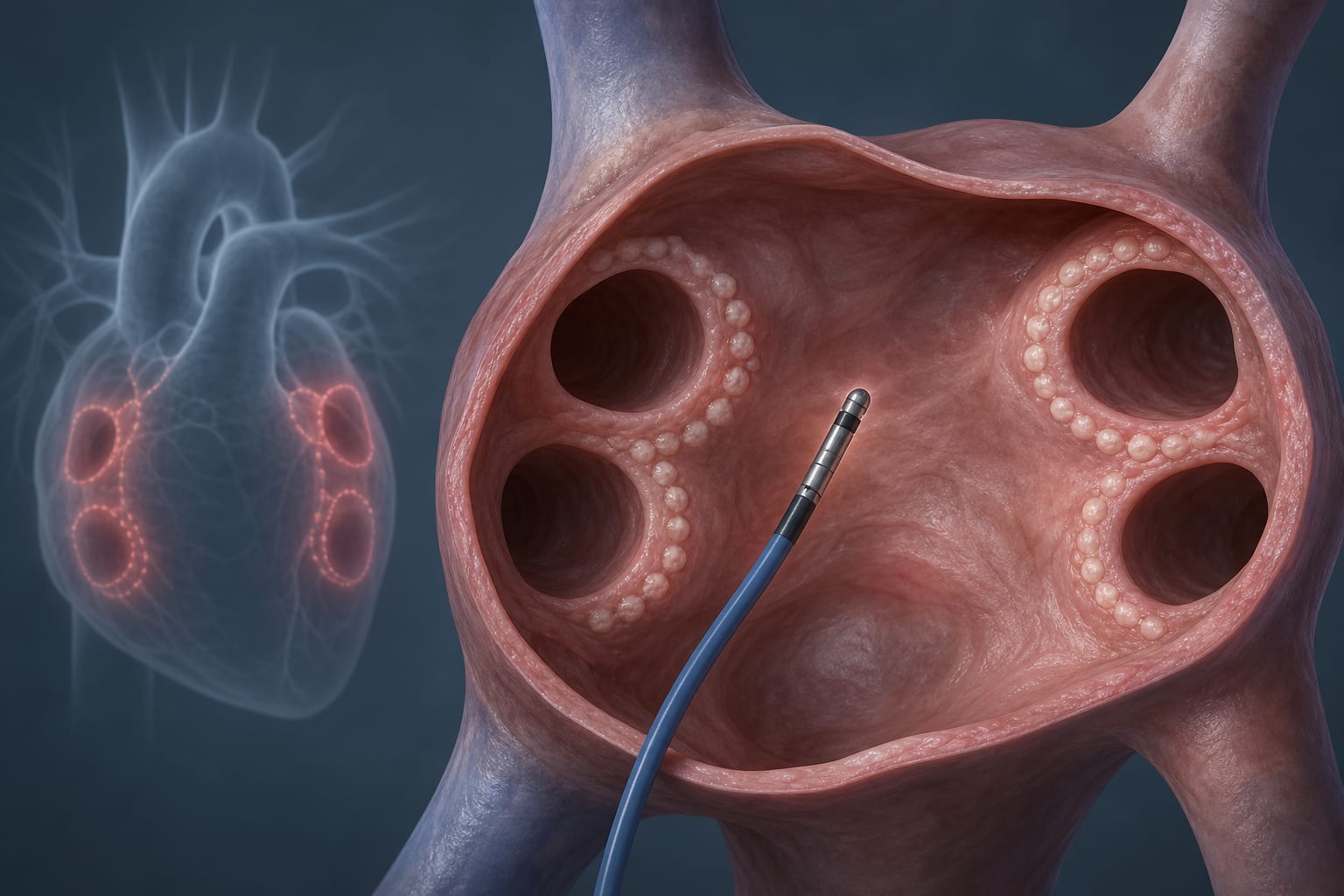
To perform a multidimensional and segment-by-segment assessment of left atrial substrate anomalies in patients with persistent atrial fibrillation undergoing ablation.
Approach:
Study Design: Single-center retrospective study analyzing 69 patients undergoing ablation for drug-refractory persistent AF.
Predictors Selected: Four factors were analyzed: bipolar voltage, left atrial wall thickness (LAWT), epicardial adipose tissue (EAT), and AF drivers.
AI-based Analysis: An AI-based platform was used for detailed segment-by-segment analysis of the left atrium.
Key Findings:
Freedom from recurrence at 12 months was 70.6%.
Higher mean percentage of very low-voltage zones predicted recurrences (HR 1.025; p = 0.008).
Posterior-wall EAT showed a potentially protective effect (HR 0.267; p = 0.007).
Anterior-wall AF drivers also indicated a protective effect (HR 0.287; p = 0.021).
Very low bipolar voltage burden in the roof was associated with increased risk of recurrence (HR 1.024; p = 0.026).
Interpretation:
The study highlights the importance of characterizing left atrial substrate to tailor ablation procedures for persistent AF patients.
Limitations:
Single-center study may limit generalizability.
Retrospective design may introduce bias.
Conclusion:
A comprehensive characterization of left atrial substrate may lead to more personalized ablation strategies for patients with persistent AF.
by Edoardo Cecchini, Gennaro Fabiano, Paola Liporace, Paolo Francesco Sorrenti, Giuseppe Campagna, Emmanuel Fabiano, Jacopo Colella, Alessandro Di Vilio, Giuseppe Indellicati, Simona Brogneri, Diego Sangiorgi, Andrea Petretta, Saverio Iacopino