To highlight the cardiovascular disease (CVD) risk associated with polycystic ovary syndrome (PCOS), particularly in non-obese women, and to discuss potential therapeutic approaches tailored for this demographic.
Key Findings:
Women with PCOS have a 77% increased risk of CVD, with over two-fold increased risk of coronary artery disease (CAD) and myocardial infarction (MI), particularly pronounced in non-obese women.
Non-obese women with PCOS are at significant risk for CVD, a demographic often overlooked in research and treatment.
Conventional therapies for PCOS, including hormonal contraceptives and metformin, showed no positive impact on CVD outcomes, necessitating alternative strategies.
Interpretation:
The findings underscore the urgent need for alternative therapeutic strategies for managing CVD risk in women with PCOS, particularly those who are non-obese, to address this critical health gap.
Limitations:
Potential misdiagnosis of PCOS in obese women due to overlapping symptoms.
Lack of detailed evaluation of all study subjects to confirm PCOS diagnosis.
Insufficient data on the effectiveness of conventional therapies for CVD prevention in PCOS.
Need for more comprehensive diagnostic criteria for PCOS to ensure accurate identification of affected individuals.
Conclusion:
New therapeutic approaches, including hormone supplementation and GLP-1 receptor agonists, are essential for improving cardiovascular health in women with PCOS, particularly in the non-obese population.
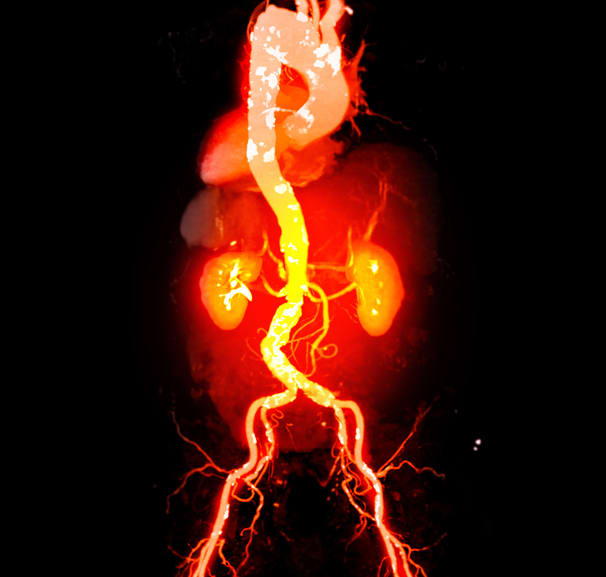
Serial imaging documented 6 years of progressive aortic calcification, culminating in near occlusion before open surgical reconstruction restored blood flow.