Epidemiological patterns and risk profiling of hospital acquired venous thromboembolism in a tertiary medical center in eastern China: a retrospective cohort study (2023–2024) - Summary - MDSpire
Advertisement
Epidemiological patterns and risk profiling of hospital acquired venous thromboembolism in a tertiary medical center in eastern China: a retrospective cohort study (2023–2024)
To investigate the epidemiological patterns, clinical characteristics, and risk factors of hospital acquired venous thromboembolism (HA-VTE) in a multi-campus medical center over a two-year period.
Approach:
Study Design: A retrospective analysis of patients diagnosed with HA-VTE at a tertiary medical center from January 1, 2023 to December 31, 2024.
Data Analysis: Parameters affecting HA-VTE occurrence were analyzed using SPSS 27.0, comparing with hospitalized patients without VTE.
Key Findings:
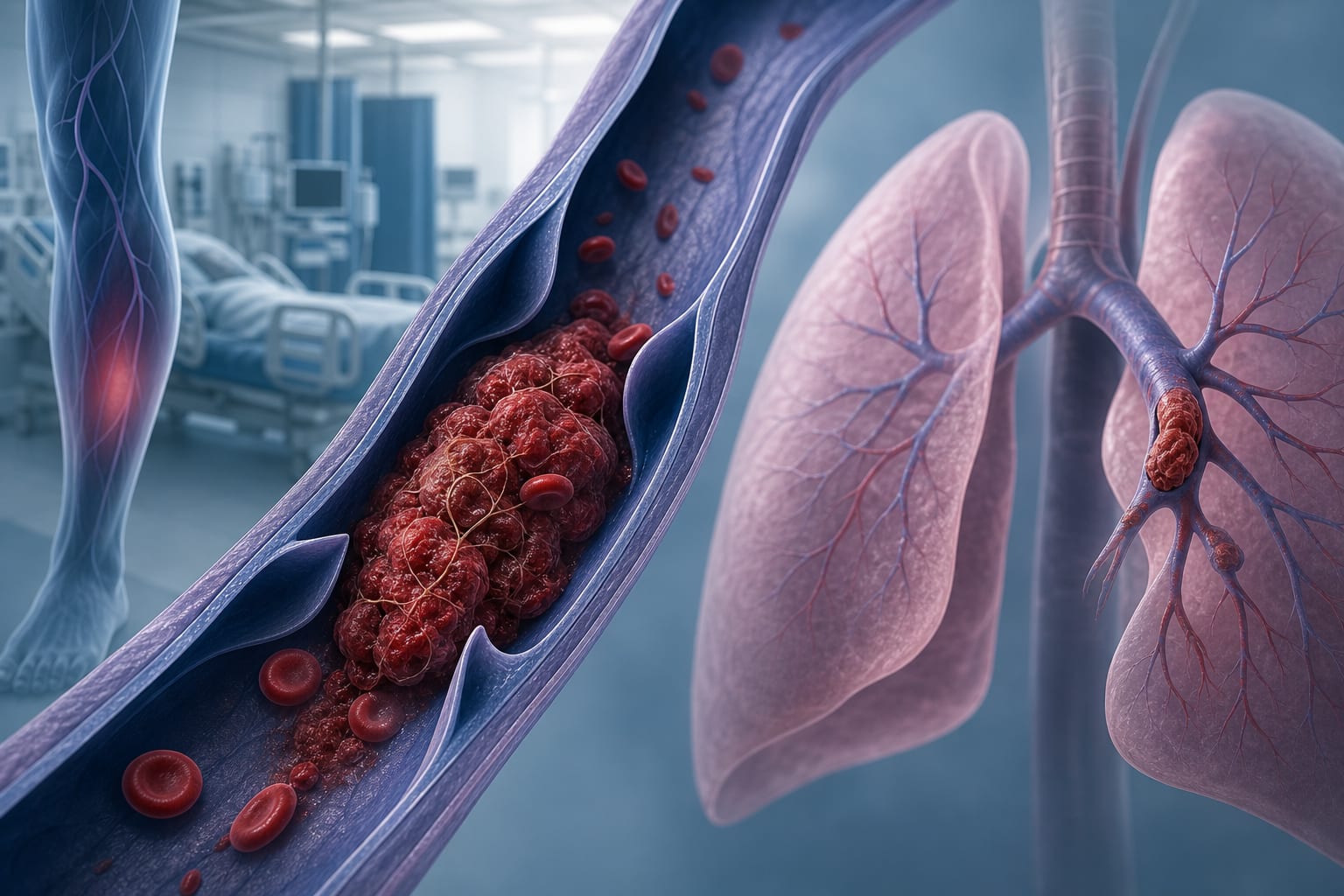
393 inpatients met the criteria for HA-VTE, with 308 having isolated HA-DVT, 61 isolated HA-PE, and 24 both.
Higher incidence of HA-VTE was found in older patients, those with malignancy, trauma, ICU stays, and major surgeries.
Patients with HA-VTE experienced longer hospital stays and higher mortality rates.
Neurosurgery, ICU, and Orthopedics departments had the highest incidence rates.
Interpretation:
Limitations:
The study is retrospective and may be subject to biases inherent in such designs.
Data was collected from a single tertiary care facility, which may limit generalizability.