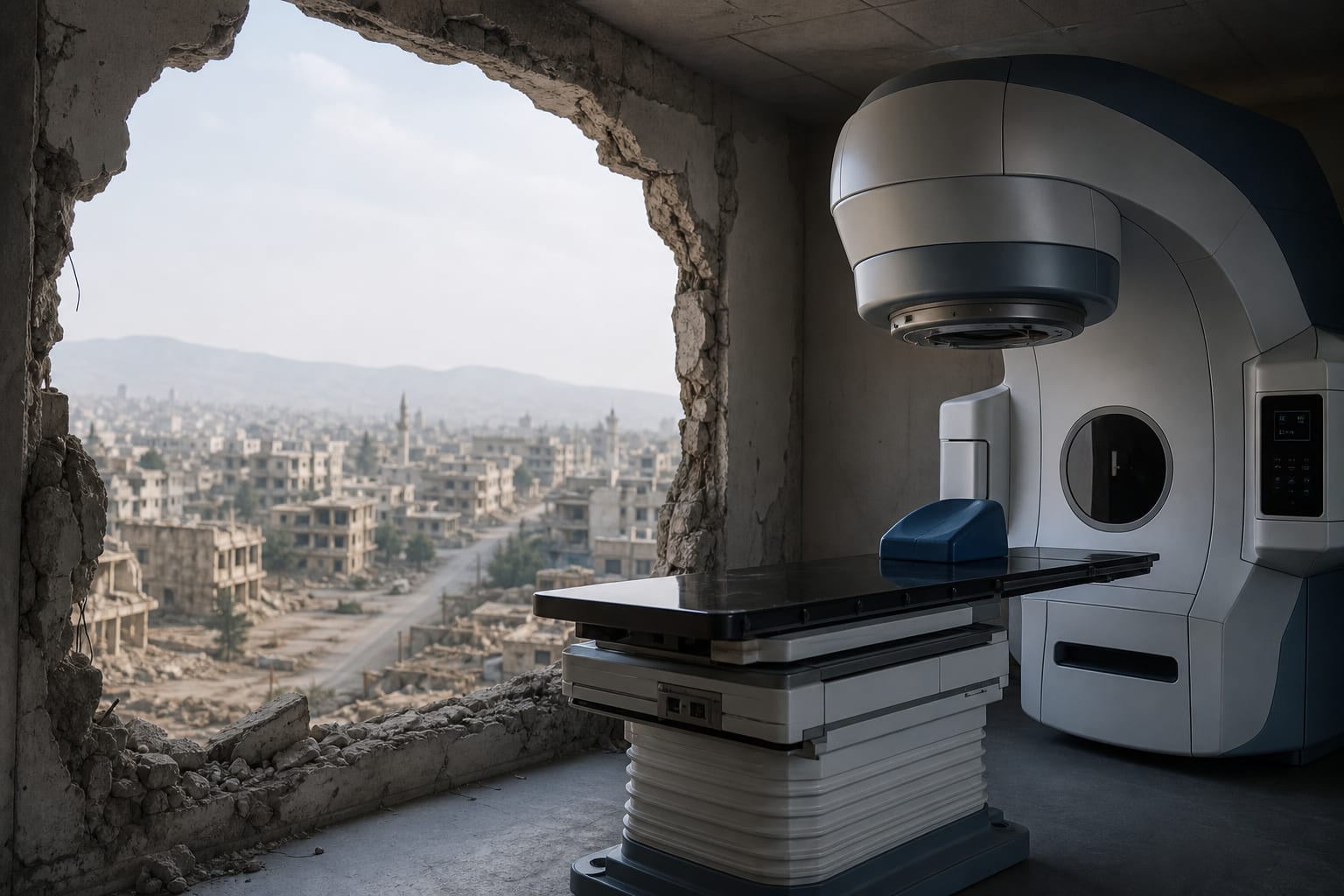
To explore the impact of prolonged conflict on the cancer care continuum in Syria and propose a recovery framework for cancer care delivery.
Approach:
Contextual Analysis: Examined the fragmentation of Syria's health system due to conflict and its effects on access to oncology services.
Proposed Framework: Suggested a sequenced approach focusing on governance, referral pathways, and defining an essential cancer service package linked to financial protection.
Key Findings:
Prolonged conflict has led to fragmented health systems in Syria, severely affecting oncology services.
Access to cancer care is limited, particularly for populations outside major urban centers, requiring patients to traverse large geographies.
Early recovery efforts must prioritize institutional coherence and structured referral pathways.
Interpretation:
Restoring continuity in cancer care requires aligning governance, service delivery, and financing before expanding specialized services.
Limitations:
Absence of a national cancer registry hampers data collection and service planning.
Limited diagnostic capacity and shortages in treatment options affect service delivery.
Lack of integrated multimodal care within oncology centers hinders effective treatment.
Conclusion:
A focus on institutional coherence, structured referral pathways, and a phased essential cancer service package is essential for effective oncology recovery in Syria.