Comparative assessment of tissue cross-reactivity and pharmacokinetic half-life of malaria monoclonal antibodies - Summary - MDSpire

Comparative assessment of tissue cross-reactivity and pharmacokinetic half-life of malaria monoclonal antibodies

  • By

  • William R. Fugina

  • Dallas R. Brown

  • Shelby Foor

  • Emma C. Ryan

  • Samuel Cuevas

  • Shreeram Nallar

  • Dawn Wolf

  • Renita Brown

  • Jesse P. Deluca

  • Geoffrey C. Chin

  • Elizabeth J. Raymond

  • James T. Raymond

  • Phil S. Medlin

  • Sheetij Dutta

  • June 23, 2026

  • 0 min

Share

Objective:

To optimize human tissue cross-reactivity and half-life extension methods for monoclonal antibodies targeting Plasmodium falciparum circumsporozoite protein.

Approach:
    Key Findings:
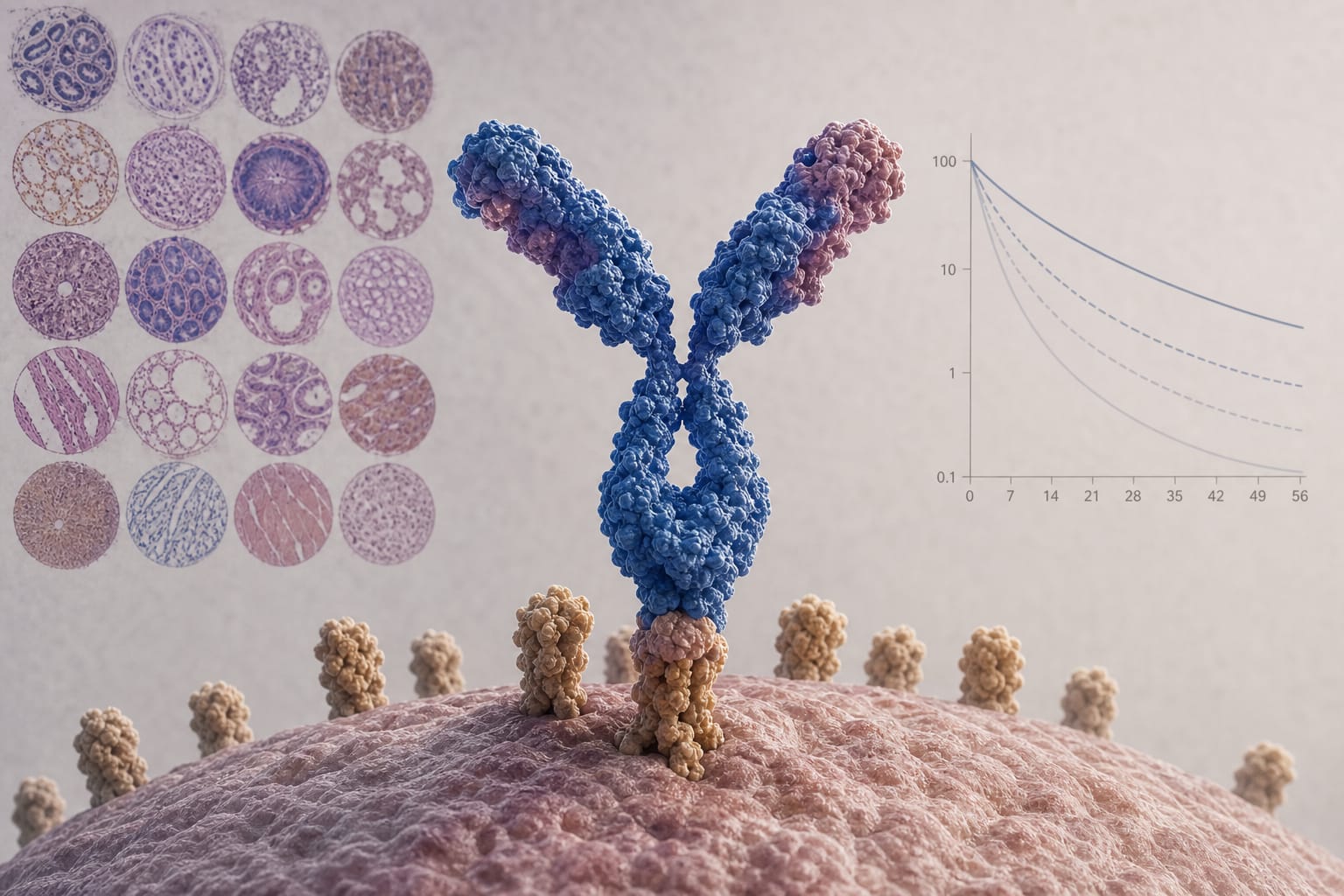
    • TCR assay showed no membrane binding; mAbs 317 and 311 had varying positive cross-reactivity to extracellular and cytoplasmic elements.
    • CIS43 showed no TCR positivity.
    • MAb 311-LS exhibited improved binding affinity to FcRn and a better pharmacokinetic profile compared to wild-type 311.
    Interpretation:

    The findings emphasize the importance of early evaluation of TCR liabilities in mAb development and demonstrate the efficacy of HLE strategies in improving mAb longevity.

    Limitations:
    • Study limited to prototype mAbs and specific tissue types.
    • Results may not fully predict human responses.
    Conclusion:

    The study provides benchmarks for developing long-acting anti-malarial mAbs.

Original Source(s)

Related Content